Dehydrated Brownie

Dehydrated Brownie Bites: Reducing Water Activity for Summer Shelf-Life

Extend the shelf life of your brownies with this tutorial on creating dehydrated brownie bites for summer enjoyment.

Creating snacks that stay fresh during the hot summer months requires precision and a bit of science. You must focus on how moisture moves within your ingredients to prevent early spoilage. This professional approach ensures your treats stay delicious even in humid conditions.

The secret to a long shelf-life is understanding the science of water activity, often called Aw. It measures the energy status of water in a system rather than just the total moisture content. By mastering Aw Control, you can create snacks that remain stable and safe for several weeks.

The following formula helps you achieve the perfect texture for these dehydrated snacks. You will use the Baker’s percentage method to ensure accuracy in every batch. Use the table below to guide your professional production process.

Professional Brownie Formula
Ingredient Baker’s Percentage (%)
All-Purpose Flour 100%
Granulated Sugar 180%
Cocoa Powder 60%
Unsalted Butter 90%
Whole Eggs 110%
  1. Whisk the eggs and sugar until the mixture becomes light and airy.
  2. Fold in the dry ingredients gently to keep the structure intact.
  3. Bake the batter at a low temperature to set the crumb.
  4. Slice the finished product into small cubes for the drying phase.

Key Takeaways

  • Water activity determines the safety and texture of your pastry.
  • Lowering Aw levels effectively stops the growth of mold and bacteria.
  • Baker’s percentages allow you to scale your recipe with high accuracy.
  • Proper drying techniques help maintain a crisp bite in summer.
  • Managing moisture energy is more important than total water volume.
  • Controlled production steps lead to a professional, shelf-stable result.

Defining Water Activity (Aw) in Pastry

To achieve shelf-stability in pastry, it’s essential to grasp the concept of water activity. Water activity, denoted as Aw, is a critical measure that influences the texture, safety, and overall shelf-life of baked goods, including dehydrated brownie bites.

Water activity is defined as the ratio of the vapor pressure of water in a substance to the vapor pressure of pure water at the same temperature. It’s a dimensionless quantity, usually expressed as a value between 0 and 1. The Aw level indicates the amount of available water in a product that can support microbial growth and chemical reactions.

Understanding Aw in the Context of Pastry

In the context of pastry, Aw is crucial because it directly affects the product’s texture and stability. A lower Aw indicates less available water, which typically results in a product that is more shelf-stable and less susceptible to microbial spoilage.

Impact of Aw on Pastry Products:

  • Texture: Aw influences the texture of pastry. Higher Aw can lead to a softer texture, while lower Aw results in a drier product.
  • Shelf-life: Products with lower Aw generally have a longer shelf-life due to reduced microbial growth.
  • Stability: Aw affects the chemical stability of the product. Lower Aw reduces the likelihood of undesirable chemical reactions.

The following table illustrates how different levels of Aw can impact the quality and shelf-life of pastry products:

Aw Range Effect on Pastry Shelf-life Expectancy
0.0 – 0.3 Very dry, potential for texture issues Long shelf-life, very stable
0.3 – 0.6 Dry, less prone to microbial growth Long shelf-life, stable
0.6 – 0.8 Moderately moist, some risk of microbial growth Moderate shelf-life, some stability concerns
0.8 – 1.0 Moist, higher risk of microbial growth Short shelf-life, less stable

water activity in pastry

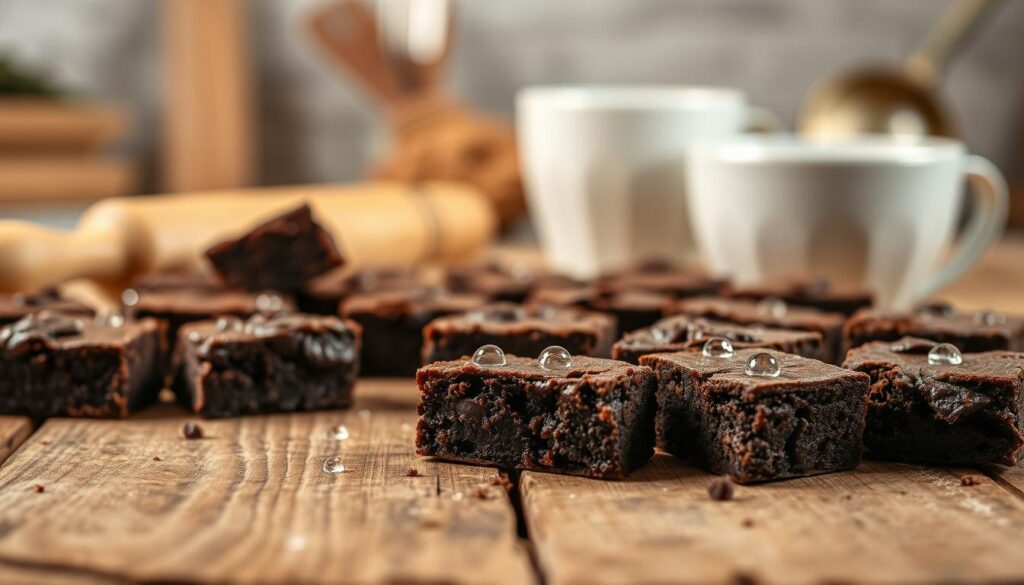
By controlling Aw, manufacturers can produce pastry products that are not only delicious but also have an extended shelf-life. Dehydrating brownie bites is an effective method to reduce Aw, thereby enhancing their shelf-stability.

The Dehydration Process vs. Baking

The dehydration process and traditional baking are two distinct methods that yield different results in terms of texture and moisture content. Understanding these differences is key to achieving the desired texture in dehydrated brownie bites.

Dehydration vs. Traditional Baking Methods

Dehydration and baking are fundamentally different in how they remove moisture from food products. Dehydration involves the slow removal of moisture using low heat over a prolonged period, whereas baking uses high heat for a shorter duration. This difference significantly impacts the final product’s texture and moisture content.

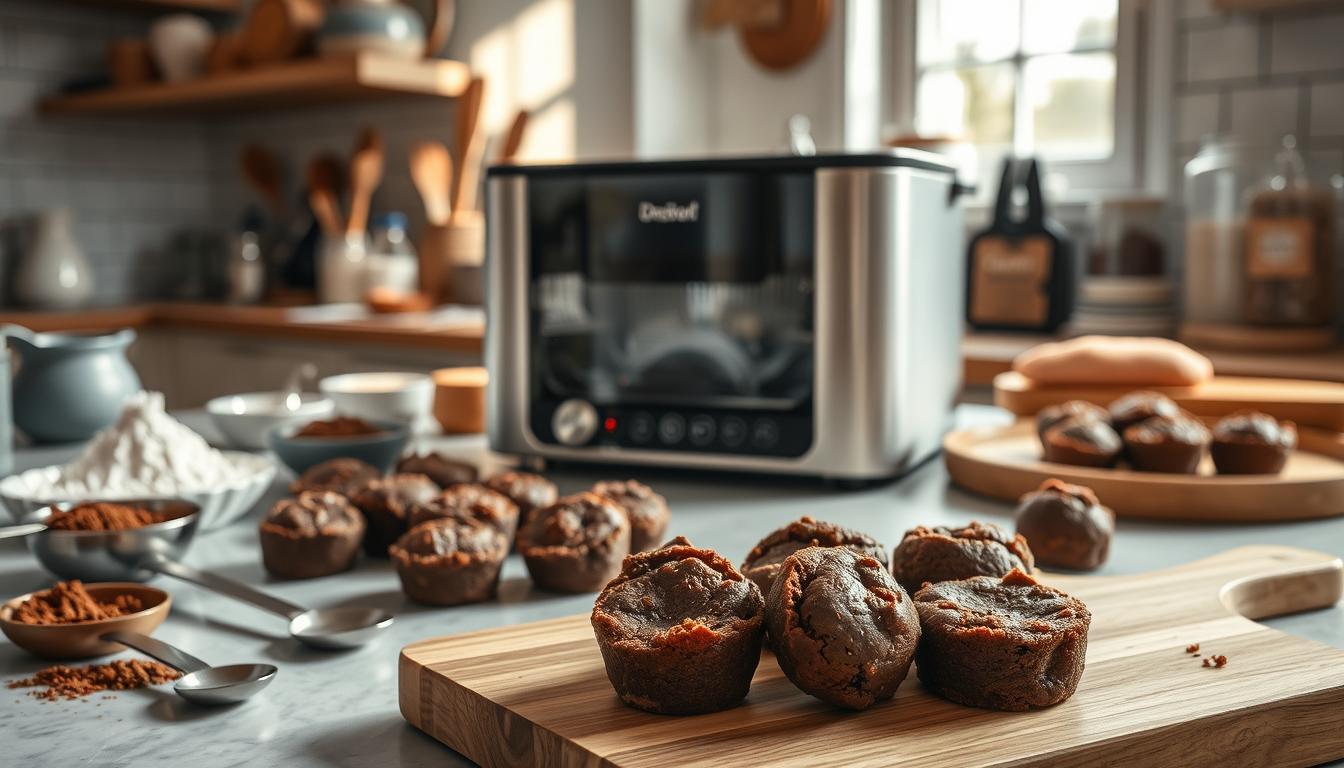
When you dehydrate brownie bites, you are essentially engineering the texture to be more suitable for summer consumption by reducing the water activity. This process helps in maintaining the product’s stability and shelf-life.

Impact on Texture and Moisture Content

The dehydration process has a profound effect on both the texture and moisture content of brownie bites. Here are the key steps involved in dehydration and their impact:
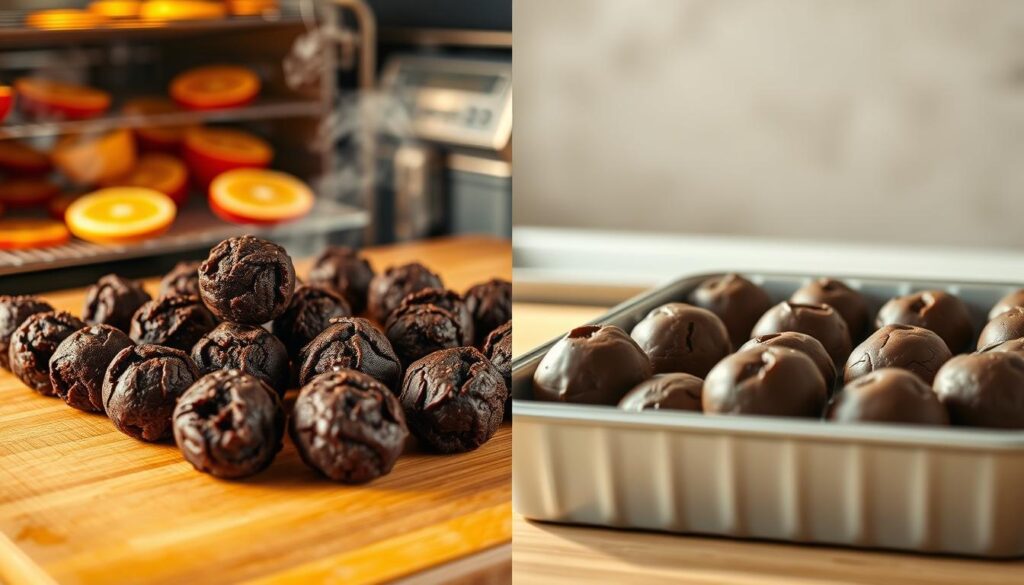
  • Slow moisture removal preserves the texture.
  • Low heat prevents the formation of ice crystals, maintaining the product’s structure.
  • Controlled dehydration ensures consistent texture and quality.

Texture Engineering

The benefits of dehydration over traditional baking include:

  1. Improved texture: Dehydration helps in achieving a more consistent and desirable texture.
  2. Reduced water activity: Lower water activity enhances the product’s shelf-life and stability.
  3. Better preservation: The slow and controlled removal of moisture preserves the product’s quality.

Food Safety & 6-Month Stability

When it comes to outdoor nutrition, ensuring the safety and stability of your food products is crucial. Dehydrated brownie bites, with their reduced water activity (Aw), offer a solution that inhibits the growth of microorganisms, thereby enhancing food safety.

By controlling the dehydration process, you can significantly extend the shelf-life of your products. Proper formulation and storage conditions further contribute to the overall stability of dehydrated brownie bites, making them suitable for consumption over a 6-month period.

For outdoor enthusiasts, having access to safe and nutritious food is essential. Dehydrated brownie bites not only meet this need but also provide a convenient and energy-rich snack option. As you consider outdoor nutrition solutions, the benefits of dehydration in ensuring food safety and stability become increasingly apparent.

FAQ

What exactly is water activity (Aw), and why is it more important than total moisture content?

While total moisture measures the amount of water in your food, Aw Control measures the energy status of that water. In professional pastry production, water activity dictates whether microorganisms like mold or bacteria can grow. By reducing the Aw level in your brownie bites, you ensure they remain Shelf-stable and safe for consumption without the need for chemical preservatives or refrigeration.

How does the dehydration process facilitate specific texture engineering for brownie bites?

Unlike traditional baking in a Viking or Wolf oven, which uses high heat to set a crumb structure quickly, dehydration utilizes low temperatures over an extended period. This method of Texture Engineering allows you to remove moisture uniformly. The result is a brownie bite with a concentrated chocolate profile and a unique, durable texture that holds up under various environmental conditions, particularly during the humid summer months.

Are these dehydrated brownies suitable for high-intensity activities like hiking or climbing?

Yes, they are an excellent source of Outdoor Nutrition. Because the dehydration process reduces weight while maintaining caloric density, these bites are favored by endurance athletes and brands like Patagonia Provisions. They provide a stable, energy-rich snack that won’t melt in your pack, making them superior to traditional fudge-style brownies for trail use.

How long can I expect these brownie bites to remain fresh and safe to eat?

When you successfully lower the water activity to a safe threshold (typically below 0.60 Aw) and store the product in airtight packaging such as FoodSaver vacuum-sealed bags, the brownies can achieve a 6-month stability period. This longevity is due to the lack of available moisture required for microbial spoilage, ensuring the product stays Shelf-stable even in ambient temperatures.

What equipment do you recommend for achieving professional-grade dehydration results?

To ensure consistent airflow and precise temperature management, you should utilize a high-performance dehydrator such as an Excalibur or a Tribest Sedona. These machines allow you to monitor the environment closely, which is critical when you are formulating a recipe based on Baker’s percentages and aiming for a specific, repeatable water activity level in every batch.

Can I adapt any standard brownie recipe for this dehydration method?

While most recipes can be adapted, you must focus on the balance of fats and sugars to ensure the final product doesn’t become overly brittle. By using a professional formula with specific Baker’s percentages, you can predict how the ingredients will react to moisture loss, allowing you to maintain a decadent mouthfeel even after the water activity has been significantly reduced.

Leave a Reply

Your email address will not be published. Required fields are marked *