All the world of cacao in one click.


Learn how to create a stunning 3D Easter egg with a geometric "cyber-egg" design and praline inclusions.
You are about to embark on a creative journey to craft a stunning geometric chocolate masterpiece, known as the “Cyber-Egg,” featuring intricate designs and delicious praline inclusions. This tutorial is designed to guide you through the process with precision and clarity.
To begin, it’s essential to understand the basics of working with chocolate and the tools required for this project. You will need to have a good understanding of tempering chocolate and using 3D printing technology to create the geometric design.
As you progress through this tutorial, you will be provided with a detailed recipe and step-by-step instructions to ensure that your final product is both visually appealing and delectable.
Creating 3D Easter eggs is an art form that combines tradition with modern creativity and sustainability. As you delve into this world, you’ll discover the craftsmanship that goes into making these edible masterpieces.

3D Easter eggs are intricate chocolate creations that have become a highlight of the Modern Easter celebration. Unlike traditional Easter eggs, these are crafted with precision and artistry, often featuring complex designs and flavors.
“The art of chocolate making has evolved significantly, and 3D Easter eggs are a testament to this evolution,” says a renowned chocolatier. The process involves not just melting chocolate, but creating a work of art that is both visually appealing and delicious.
The rise of artisan chocolate creations has led to a renewed interest in Easter eggs, with chocolatiers pushing the boundaries of design and flavor. Artisan chocolate is characterized by its high-quality ingredients and meticulous production process, making each piece a unique experience.
Understanding the importance of sustainable ingredients not only enhances the quality of your chocolate but also contributes to a more environmentally friendly practice. Sourcing ingredients that are sustainably produced is crucial for minimizing the environmental footprint of your creations.
“Sustainability is no longer a choice but a necessity in the chocolate industry,” notes a leading expert in sustainable chocolate production.
By choosing sustainable ingredients, you are not only ensuring the quality of your 3D Easter eggs but also supporting ethical practices in the chocolate industry.
To craft a stunning Cyber-Egg, you’ll need specific tools and molds. Creating a 3D Easter egg involves precision, creativity, and the right equipment to achieve the desired geometric design and smooth finish.
The process begins with essential baking tools that help in preparing and shaping your chocolate creation. These tools are fundamental in ensuring that your Cyber-Egg turns out as envisioned.
To start, you’ll need a few basic baking tools that are crucial for the preparation and molding of your 3D Easter egg. These include:
Having these tools at your disposal will simplify the process and enhance the quality of your Cyber-Egg.
The right mold is crucial for achieving the intricate geometric design of your Cyber-Egg. Molds come in various shapes, sizes, and materials, including silicone, polycarbonate, and metal. For a geometric Cyber-Egg, a mold that can create detailed, 3D shapes is essential.
When selecting a mold, consider the following factors:
| Mold Material | Flexibility | Detail Retention |
|---|---|---|
| Silicone | High | Medium |
| Polycarbonate | Low | High |
| Metal | Low | High |
Silicone molds are flexible and easy to release chocolate, while polycarbonate and metal molds offer high detail retention, crucial for intricate designs. Choose a mold that best suits your design needs and skill level.
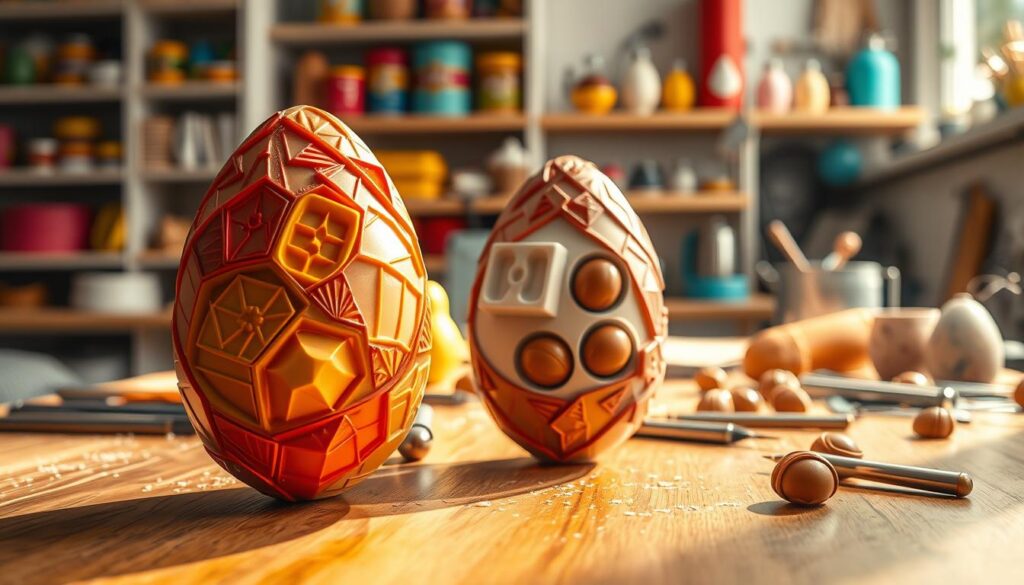
By combining the right baking tools with an appropriate mold, you’ll be well on your way to creating a Cyber-Egg with impressive textural layers and a professional finish.
The art of making a Cyber-Egg begins with selecting high-quality ingredients that enhance its flavor and aesthetic appeal. Understanding the role of each component is crucial for crafting a masterpiece that delights both the taste buds and the eyes.
The foundation of a Cyber-Egg lies in its chocolate. You’ll need high-quality chocolate that melts well and provides a smooth finish. Dark, milk, and white chocolate are options, each offering a unique flavor profile. For a sophisticated design, consider using chocolate with a high cocoa content for a richer taste.
Choosing the Right Chocolate: When selecting chocolate, consider the cocoa content, processing methods, and any additional flavorings. High-quality chocolate not only tastes better but also provides a better texture for your Cyber-Egg.
Praline inclusions add a delightful crunch and flavor contrast to your Cyber-Egg. To make praline, you’ll need nuts (such as almonds or hazelnuts) and caramelized sugar. The process involves cooking the sugar to the right temperature and then mixing it with nuts before it sets.
Tips for Perfect Praline: To achieve the perfect praline, ensure that the sugar is caramelized to a golden brown. This enhances the flavor and texture. Also, be cautious when working with hot sugar to avoid burns.
Flavor enhancements can elevate your Cyber-Egg from a simple chocolate treat to a complex culinary experience. Consider adding extracts (like vanilla or almond), spices, or even a hint of salt to balance the sweetness.
To give you a clearer understanding, here’s a comparison of different flavor enhancements:
| Flavor Enhancement | Description | Effect on Cyber-Egg |
|---|---|---|
| Vanilla Extract | Adds a creamy, sweet flavor | Enhances the overall sweetness and smoothness |
| Almond Extract | Provides a nutty, slightly sweet flavor | Complements the praline inclusions |
| Hint of Salt | Balances sweetness with a touch of saltiness | Balances the flavors, reducing sweetness |
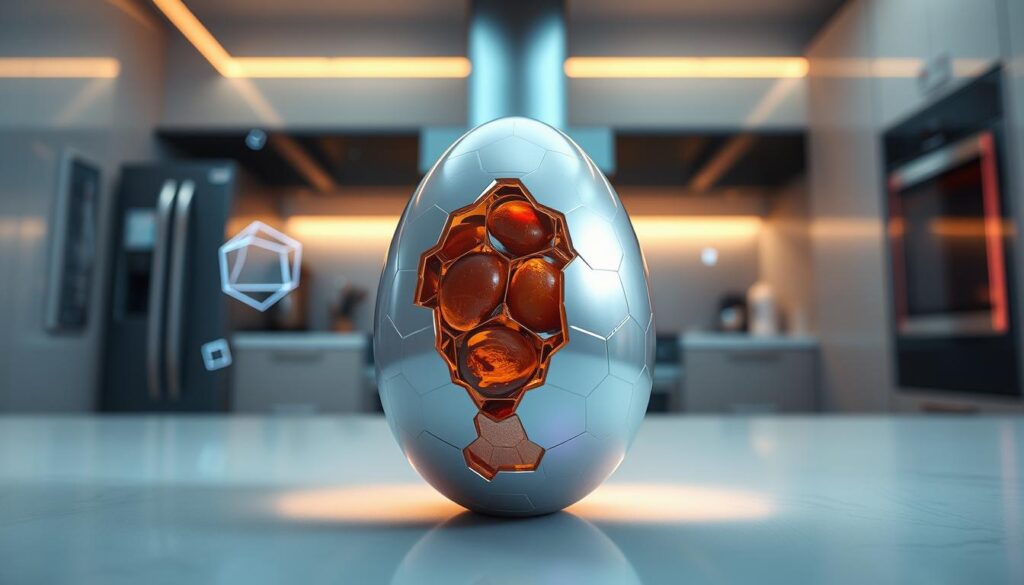
By understanding and selecting the right ingredients, you can create a Cyber-Egg that is not only delicious but also visually appealing, perfect for showcasing your culinary design skills.
The Cyber-Egg recipe’s success lies in its precise ingredient ratios, as outlined in the detailed ingredient table. To achieve the perfect blend, understanding the proportions of each component is crucial.
When creating complex confections like the Cyber-Egg, especially those involving 3D Printing technology, having a precise ingredient table is indispensable. This table allows you to scale your recipe while maintaining the integrity of the ingredient ratios.
| Ingredient | Baker’s Percentage (%) | Quantity (for 10 eggs) |
|---|---|---|
| Dark Chocolate | 60 | 600g |
| Praline | 20 | 200g |
| Cocoa Butter | 10 | 100g |
| Sugar | 5 | 50g |
| Flavor Enhancers | 5 | 50g |
As you can see, the detailed ingredient table provides a clear breakdown of the components. This precision is akin to the accuracy required in 3D Printing, where exact measurements are crucial for the final product’s quality.
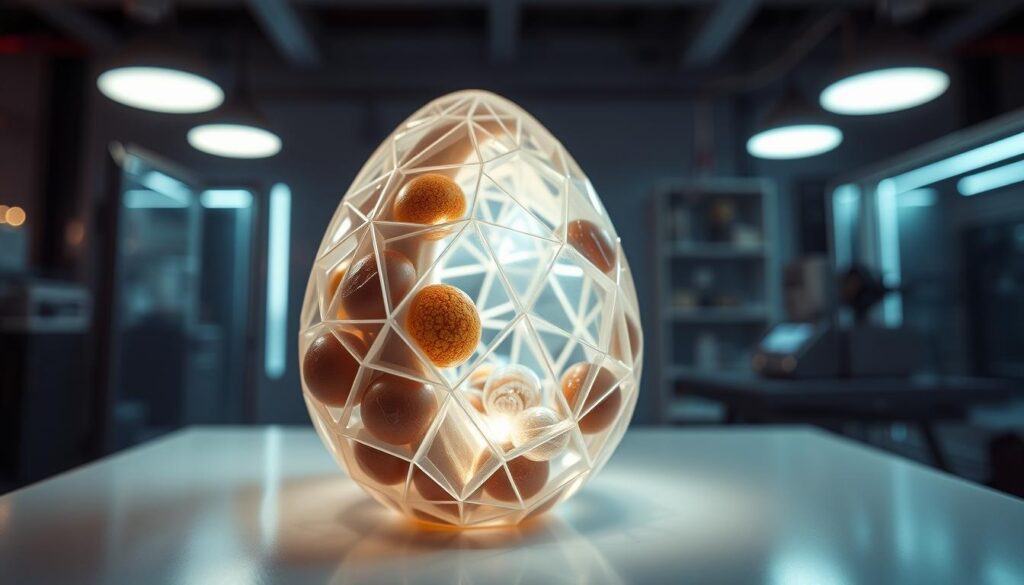
By using Baker’s percentages, you can easily adjust the quantities based on your needs, whether you’re making a small batch or a large production run. This flexibility is particularly useful when experimenting with new recipes or scaling up for events.
“Precision in baking is like precision in 3D Printing; it’s all about getting the measurements just right,” says a renowned chocolatier. This quote underscores the importance of accuracy in creating complex desserts like the Cyber-Egg.
Crafting a Cyber-Egg for Modern Easter celebrations is a fun and rewarding process. With your ingredients and equipment ready, you can create a beautifully designed Cyber-Egg by following these simple steps.
To begin, you’ll need to melt the chocolate. High-quality chocolate is essential for achieving a smooth, glossy finish. Follow these steps:
Preparing the praline is a crucial step in adding texture and flavor to your Cyber-Egg. Here’s how to do it:
The quality of the praline can significantly impact the overall taste and appearance of your Cyber-Egg.
With your chocolate melted and praline prepared, it’s time to assemble the Cyber-Egg.
By following these steps, you’ll be able to create a stunning Cyber-Egg that’s perfect for Modern Easter celebrations. Experiment with different praline flavors and chocolate types to make your Cyber-Egg truly unique.
“The art of chocolate making is a delicate balance of science and creativity.”
The art of creating a stunning Cyber-Egg lies in the details and techniques used. To elevate your Cyber-Egg to a professional level, you’ll need to master a few key techniques that enhance its visual appeal.
A smooth finish is crucial for the overall appearance of your Cyber-Egg. To achieve this, ensure that your chocolate is melted to the correct temperature and that it is tempered properly. Tempering gives chocolate a smooth, glossy finish and a satisfying snap when broken.
Tempering Chocolate: To temper chocolate, you need to heat it to around 105°F (40°C) to melt all the crystals, then cool it down to around 82°F (28°C) to allow the crystals to form, and finally heat it again to around 90°F (32°C) for working temperature.
| Tempering Stage | Temperature (°F) | Temperature (°C) |
|---|---|---|
| Melting | 105 | 40 |
| Cooling | 82 | 28 |
| Working | 90 | 32 |
Adding decorative elements can enhance the visual appeal of your Cyber-Egg. One way to do this is by incorporating textural layers. You can achieve this by adding praline inclusions or using molds with intricate designs.
Experiment with different designs and patterns to create a unique Cyber-Egg. You can also use edible gold or silver dust to give your Cyber-Egg a luxurious finish.
With your Cyber-Egg complete, it’s time to focus on the finishing touches that make it shine. The presentation of your 3D Easter egg can greatly enhance its appeal, whether it’s for personal enjoyment or as a gift.
Proper packaging is essential to protect your Cyber-Egg and make it look attractive. Consider using eco-friendly materials that align with the sustainable ingredients used in your chocolate creation. You can opt for colorful boxes, decorative tins, or even handmade paper wraps to add a personal touch.
When packaging, ensure that the egg is securely placed to avoid any damage. You can use soft inserts like cotton or paper pulp to cushion the egg. Additionally, including a personalized note or a card with the ingredients and your signature can add a thoughtful element.
| Packaging Material | Description | Eco-Friendly |
|---|---|---|
| Colorful Boxes | Attractive and sturdy, available in various sizes. | Yes |
| Decorative Tins | Reusable and can be customized with designs. | No |
| Handmade Paper Wraps | Unique, biodegradable, and customizable. | Yes |
Once packaged, think about how you can creatively display your Cyber-Egg. You can place it on a decorative platter or cake stand as a centerpiece for your Easter celebration. Alternatively, consider creating a themed display with spring flowers, Easter grass, or other seasonal decorations.
If you’re gifting your Cyber-Egg, a beautifully designed gift box or bag can enhance the unboxing experience. You can also include a small gift or card with Easter wishes to make it more special.
By focusing on the final touches and presentation, you can elevate your Cyber-Egg from a delicious treat to a stunning piece of art that impresses and delights.
Understanding the best storage practices is essential for enjoying your 3D Easter eggs over time. Proper storage not only maintains the freshness of the chocolate but also preserves the intricate details achieved through 3D printing technology.
To keep your chocolate creations in optimal condition, it’s vital to control the environment in which they are stored. This involves managing factors such as temperature, humidity, and exposure to light.
Chocolate is sensitive to temperature fluctuations, humidity, and light exposure. To maintain its quality:
The shelf life of your 3D Easter eggs can be maximized by following specific storage guidelines. Here’s a summary of best practices in a tabular format:
| Storage Condition | Ideal Range | Impact on Chocolate |
|---|---|---|
| Temperature | 55°F – 65°F (13°C – 18°C) | Prevents melting and blooming |
| Humidity | Below 50% | Reduces the risk of sugar bloom |
| Light Exposure | Minimal to none | Preserves color and texture |
By adhering to these guidelines, you can enjoy your 3D Easter eggs for a longer period while maintaining their quality and appearance.
Your Cyber-Egg is a masterpiece of Modern Easter celebrations. Share it with others and enjoy their delight.
Package your 3D Easter eggs in decorative boxes or bags for a special treat. Add a personal touch with ribbons or embellishments.
As you continue to experiment, you’ll discover new ways to make your 3D chocolate creations shine, making this Modern Easter even more memorable.