All the world of cacao in one click.


Discover the secrets of AI-driven conching to elevate your micro-batch chocolate and confections. Learn the techniques in this tutorial.
You are about to elevate your chocolate-making skills with the latest innovation in conching technology. AI-driven conching is revolutionizing the way micro-batch chocolate makers produce high-quality chocolate.
By leveraging Smart Conching technology, you can achieve precision texturizing that was previously unattainable. This process involves a precise blend of ingredients and a controlled conching process.
To get started, you’ll need a specific blend of ingredients. Here’s a sample recipe using Baker’s percentage:
The recipe involves combining ingredients in specific proportions. The exact percentages will depend on the desired chocolate profile.
In the world of chocolate making, conching stands out as a critical step that refines the taste and texture of the chocolate. This process is pivotal in developing the unique characteristics of the chocolate, making it a crucial aspect of chocolate production.
Conching is a process that involves agitating and aerating the chocolate mixture to develop the flavor and texture. It’s a critical step that can last anywhere from a few hours to several days, depending on the desired outcome. During conching, the chocolate is mixed with sugar, milk (if applicable), and other ingredients, and then subjected to friction and heat.
The conching process plays a significant role in flavor development. As the chocolate is agitated and aerated, the flavors meld together, and the bitterness is reduced. The duration and temperature of conching can significantly impact the final flavor profile. For instance, a longer conching time can result in a smoother, more refined flavor.
To illustrate the importance of conching in flavor development, consider the following table, which outlines the typical ingredients used in chocolate production and their proportions:
| Ingredient | Baker’s Percentage (%) |
|---|---|
| Cocoa Beans | 100 |
| Sugar | 40-80 |
| Milk Solids | 0-20 |
| Cocoa Butter | 0-10 |
Traditional conching techniques involve using stone grinders or other mechanical devices to mix and aerate the chocolate. Modern conching techniques, on the other hand, often utilize advanced machinery and technology, such as AI-driven conching systems, to optimize the process. These modern systems can offer greater control over factors like temperature, agitation, and aeration, leading to more consistent and refined flavor profiles. Moreover, they can enhance Energy Efficiency by optimizing energy consumption during the conching process.
By understanding the basics of conching and its role in flavor development, chocolate makers can better appreciate the importance of this process in creating high-quality chocolate. Whether using traditional or modern techniques, the goal remains the same: to produce chocolate with a rich, complex flavor profile and smooth texture.
The chocolate industry is on the cusp of a revolution with AI-driven conching. As technology advances, the art of chocolate making is being transformed, enabling producers to achieve unprecedented levels of quality and consistency.
AI is revolutionizing food production by introducing precision and predictability into processes that were previously manual and subjective. In chocolate making, AI-driven systems can monitor and adjust variables such as temperature, humidity, and conching time to optimize flavor development.
The integration of IoT devices allows for real-time data collection, enabling chocolatiers to fine-tune their processes. Here are the key steps involved in AI-driven conching:
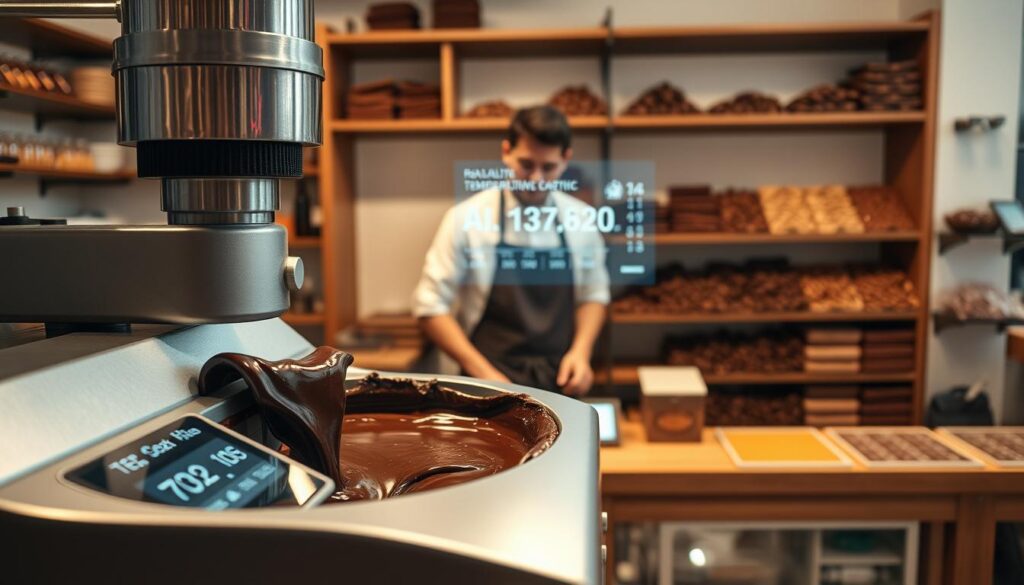
The benefits of AI in conching processes are multifaceted. By leveraging AI, chocolatiers can achieve enhanced flavor consistency and improved efficiency. AI systems can analyze vast amounts of data to predict the optimal conching time and conditions, reducing the risk of human error.
Moreover, AI-driven conching enables the creation of unique and complex flavor profiles that would be difficult to achieve manually. This opens up new possibilities for micro-batch makers to innovate and differentiate their products in a competitive market.
By leveraging AI conching technology, chocolate artisans can now fine-tune their conching processes with unprecedented accuracy. This advanced technology is not just about automating a traditional process; it’s about enhancing the art of chocolate making with precision and data-driven insights.
At the heart of AI conching technology are sophisticated sensors and monitoring systems. These components work together to track various parameters during the conching process, such as temperature, humidity, and particle size distribution. The data collected is then used to make real-time adjustments, ensuring that the chocolate achieves the desired texture and flavor profile.
Key sensors used in AI conching technology include:
| Sensor Type | Function | Benefit |
|---|---|---|
| Temperature Sensors | Monitor and adjust temperature | Consistent flavor development |
| Humidity Sensors | Control moisture levels | Prevents bloom and ensures smooth texture |
| Particle Size Analyzers | Analyze and adjust particle size | Optimal texture and mouthfeel |
AI conching technology doesn’t just stop at data collection; it also provides advanced data analysis capabilities. By analyzing the data collected during the conching process, AI systems can identify patterns and correlations that may not be apparent to human chocolatiers. This enables the creation of complex, nuanced flavor profiles that are consistent across batches.
“The use of AI in conching has allowed us to achieve a level of consistency and quality that was previously unattainable. It’s been a game-changer for our micro-batch chocolate production.” – Expert Chocolatier
The AI system can also predict how different variables will affect the final product, allowing for adjustments to be made in real-time. This predictive capability is particularly valuable for micro-batch makers who need to ensure that every batch meets their high standards.
As you continue to explore AI conching technology, you’ll find that its capabilities extend far beyond traditional conching methods. By embracing this technology, you can elevate your chocolate-making process, achieving greater precision, consistency, and quality in your products.
AI conching is transforming the chocolate production landscape, particularly for micro-batch makers who value precision and quality. By leveraging AI conching technology, you can significantly enhance your production process, resulting in higher quality chocolates with unique characteristics.
One of the primary advantages of AI conching is its ability to achieve enhanced consistency in texture. Traditional conching methods can be inconsistent, leading to variations in the final product. AI conching technology monitors and adjusts the conching process in real-time, ensuring that every batch meets your desired texture specifications.
To achieve this consistency, AI conching systems follow a precise process:
AI conching also offers the benefit of improved efficiency and reduced waste. By optimizing the conching process, AI technology can reduce the time and energy required to produce high-quality chocolate. This not only saves resources but also minimizes waste generated during production.
The steps involved in improving efficiency include:
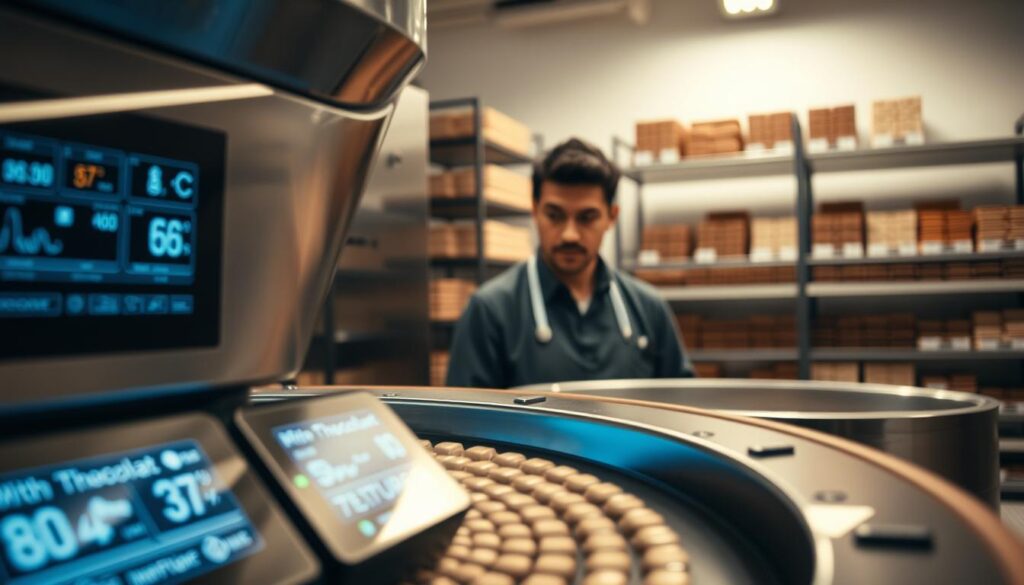
Another significant advantage of AI conching is the ability to create customizable profiles for unique chocolates. This allows you to experiment with different flavor profiles and textures, catering to a wide range of consumer preferences.
To create these unique profiles, you can:
By embracing AI conching, micro-batch makers can not only improve their production efficiency and consistency but also innovate and differentiate their products in a competitive market.
When it comes to AI-driven conching, selecting the right equipment is crucial for micro-batch chocolate makers. The process involves more than just purchasing any AI conching machine; it’s about finding the one that aligns with your production needs and quality standards.
Several leading brands have emerged in the AI conching technology space, offering innovative solutions for micro-batch chocolate production. Some of the top brands include:
When selecting AI conching equipment, several factors come into play. Consider the following:
By carefully evaluating these factors and exploring offerings from top brands, you can make an informed decision when investing in AI conching technology for your micro-batch chocolate production.
Real-time data is transforming the way micro-batch makers approach conching. By leveraging AI-driven technology, you can now monitor and control the conching process with unprecedented precision.
The ability to track conching variables in real-time is a significant advantage. This includes monitoring temperature, moisture levels, and particle size distribution. With this data, you can make informed decisions to optimize the conching process.
To effectively track conching variables, follow these steps:
By closely monitoring these variables, you can identify areas for improvement and make adjustments in real-time.
Analyzing the results of your conching process is crucial for continuous improvement. By examining the data collected during conching, you can refine your techniques and achieve better outcomes.
A key aspect of this analysis is Texture Analysis. Understanding the texture of your chocolate is vital for producing high-quality products. AI conching technology provides detailed insights into the texture, allowing you to make precise adjustments.
“The use of AI in conching has allowed us to achieve a consistency in texture that was previously unattainable. It’s been a game changer for our micro-batch chocolate production.” – Expert Chocolate Maker
The benefits of real-time data and insights in AI conching can be summarized in the following table:
| Benefit | Description | Impact |
|---|---|---|
| Improved Texture | Real-time monitoring of particle size distribution | Consistent, high-quality chocolate |
| Optimized Conching Time | Data-driven adjustments to conching duration | Reduced waste and improved efficiency |
| Enhanced Flavor Profile | Monitoring and control of temperature and moisture | Unique and complex flavor profiles |
By embracing real-time data and insights, you can take your micro-batch chocolate production to the next level, achieving unparalleled quality and consistency.
To maximize the benefits of AI conching, micro-batch makers must invest time in learning how to effectively utilize this technology. As you begin to integrate AI conching into your chocolate production, you’ll discover that the initial learning curve is a worthwhile investment.
The complexity of AI conching systems can be daunting at first, but most manufacturers provide comprehensive training programs. These programs are designed to help you understand the nuances of the technology, including how to optimize flavor profiles and manage the conching process.
For instance, understanding the Baker’s percentage is crucial when formulating recipes for AI conching. This system allows you to scale ingredient quantities based on the total flour weight, ensuring consistency across batches.
| Ingredient | Baker’s Percentage (%) |
|---|---|
| Cocoa Beans | 100 |
| Sugar | 50 |
| Cocoa Butter | 20 |
| Milk Powder | 10 |
By mastering the Baker’s percentage, you can fine-tune your recipes to achieve the desired flavor and texture profiles. This level of precision is a hallmark of successful AI conching.
Beyond the initial training, AI conching technology providers often offer ongoing support to help you troubleshoot issues and optimize your processes. This support can include online resources, customer service hotlines, and regular software updates.
Continuous learning is key to getting the most out of your AI conching system. By staying up-to-date with the latest developments and best practices, you can ensure that your chocolate production remains competitive and innovative.
As you continue to work with AI conching technology, you’ll find that the benefits extend beyond just the production process. The data insights and analytics provided by these systems can help you refine your recipes, reduce waste, and improve overall efficiency.
Successful implementations of AI conching have been reported by several artisan chocolate makers who have integrated this technology into their production processes. These case studies highlight the benefits and experiences of micro-batch producers who have adopted AI-driven conching.
Several artisan chocolate makers have successfully incorporated AI conching into their production lines. For instance, Michel Cluizel, a renowned French chocolatier, has adopted AI conching to enhance the texture and flavor profile of their chocolates. By leveraging Smart Conching technology, they have achieved a more consistent and refined product.
You can benefit from AI conching by improving the quality and consistency of your chocolate products. The use of advanced sensors and monitoring systems allows for real-time adjustments, ensuring optimal conching conditions.
Industry experts report that AI conching has not only improved the efficiency of their production processes but also reduced energy consumption. A case study on Energy Efficiency in AI conching revealed significant cost savings for micro-batch producers.
| Company | AI Conching Benefits | Energy Savings |
|---|---|---|
| Michel Cluizel | Improved texture and flavor consistency | 20% |
| Bean-to-Bar Chocolate | Enhanced flavor profile optimization | 15% |
| Artisan Chocolates | Increased production efficiency | 25% |
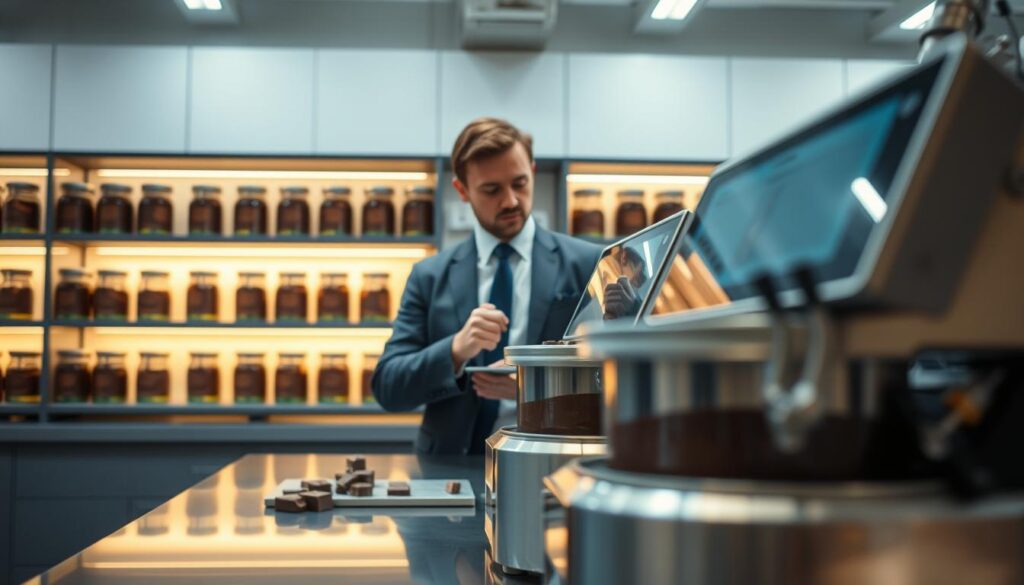
By adopting AI conching technology, you can achieve similar benefits, including improved product quality and reduced energy consumption. As the chocolate industry continues to evolve, the integration of AI in conching processes is expected to become increasingly prevalent.
The integration of AI in conching processes not only enhances chocolate quality but also addresses environmental concerns. As the chocolate industry moves towards more sustainable practices, AI conching technology plays a crucial role in reducing the environmental footprint of chocolate production.
One of the significant environmental benefits of AI conching is its ability to optimize energy consumption. By leveraging IoT devices and real-time data analysis, AI conching systems can monitor and adjust energy usage during the conching process. Here are the steps involved in reducing energy consumption:
By adopting these measures, micro-batch chocolate makers can significantly reduce their energy consumption, contributing to a more sustainable chocolate production process.
Beyond energy consumption, AI conching technology promotes sustainable practices throughout chocolate production. This includes:
As noted by a leading chocolatier, “Sustainability is no longer a choice but a necessity in the chocolate industry. AI conching is a step in the right direction.”
“The future of chocolate making lies in embracing technology that not only improves our products but also our environmental stewardship.”
To illustrate the impact of AI conching on sustainability, consider the following comparison:
| Practice | Traditional Conching | AI Conching |
|---|---|---|
| Energy Consumption | High | Optimized |
| Waste Reduction | Limited | Significant |
| Sourcing Practices | Variable | Improved |
By adopting AI conching technology, you can not only enhance the quality of your chocolate but also contribute to a more sustainable future for the industry.
The future of chocolate making is being reshaped by AI-driven conching technology. As we look ahead, it’s clear that AI conching will continue to play a pivotal role in the evolution of the chocolate industry, especially for micro-batch makers.
With the advancements in Smart Conching, the ability to precision-texturize chocolate will become more accessible, allowing for a wider range of flavors and textures. This technology is not just about maintaining consistency but also about pushing the boundaries of what is possible in chocolate making.
Several innovations are on the horizon that will further transform the landscape of chocolate making. These include:
These advancements will enable micro-batch chocolate makers to experiment with new recipes and flavor profiles, leveraging the power of AI to create truly unique chocolates.
As AI conching technology becomes more prevalent, we can expect the micro-batch chocolate industry to become even more diverse and vibrant. Here are some predictions:
To illustrate the potential of AI conching, let’s consider a sample recipe that combines traditional techniques with modern AI-driven precision. The following table outlines a basic dark chocolate recipe using Baker’s percentage:
| Ingredient | Baker’s Percentage (%) |
|---|---|
| Cocoa Beans | 100 |
| Sugar | 40 |
| Cocoa Butter | 20 |
| Milk Powder | 10 |
By adjusting these percentages and using AI conching, micro-batch makers can fine-tune their recipes to achieve the desired flavor and texture profiles.
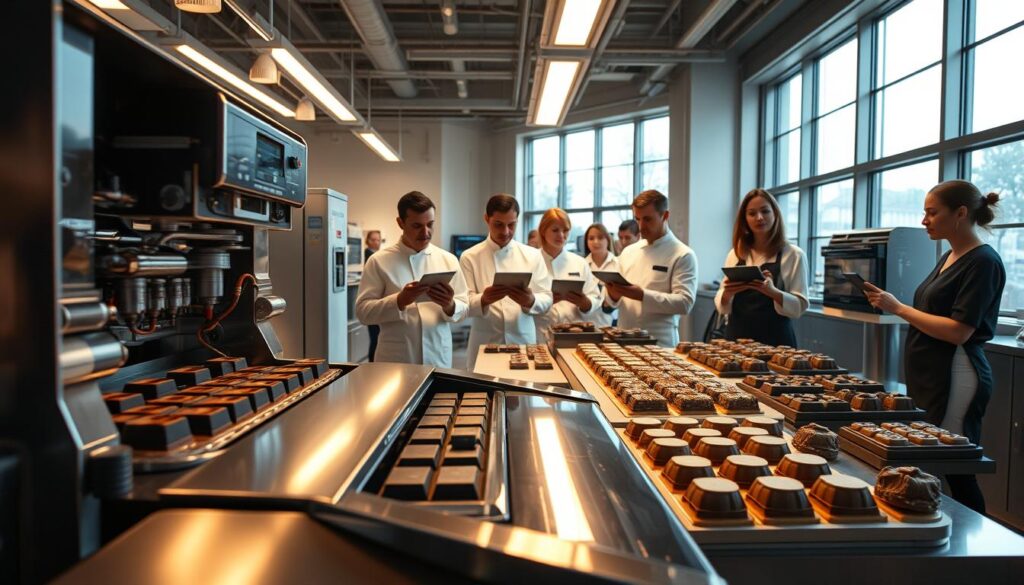
As the chocolate industry continues to evolve, embracing AI conching technology will be key to staying competitive and innovative. By leveraging these advancements, micro-batch chocolate makers can look forward to a future filled with new possibilities and unparalleled quality.
As you explore the possibilities of AI-driven conching, it’s clear that this technology is revolutionizing the chocolate-making process. By leveraging Energy Efficiency, advanced Texture Analysis, and IoT connectivity, micro-batch makers can achieve unparalleled quality and consistency.
With AI conching, you can optimize your chocolate production for unique flavor profiles and textures. This technology enables real-time monitoring and adjustments, ensuring that every batch meets your high standards.
As the chocolate industry continues to evolve, embracing AI conching technology will be key to staying ahead of the curve. By integrating IoT and Energy Efficiency into your production process, you’ll not only improve your bottom line but also contribute to a more sustainable future.
By adopting AI conching, you’ll be well-positioned to capitalize on the growing demand for artisanal chocolates with precise texture and flavor profiles.