All the world of cacao in one click.

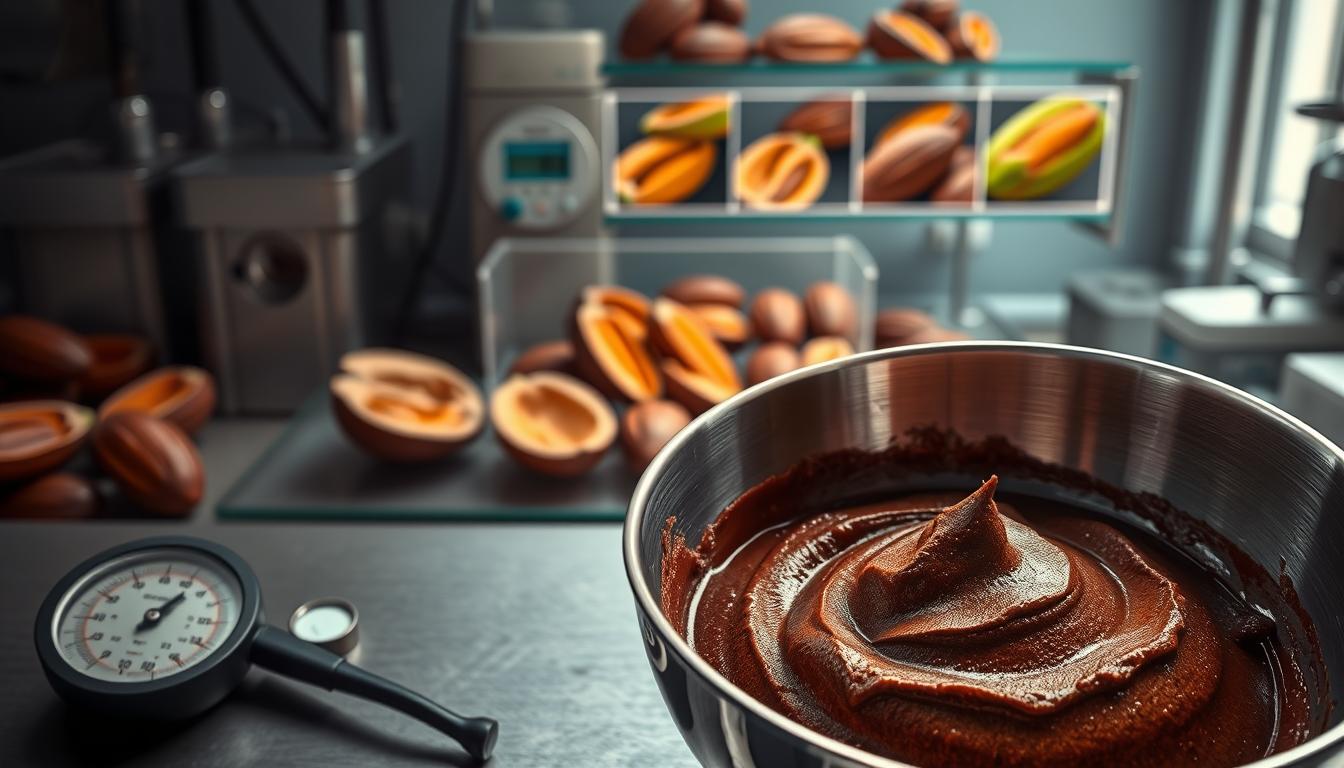
Master the art of Cacao Sorbet Tech with this tutorial on balancing total solids for heat resistance.
Creating a high-quality frozen dessert requires more than just mixing basic ingredients together. You need to master the balance of total solids to ensure your final product survives the heat. These solids include the sugars and cocoa particles that provide essential structure and prevent rapid melting. Mastering these elements allows you to produce a consistent and velvety texture every time.
Understanding the relationship between water and dry mass is vital for any professional pastry chef. It ensures that your creations maintain their form even when served at outdoor events or in warm dining rooms. A well-calculated formula leads to a smoother mouthfeel that your customers will truly appreciate. This professional method follows a Clean Label strategy to keep your ingredients simple yet highly effective.
You will find that balancing percentages is the ultimate secret to achieving elite results in a busy kitchen. By focusing on these specific ratios, you can elevate the overall quality of your frozen treats. Precision is the foundation of excellence in the world of modern confectionery. Follow this guide to transform your approach to frozen dessert formulation.
To achieve the best results, use the following professional ratios. These percentages are based on the total weight of the mixture to ensure perfect heat resistance and stability.
| Ingredient | Percentage (%) |
|---|---|
| Water | 64% |
| Sucrose/Glucose Blend | 22% |
| Cocoa Powder (22/24% Fat) | 12% |
| Natural Fiber Stabilizer | 2% |
| Total | 100% |
The science behind sorbet texture is closely linked to managing water activity effectively. Understanding this relationship is key to producing high-quality sorbet.
The texture of sorbet is a critical factor in its overall quality. Water activity significantly influences this texture, making its management crucial in sorbet production.
Water activity refers to the amount of water available for chemical reactions and microbial growth in a product. In the context of sorbet, it affects the formation of ice crystals, which can lead to an icy texture.
When water activity is not properly managed, it can result in the growth of large ice crystals, giving the sorbet an unpleasant texture. Hydrocolloids can be used to control water activity and improve the texture of sorbet. By incorporating hydrocolloids into your sorbet recipe, you can effectively manage water activity and achieve a smoother texture.

The use of hydrocolloids in sorbet production is a practical application of Sorbet Physics. By understanding how hydrocolloids interact with water and other ingredients, you can create a sorbet that is not only delicious but also has a desirable texture.
To manage water activity effectively, it’s essential to understand its impact on sorbet texture. Here are some key considerations:
By applying these principles, you can produce a sorbet with a smooth and creamy texture, enhancing the overall consumer experience.
To create a sorbet that delights the palate, it’s essential to grasp the importance of Brix levels. The Brix scale measures the sugar content in a solution, which has a direct impact on the texture and taste of your sorbet.
The mouthfeel of your sorbet is significantly influenced by its Brix level. A sorbet with the optimal Brix level will have a smooth texture that is neither too icy nor too sweet. Understanding and achieving the right Brix level is crucial for a palatable sorbet.
The Brix level is a measure of the weight of sugar in a solution, expressed as a percentage. For instance, a Brix level of 30 means that there are 30 grams of sugar per 100 grams of solution. This measurement is vital because it directly affects the freezing point and texture of your sorbet.
When the Brix level is too low, the sorbet may become too icy due to the higher water content. Conversely, a Brix level that is too high can make the sorbet overly sweet and potentially lead to an unpleasant texture.
Measuring Brix levels is a straightforward process that involves using a refractometer. This tool measures the refractive index of a solution, which correlates to its sugar content.
To measure Brix levels accurately:
By adjusting your recipe based on the Brix level, you can achieve the perfect balance for a smooth and enjoyable sorbet. It’s also worth noting that the ideal Brix level may vary depending on the specific ingredients and desired texture of your sorbet.
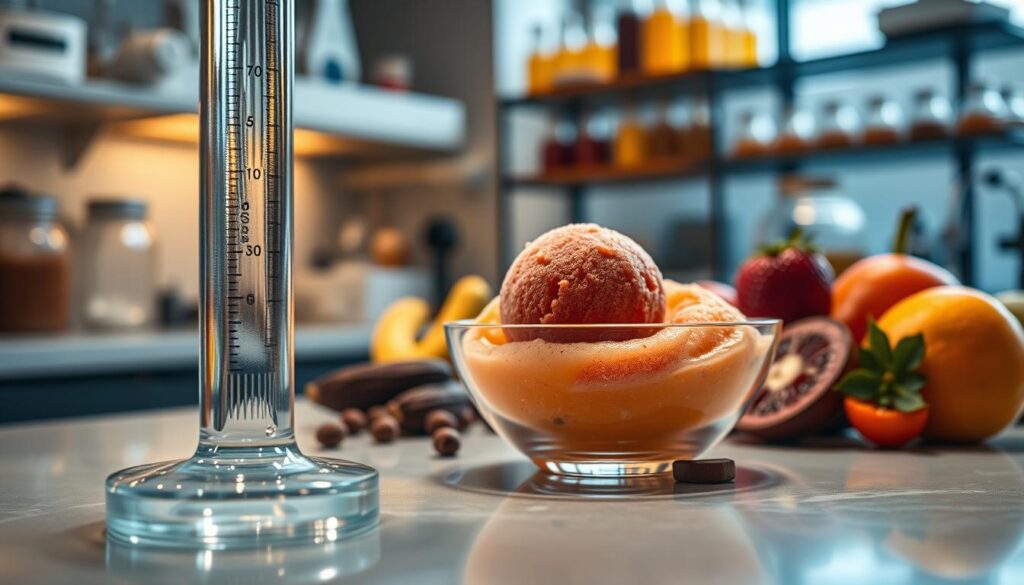
To create a high-quality cacao sorbet that meets clean label standards, you need to understand the importance of ingredient selection and processing techniques. The sorbet mixture typically consists of water, sugar, and high-quality cacao. By adjusting the ratio of these ingredients and controlling the processing conditions, you can produce a sorbet that is both delicious and resistant to ice crystal formation.
Preventing ice crystals in high heat requires a deep understanding of Sorbet Physics. By optimizing the Brix levels and managing water activity, you can create a sorbet that remains smooth and creamy even in challenging conditions. This involves carefully calibrating the mixture to achieve the ideal balance between sugar content and water activity.
By following these guidelines and using high-quality ingredients, you can produce a clean label cacao sorbet that delivers exceptional taste and texture. The result is a delicious and refreshing dessert that meets the demands of discerning consumers.