All the world of cacao in one click.

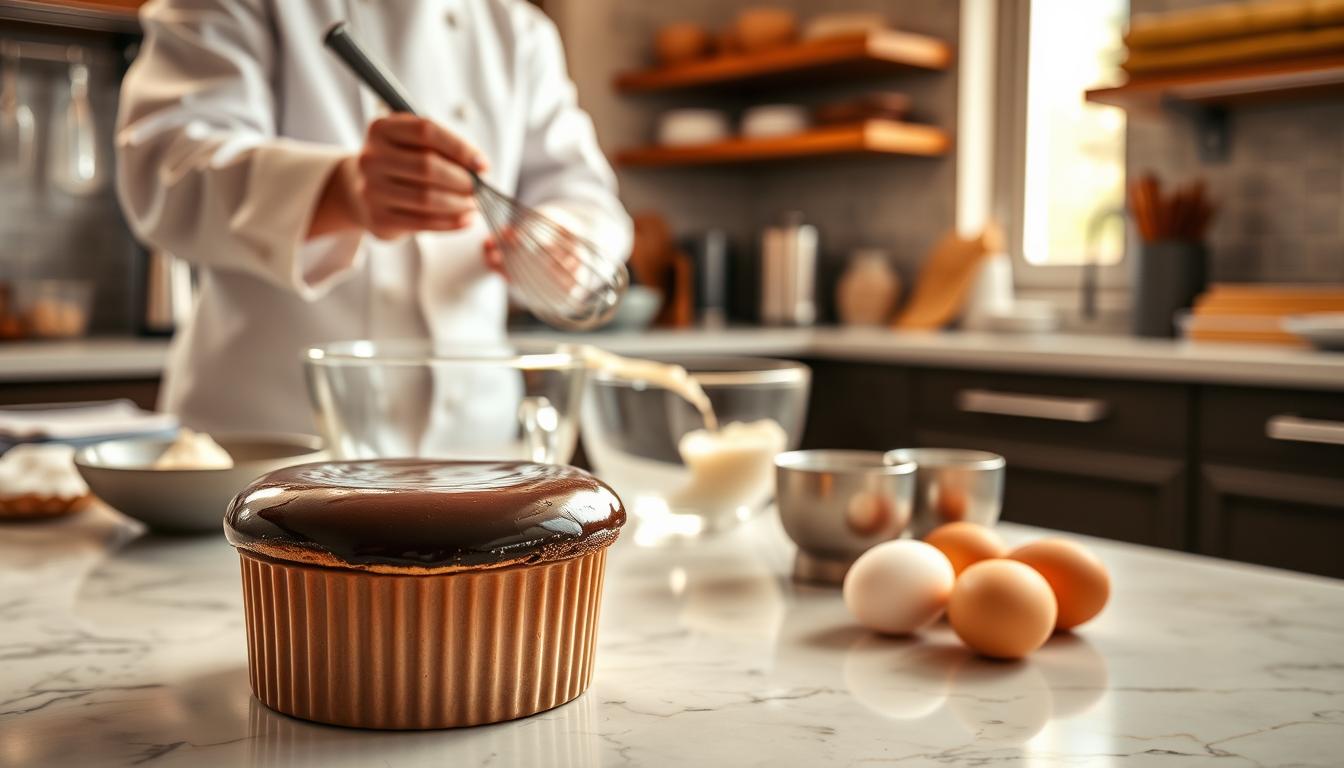
Elevate your dessert game with our Chocolate Soufflé Masterclass. Discover the secrets to baking a light, airy, and indulgent soufflé.
Welcome to the Chocolate Soufflé Masterclass, where you’ll master the art of creating a perfect dessert. You’ll learn the intricacies of working with high-quality dark chocolate and how it elevates your soufflé.
To achieve perfection, it’s crucial to start with the right ingredients and preparation techniques. This includes properly coating your ramekins to ensure a smooth release.
In this masterclass, you’ll be guided through preparing the ideal chocolate base, understanding the importance of ingredient ratios, and executing the soufflé to perfection.
The soufflé, with its airy texture and dramatic rise, is a culinary masterpiece that demands attention to detail. At its core, a soufflé is a delicate balance of ingredients and technique, making it a challenging yet rewarding dish to master.
A soufflé’s success hinges on several fundamental elements. First, it’s crucial to understand the role of temperature and timing in the baking process. Preheating your oven to the correct temperature is vital, as is ensuring that your ingredients are at room temperature before you begin.
To achieve the perfect rise, you must also prepare your ramekins properly. Ramekin coating is a critical step that involves buttering the ramekins and then coating them with a layer of sugar or breadcrumbs. This not only helps the soufflé rise evenly but also adds flavor.
The ingredients you choose play a significant role in the stability and rise of your soufflé. Egg whites are particularly crucial, as they provide the structure and lift. Ensuring that your egg whites are at room temperature and free from any yolk residue is essential for achieving egg white stability.
Understanding the science behind egg whites and how they contribute to the soufflé’s structure is key to mastering this dish.
| Ingredient | Role in Soufflé | Tips for Preparation |
|---|---|---|
| Egg Whites | Provides structure and lift | Ensure room temperature and free from yolk residue |
| Sugar/Breadcrumbs | Adds flavor and aids in rise | Use granulated sugar or fine breadcrumbs for coating ramekins |
| Butter | Enhances flavor and aids in release | Generously butter ramekins before adding sugar/breadcrumbs |
By understanding the basics of soufflé preparation and the critical role of ingredients, you’ll be well on your way to creating a dish that’s sure to impress. Remember, practice makes perfect, so don’t be discouraged by initial failures.
To achieve a sublime chocolate soufflé, you must first master the art of creating its chocolate base. This crucial component is what sets a great soufflé apart from a merely good one. The chocolate base is responsible for the deep, rich flavor that characterizes a well-made chocolate soufflé.
When it comes to crafting this base, the quality of the chocolate you use is paramount. You will need to select a high-quality dark chocolate that is rich in cocoa solids. This type of chocolate not only provides a deeper flavor but also contributes to the soufflé’s structure.
The choice of chocolate can make or break your soufflé. For a Chocolate Soufflé Masterclass, it’s recommended to use dark chocolate with at least 70% cocoa content. This percentage ensures that your soufflé has a robust, intense chocolate flavor without being overly sweet.
When selecting your chocolate, consider the cocoa content and the processing methods. High-quality chocolate will have a smoother, more refined texture and a more complex flavor profile.
Once you have selected your chocolate, the next step is to melt it properly. Melting chocolate can be a delicate process, as it can easily seize up or become too grainy. To avoid this, melt your chocolate slowly over a double boiler or in the microwave in short, controlled bursts, stirring between each heating.
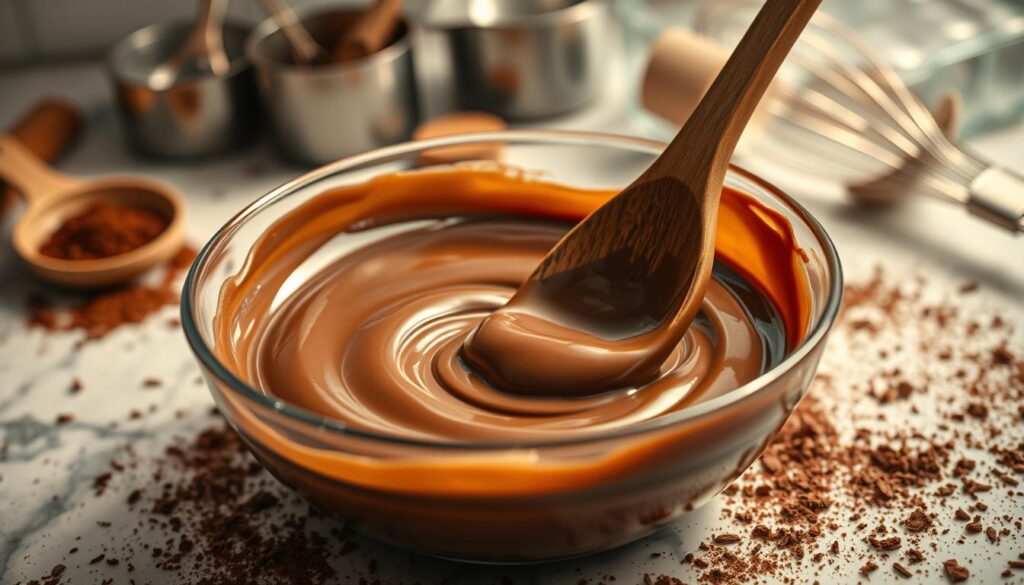
The goal is to achieve a smooth, glossy chocolate that is fully melted and ready to be incorporated into your soufflé base. This melting technique is crucial for ensuring that your soufflé has a uniform texture and flavor.
By mastering the art of creating the chocolate base, you will be well on your way to crafting a truly exceptional chocolate soufflé. Remember, the key to success lies in the quality of your ingredients and the care with which you prepare them.
To create a soufflé that rises to perfection, it’s essential to grasp the science behind egg white stability. Egg whites are a crucial component, providing the structure and lift that characterizes a well-made soufflé.
Egg whites are primarily composed of proteins and water. When beaten, the proteins unwind and reorganize into a network that traps air, creating a stable foam. This process is fundamental to achieving the desired texture in a soufflé.
Beating egg whites to the correct consistency is a nuanced process. Here are the steps to achieve stiff peaks:
The table below summarizes the stages of beating egg whites and their characteristics:
| Stage | Description | Characteristics |
|---|---|---|
| Frothy | Initial stage of beating | Bubbles are large and visible |
| Soft Peaks | After adding stabilizer and continuing to beat | Peaks that flop over |
| Stiff Peaks | Final stage after gradual addition of sugar | Peaks stand straight, glossy finish |
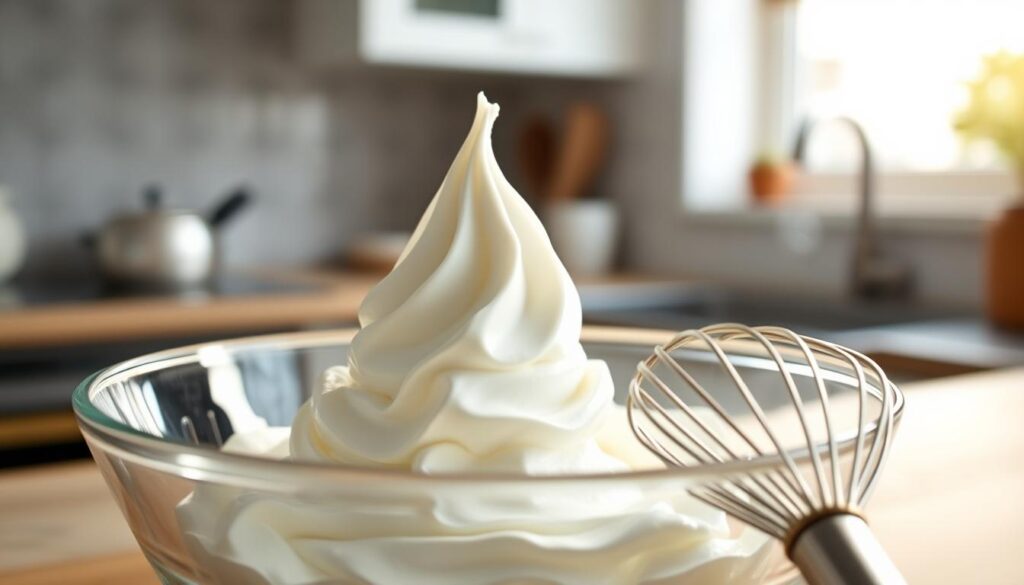
Mastering the art of beating egg whites to stiff peaks is a skill that requires practice. With patience and the right technique, you’ll be able to achieve the perfect soufflé.
To achieve a light and airy soufflé, mastering the folding technique is essential. This process requires patience and a gentle touch to preserve the airy texture of the egg whites.
The key to a successful soufflé lies in gently folding the egg whites into the chocolate base. Start by taking a quarter of the egg whites and gently mixing them into the chocolate base to lighten it. Then, pour the chocolate mixture into the remaining egg whites.
Using a spatula, gently cut through the mixture, folding it over on itself. Continue this process until no white streaks remain, being careful not to deflate the egg whites.
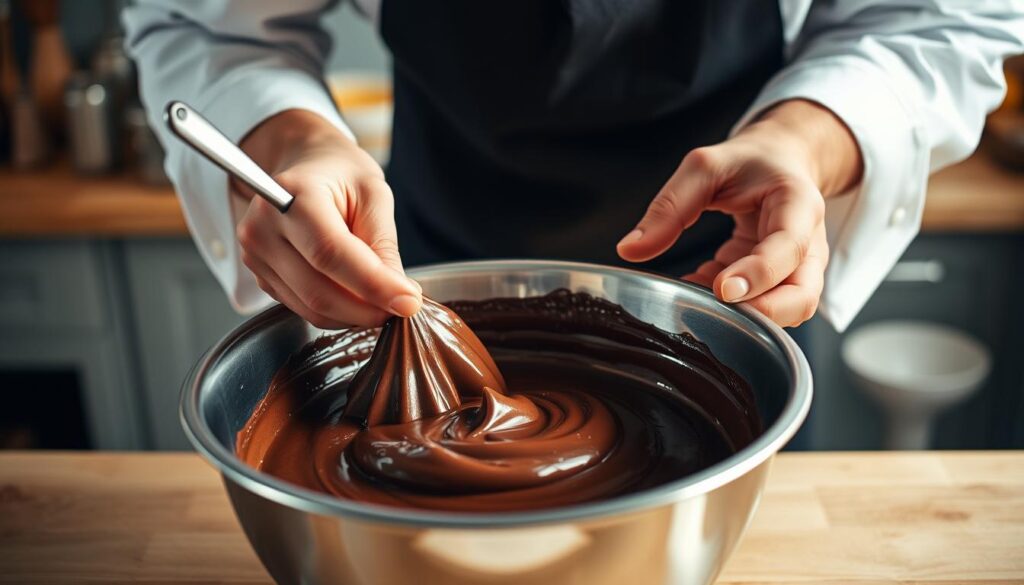
One of the most common mistakes in folding is over-mixing. This can cause the soufflé to lose its airy texture and collapse. To avoid this, fold the mixture just until it’s combined.
Another mistake is not properly preparing the egg whites. Ensure they are at room temperature and free of any yolk residue before beating.
Here’s a quick reference for the ingredients and their proportions in baker’s percentages for your chocolate soufflé:
| Ingredient | Baker’s Percentage (%) |
|---|---|
| High-quality dark chocolate | 100% |
| Egg Yolks | 50% |
| Egg Whites | 150% |
| Sugar | 25% |
By mastering the folding technique and using high-quality dark chocolate, you’ll be well on your way to creating a decadent and airy chocolate soufflé that will impress your guests.
To achieve a perfectly baked chocolate soufflé, understanding your oven’s convection setting is crucial. Oven convection affects the rise and texture of your soufflé, making it essential to adjust your baking time and temperature accordingly.
Oven convection can either enhance or detract from your soufflé’s structure, depending on how it’s utilized. When using convection, the circulating hot air can help maintain egg white stability, a critical factor in soufflé baking.
The key to a successful soufflé lies in precise timing. You must balance the baking time with the temperature to ensure your soufflé rises perfectly. A well-timed soufflé will have a delicate crust and a creamy center, making it a true masterpiece of soufflé baking.
By mastering oven convection and timing, you’ll be well on your way to creating exquisite chocolate soufflés that will impress anyone.