All the world of cacao in one click.

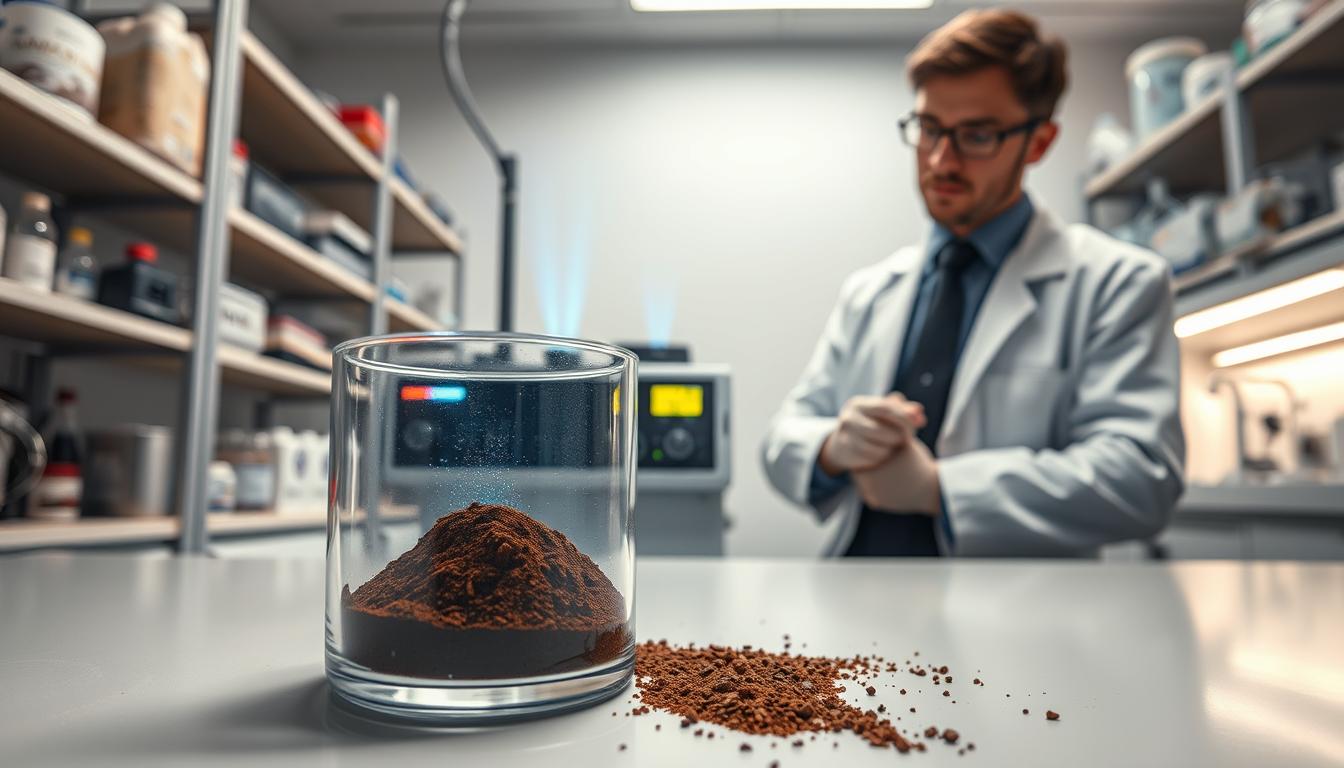
Discover how cold plasma sterilization can improve the safety of your cocoa powder. Learn the benefits of this non-thermal processing technique in this informative tutorial.
As a professional in the food industry, you understand the importance of ensuring the safety and quality of your products. One critical aspect is the microbial decontamination of ingredients like cocoa powder. Cold Plasma Sterilization is an innovative, non-thermal processing technique that effectively reduces microbial contamination without compromising the nutritional value or flavor of the cocoa powder.
By implementing Cold Plasma Sterilization, you can significantly enhance the safety and shelf life of your final product. This method is crucial for preserving the quality of your cocoa powder, making it an essential step in your production process.
As the demand for safe and high-quality food products grows, non-thermal sterilization techniques like cold plasma are becoming increasingly important. You are likely aware that traditional sterilization methods often involve high temperatures, which can be detrimental to the quality of certain food products. Non-thermal sterilization offers a solution to this problem.
Non-thermal sterilization techniques, such as cold plasma, are gaining attention for their ability to decontaminate food products without the use of high temperatures. This method is particularly useful for products that are sensitive to heat, ensuring that the nutritional value and flavor are preserved.
Cold plasma technology works by exposing the beans to a cold plasma field, which generates reactive species that effectively inactivate microbial contaminants. This process is crucial for Salmonella prevention, a critical concern in the production of cocoa powder.
The process involves several key steps:
“The use of cold plasma for sterilization purposes represents a significant advancement in food safety technology.” By leveraging cold plasma technology, you can ensure that your cocoa beans are thoroughly decontaminated, resulting in safer cocoa powder.
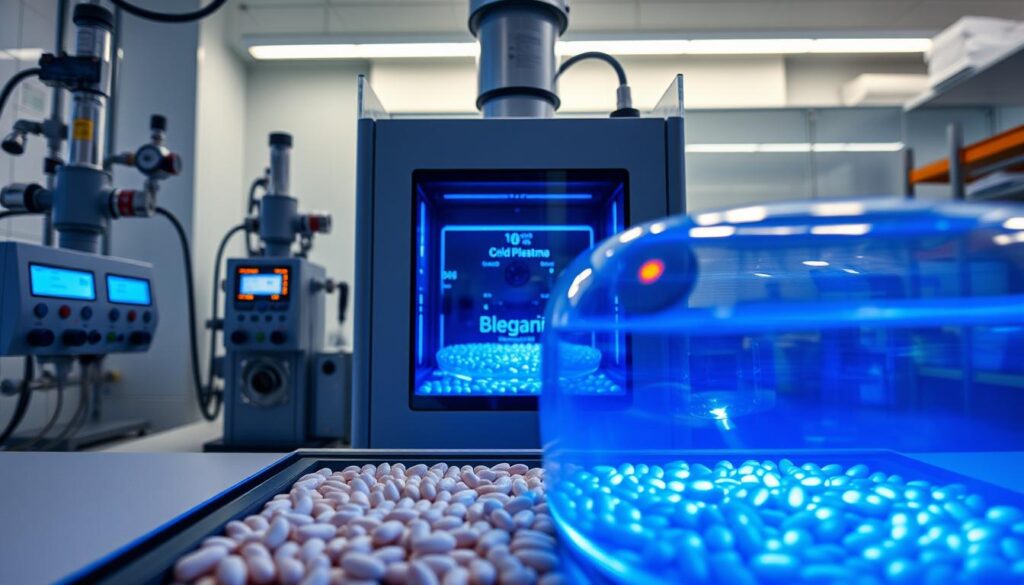
The effectiveness of cold plasma in killing pathogens makes it an invaluable tool in the production of safe and high-quality cocoa powder. As you continue to explore non-thermal sterilization methods, it’s clear that cold plasma has a significant role to play in the future of food safety.
Cocoa powder’s flavor profile can be meticulously maintained through the application of cold plasma sterilization, a non-thermal process. You benefit from a method that not only ensures the microbial safety of your cocoa powder but also preserves its delicate flavor compounds and nutritional content.
Cold plasma technology operates at low temperatures, making it an ideal sterilization method for heat-sensitive products. Unlike traditional thermal sterilization techniques, cold plasma sterilization retains the nutrient content and flavor profile of cocoa powder, providing a superior quality product.
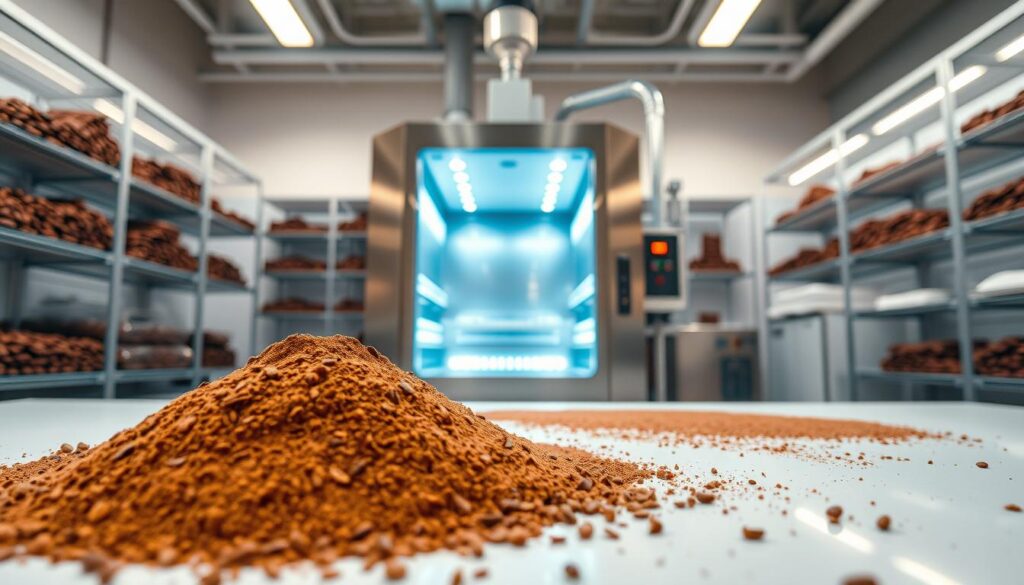
When you choose cold plasma sterilization, you’re opting for a process that effectively achieves microbial decontamination without compromising the product’s quality. This method is particularly beneficial for cocoa powder, as it maintains the product’s natural flavor and nutritional properties.
By adopting cold plasma sterilization, you can ensure that your cocoa powder meets the highest standards of quality and safety while maintaining its unique flavor profile and nutritional value. This approach not only enhances the product’s appeal to consumers but also contributes to a healthier and more sustainable food processing practice.
Optimizing the energy consumption of plasma systems is essential for sustainable cold plasma sterilization. As you integrate this technology into your production line, understanding how to manage energy usage effectively is crucial.

To ensure that your cold plasma sterilization process is energy-efficient, several factors need to be considered. These include the design of the plasma system, the operating parameters, and the type of material being sterilized.
Key factors influencing energy efficiency:
To optimize your plasma system for energy efficiency, follow these steps:
By following these steps and continually monitoring your system’s performance, you can significantly reduce the energy consumption of your cold plasma sterilization process, making it more sustainable and cost-effective.
To ensure the safe consumption of cocoa powder treated with cold plasma sterilization, you must implement strict safety protocols. This includes measures for Salmonella prevention, a critical step in safeguarding public health. By verifying that your process effectively eliminates pathogens, you can confidently market your product as safe.
Regulatory compliance is also crucial. You must obtain necessary approvals to demonstrate that your cold plasma sterilization process retains the nutritional value of the cocoa, ensuring Nutrient retention. By adhering to these guidelines, you can produce high-quality cocoa powder that meets or exceeds regulatory standards.
By following these safety protocols and obtaining regulatory approval, you can ensure that your cold plasma sterilization process is both effective and compliant with industry regulations.