All the world of cacao in one click.

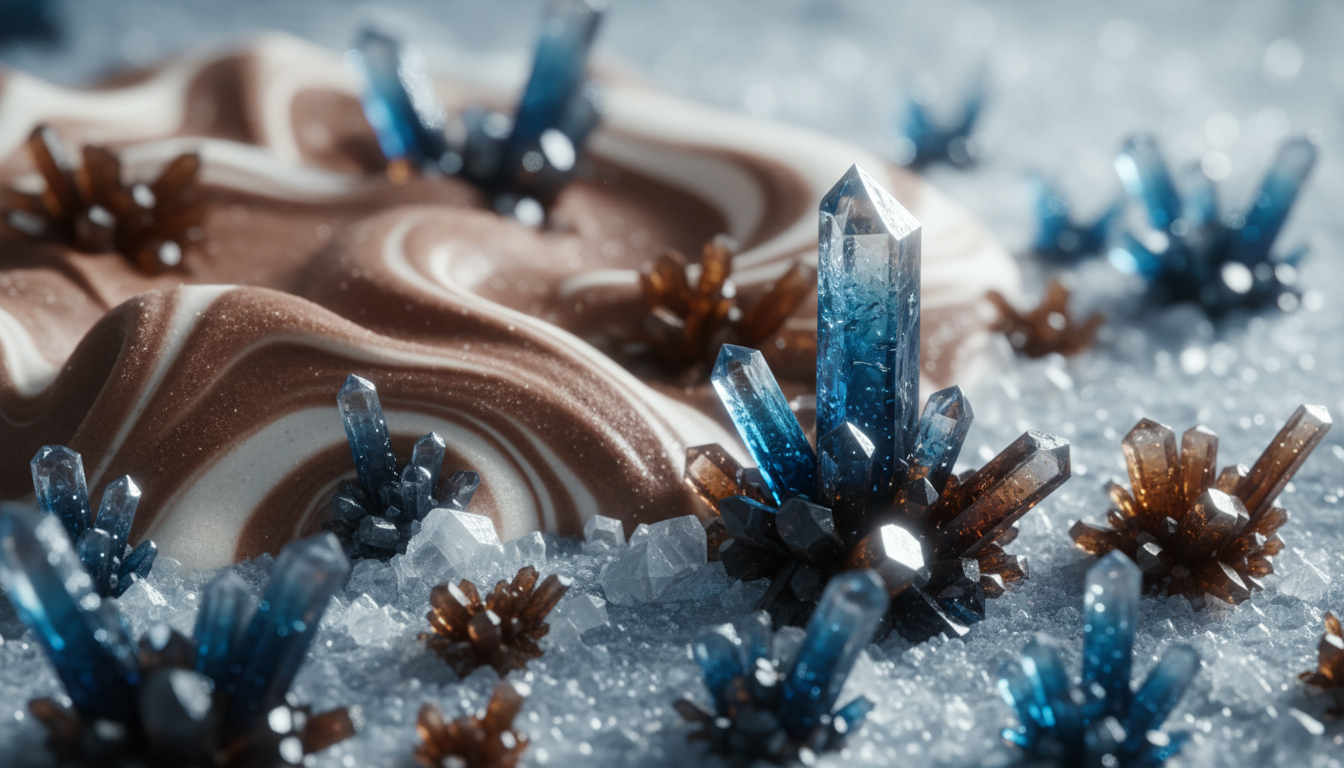
Unlock the creaminess of cryo gelato with our step-by-step guide. Explore the science behind fast-freezing for a luxurious texture.
Achieving a luxurious texture in your frozen desserts requires more than just high-quality ingredients. You must master the delicate balance of ice science to ensure every spoonful is velvety. By accelerating the cooling process, you minimize crystal growth effectively.
Smaller structures lead to a much smoother mouthfeel that defines professional cocoa treats. This method focuses on rapid temperature drops to maintain peak quality. Use the specific ratios in the table below to prepare your base with precision.
| Ingredient | Baker’s Percentage (%) |
|---|---|
| Whole Milk | 100.0% |
| Heavy Cream | 25.0% |
| Granulated Sugar | 18.5% |
| Cocoa Powder (Dutch-processed) | 7.5% |
| Stabilizer Blend | 0.5% |
Precision is the foundation of texture. Follow these steps to execute the flash-freezing technique correctly:
Achieving the perfect silky texture in cocoa gelato involves understanding the physics behind ice crystal formation. When you freeze your gelato base, the water inside the mixture forms ice crystals. The size of these crystals is crucial for the final texture of your gelato.
If the freezing process is slow, these crystals can grow large, giving your gelato an icy texture. On the other hand, rapid freezing results in smaller ice crystals, contributing to a smoother gelato. This is where cryo-cooking techniques come into play, helping you achieve the right consistency by rapidly freezing the mixture.
To control crystal growth, you need to understand the process involved. Here are the steps to achieve the desired crystal size through cryo-cooking:
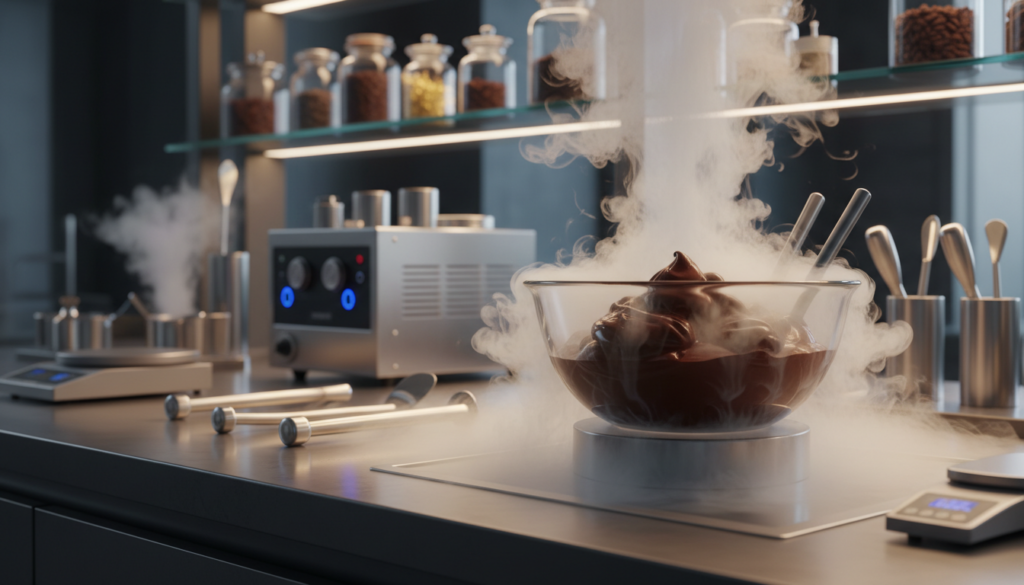
By following these steps and utilizing cryo-cooking techniques, you can significantly improve the texture of your flash-frozen cocoa gelato. The key is to ensure that your freezing method is capable of lowering the temperature quickly enough to prevent the formation of large ice crystals.
Understanding the principles behind cryo-cooking and how it applies to your gelato-making process is essential. This knowledge allows you to make adjustments as needed to achieve the perfect silky texture in your cocoa gelato.
The method you choose for freezing your cocoa gelato mixture significantly impacts its final texture and lipid profile. Both liquid nitrogen and batch freezers are popular choices, but they have different effects on your gelato.
Liquid nitrogen freezing is a rapid process that instantly freezes the mixture, preserving the delicate balance of lipids. On the other hand, batch freezers take longer to freeze the mixture, which can affect the lipid structure.
When comparing the two methods, it’s essential to consider the ingredients and their proportions in your gelato recipe. Here’s a breakdown of a typical cocoa gelato recipe using Baker’s percentage:
| Ingredient | Baker’s Percentage (%) |
|---|---|
| Cocoa | 20 |
| Sugar | 25 |
| Milk Fat | 12 |
| Cream | 30 |
The lipid profile of your gelato is crucial for its flavor and mouthfeel. The choice between liquid nitrogen and a batch freezer can significantly affect this profile.
The rapid freezing of liquid nitrogen helps in preserving the lipid structure, resulting in a smoother and creamier gelato. In contrast, batch freezers can cause a slight degradation of the lipid profile due to the longer freezing time.

To achieve the best results, you should consider the type of ingredients used and their proportions. For instance, a high-fat cocoa formula might benefit more from the rapid freezing of liquid nitrogen.
To create a luxurious and creamy gelato, you need a high-fat cocoa formula. This involves balancing ingredients using a Baker’s percentage to ensure the right proportions. A high-fat content enhances the texture and flavor of your gelato.
When applying the cryo-cooking technique to your high-fat cocoa gelato mixture, you can achieve a smooth and even freeze. This method allows you to preserve the delicate flavors and textures of your ingredients.
To make your high-fat cocoa gelato, combine 30% cocoa, 20% sugar, 15% whole milk, and 35% heavy cream. Use a cryo-cooking technique to freeze the mixture effectively. The result is a rich and creamy gelato that showcases the best qualities of your high-fat cocoa formula.
By following this recipe and utilizing the right freezing technique, you can produce a high-quality gelato that delights your customers. The cryo-cooking technique plays a crucial role in achieving the perfect texture and flavor.