All the world of cacao in one click.

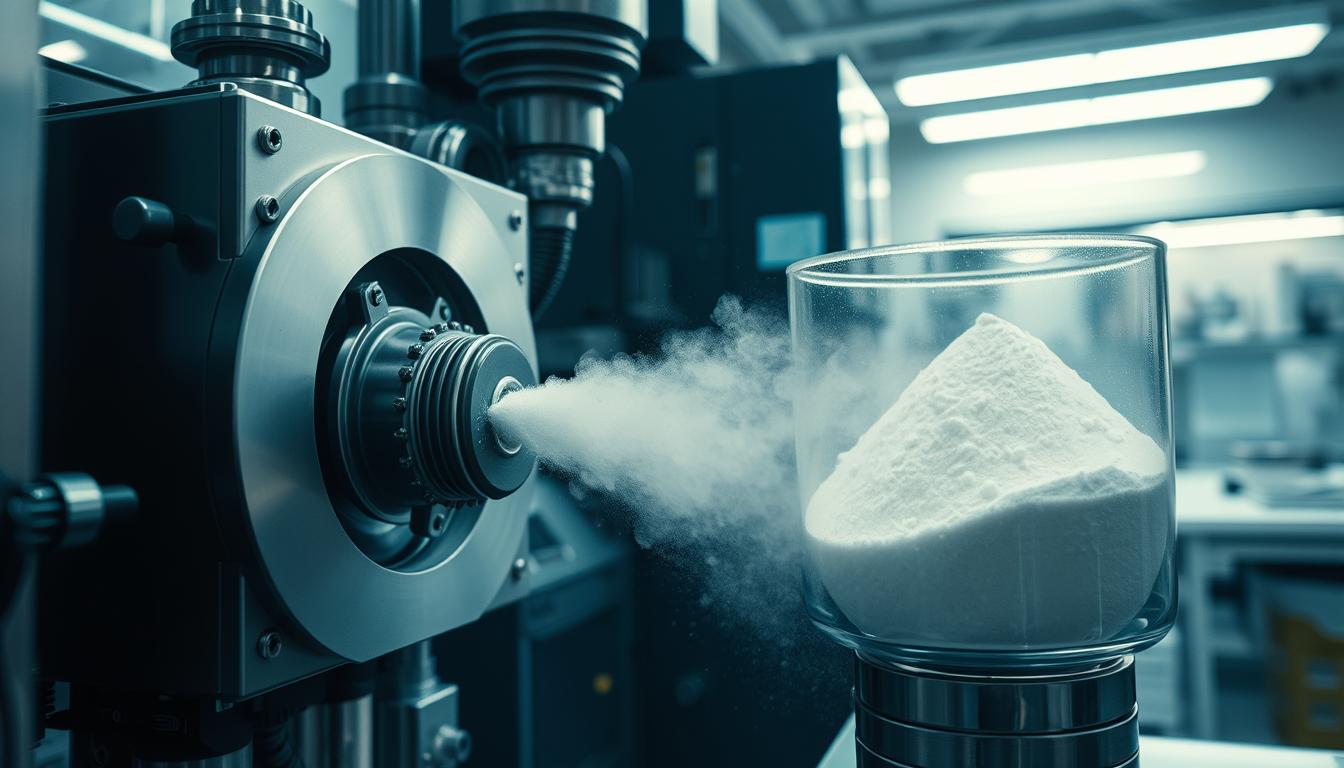
Discover the power of cryogenic grinding to create ultra-smooth ganaches. Our expert tutorial guides you step-by-step.
You’ve likely encountered ganaches with varying textures, but achieving sub-micron smoothness requires a precise technique. Cryogenic Milling is a process that utilizes liquid nitrogen to cool the grinding chamber, preserving the delicate flavors and aromas of the ingredients.
To start, you’ll need to prepare your ingredients, including high-quality chocolate and cream. The ingredients are then frozen and ground into a fine powder using a cryogenic grinder. This process results in a smooth and uniform ganache texture.
At cryogenic temperatures, the properties of ingredients change, facilitating the grinding process. When materials are cooled to extremely low temperatures, they become more brittle. This brittleness is crucial because it allows for a more efficient grinding process, resulting in a finer particle size.
The science behind this process lies in the thermodynamics and material science. As temperatures drop, the molecular structure of the ingredients becomes less flexible and more prone to fracture. This change significantly reduces the energy required to grind the materials into smaller particles.
Low temperatures are essential in grinding because they directly influence the final texture of the ganache. By controlling the temperature, you can achieve a more consistent and finer particle size. This consistency is vital for applications where texture plays a critical role.
For instance, in chocolate production, the smoothness of the ganache can significantly affect the final product’s quality. Cryogenic grinding ensures that the ganache achieves a uniform texture, enhancing the overall product quality.
| Temperature | Particle Size | Texture |
|---|---|---|
| Room Temperature | 100-500 microns | Coarse |
| Cryogenic Temperature | 1-15 microns | Smooth |
As illustrated in the table, cryogenic temperatures result in significantly finer particle sizes compared to grinding at room temperature. This difference is due to the increased brittleness of the ingredients at lower temperatures.
“Cryogenic grinding has revolutionized our production process by allowing us to achieve previously unattainable textures.” – Expert in Food Processing
The benefits of cryogenic grinding extend beyond just achieving a finer particle size. It also helps in preserving the delicate compounds within the ingredients, which is a topic we’ll explore in later sections.
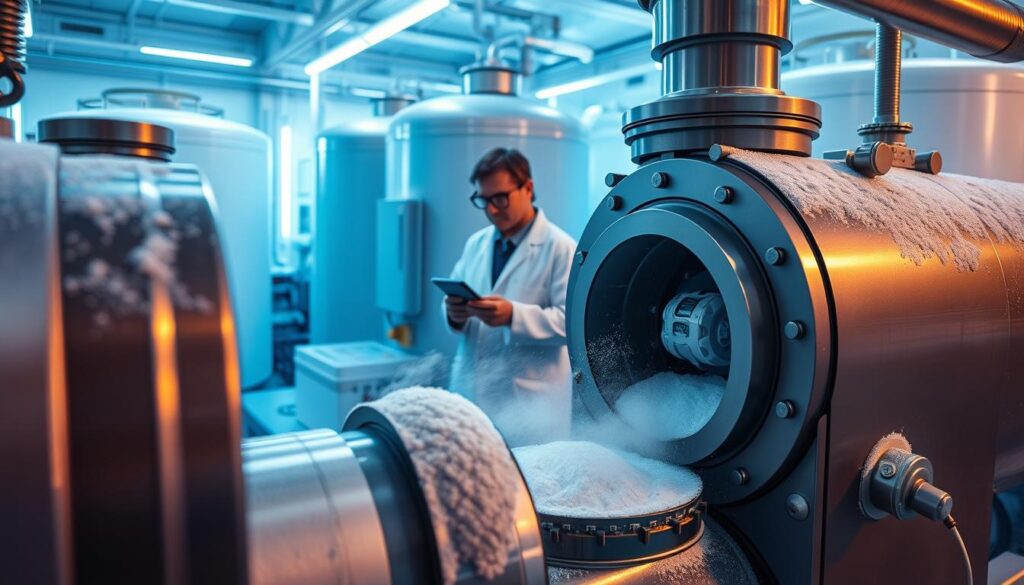
By understanding the physics behind low-temperature grinding, you can optimize your grinding technique to achieve the desired particle size and texture. This knowledge is crucial for producing high-quality ganaches with consistent textures.
To achieve an ultra-fine texture in your ganaches, it’s crucial to understand the techniques involved in cryogenic milling. This process allows you to produce high-quality ganaches with a smoothness that is hard to achieve with traditional grinding methods.
The technique of cryogenic milling involves grinding the ganache ingredients at extremely low temperatures. This not only helps in achieving an ultra-fine texture but also preserves the integrity of the ingredients.
Achieving an ultra-fine texture requires precise control over the grinding process. One of the key factors is the adjustment of grinding time and speed.
Adjusting the grinding time and speed is crucial for achieving the desired texture. A faster speed can result in a finer texture, but it also increases the risk of overheating. Therefore, it’s essential to monitor the grinding process closely.
Here’s a general guide to adjusting grinding time and speed:
| Grinding Speed | Grinding Time | Resulting Texture |
|---|---|---|
| Low | Long | Coarse |
| Medium | Medium | Medium |
| High | Short | Ultra-Fine |
As shown in the table, a high grinding speed with a short grinding time can result in an ultra-fine texture. However, it’s crucial to monitor the temperature to prevent overheating.
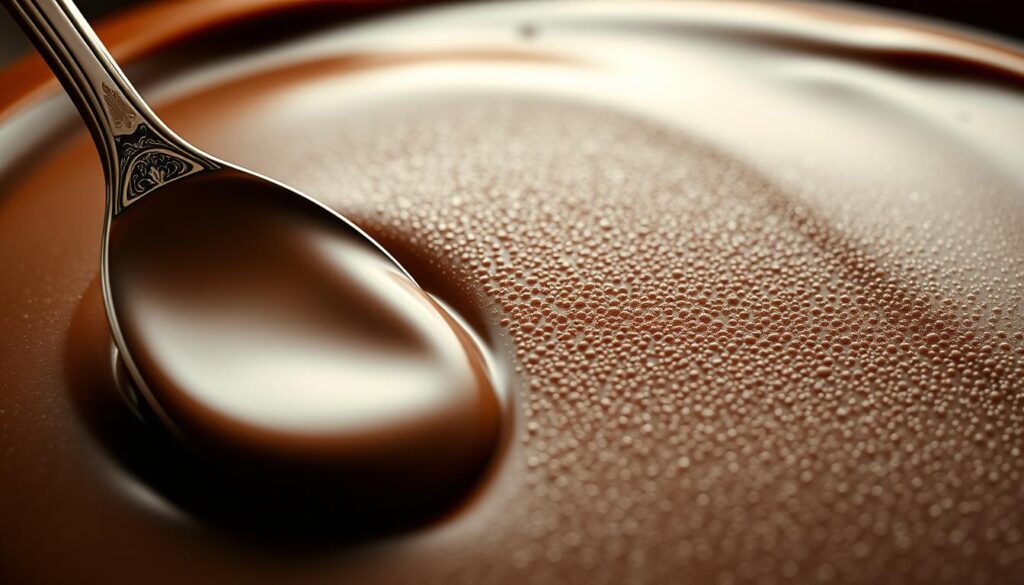
By mastering the techniques of cryogenic milling and adjusting the grinding parameters, you can achieve a 15-micron smoothness instantly in your ganaches. This not only enhances the texture but also improves the overall quality of your final product.
To retain the full flavor and aroma of your ganaches, understanding the impact of cryogenic milling on terpenes is essential. Terpenes are volatile compounds that contribute significantly to the aroma and flavor of ganaches. However, they are also fragile and can be easily degraded during processing.
Cryogenic milling offers a solution to this problem by grinding the ingredients at extremely low temperatures. This not only helps in achieving a finer texture but also preserves the terpenes and other volatile compounds. The low temperatures prevent the degradation of these delicate compounds, ensuring that your final product retains its full flavor and aroma.
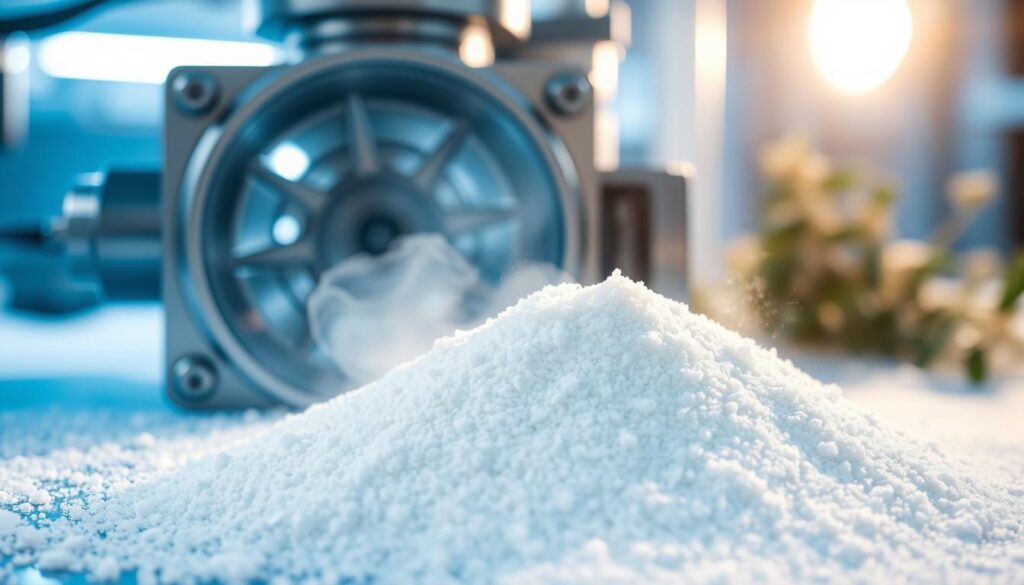
The science behind cryogenic milling’s ability to preserve terpenes lies in the effect of low temperatures on molecular activity. At cryogenic temperatures, the molecular movement slows down significantly, reducing the likelihood of terpene degradation. This means that the terpenes and other volatile compounds remain intact, preserving the intended flavor and aroma of your ganaches.
The preservation of terpenes is not just about maintaining flavor; it’s also about ensuring the quality and consistency of your ganache products. By controlling the temperature during the grinding process, you can achieve a more consistent product that meets your quality standards.
By understanding the role of cryogenic temperatures in preserving terpenes and other volatile compounds, you can optimize your ganache production process. This not only enhances the quality of your products but also provides a competitive edge in the market by ensuring consistency and superior flavor.
Maintaining your cryogenic grinder is crucial for achieving consistent results in your ganache production. Proper equipment maintenance ensures that your grinder continues to function optimally, even in the harsh conditions of sub-zero labs.
To keep your cryogenic grinder in top condition, regularly clean the equipment to prevent the buildup of residue. When handling liquid nitrogen, always wear protective gear, including gloves and goggles, to prevent injury from the extremely low temperatures.
It’s also essential to inspect your grinder regularly for signs of wear and tear. Check for any damage to the grinding chamber or other components that may be exposed to liquid nitrogen. By following these best practices, you can extend the life of your cryogenic grinder and continue to produce high-quality ganaches using cryogenic grinding techniques.
Safe handling of liquid nitrogen is critical in sub-zero labs. Ensure that your storage containers are properly labeled and that you follow all safety guidelines when transferring the liquid nitrogen to your cryogenic grinder.