All the world of cacao in one click.

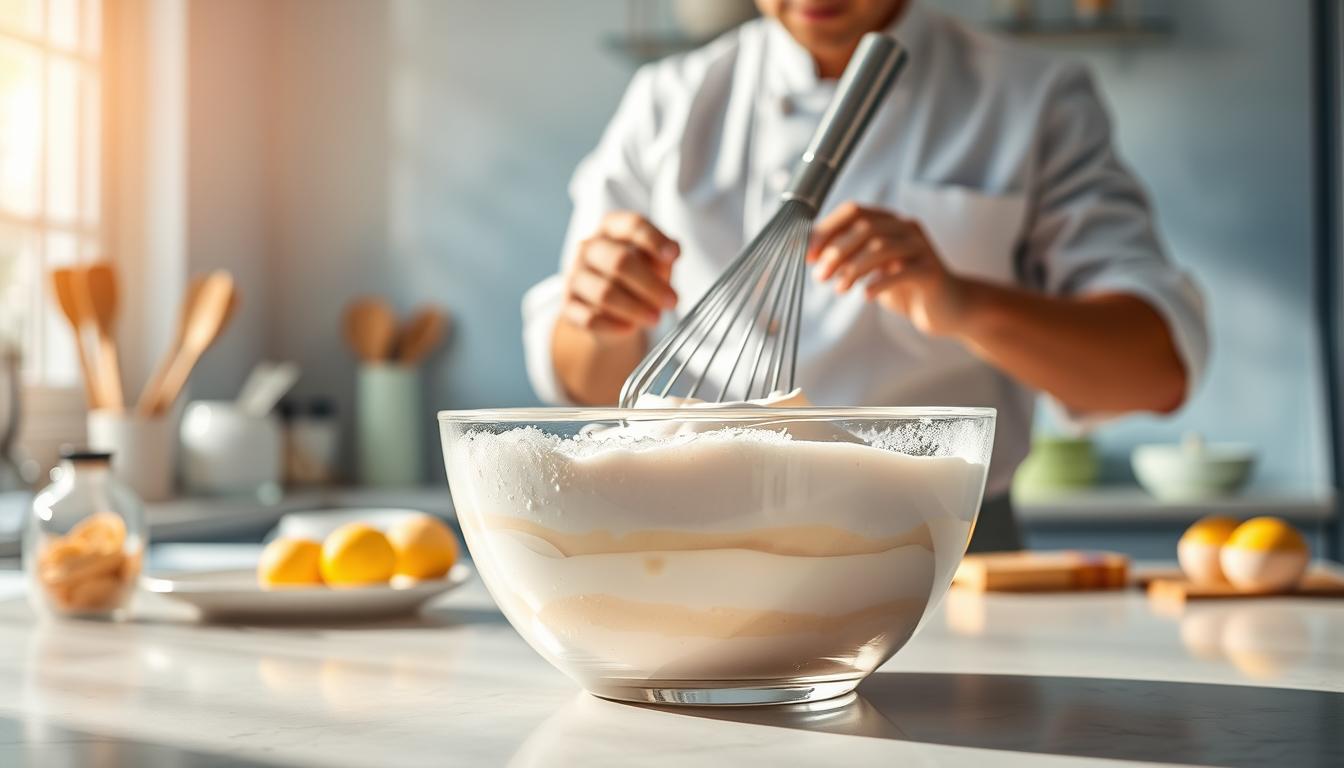
Master the art of cryogenic mousse with this tutorial on achieving 0.5-micron air bubbles for a light, airy summer dessert.
You are about to master a culinary technique that redefines how we enjoy light desserts. Most foams struggle to maintain their shape during the hot summer months. By applying Molecular Gastronomy, you can achieve a stable structure with 0.5-micron bubbles.
| Ingredient | Baker’s Percentage |
|---|---|
| Fruit Base (Purée) | 100% |
| Egg White Protein | 5% |
| Sugar (Fine) | 15% |
| Hydrocolloid Stabilizer | 0.8% |
This method relies on Overrun Science to control how much air enters the mixture. High-speed mixing creates a fine texture that feels incredibly smooth on the tongue. Using a cryogenic chilling step helps lock these tiny bubbles in place quickly.
This process results in a mousse that stays firm even as temperatures rise. Follow these steps to ensure professional results every time:
When temperatures soar, standard mousse often falls flat due to its inherent structural limitations. The primary culprits behind this failure are the ingredients used to create the mousse’s airy texture.
The traditional mousse recipe relies heavily on whipped cream and egg whites for aeration. These components are notoriously sensitive to temperature fluctuations, which can cause the mousse to collapse.
As temperatures rise, the fat in the cream begins to melt, and the proteins in the egg whites denature, leading to a loss of structure. This results in a mousse that is more akin to a soggy, flat mess than a light, airy dessert.
To understand the composition of a standard mousse, let’s examine the typical ingredients and their proportions:
| Ingredient | Baker’s Percentage (%) |
|---|---|
| Whipped Cream | 60 |
| Granulated Sugar | 20 |
| Egg Whites | 15 |
| Flavorings (e.g., Vanilla) | 5 |
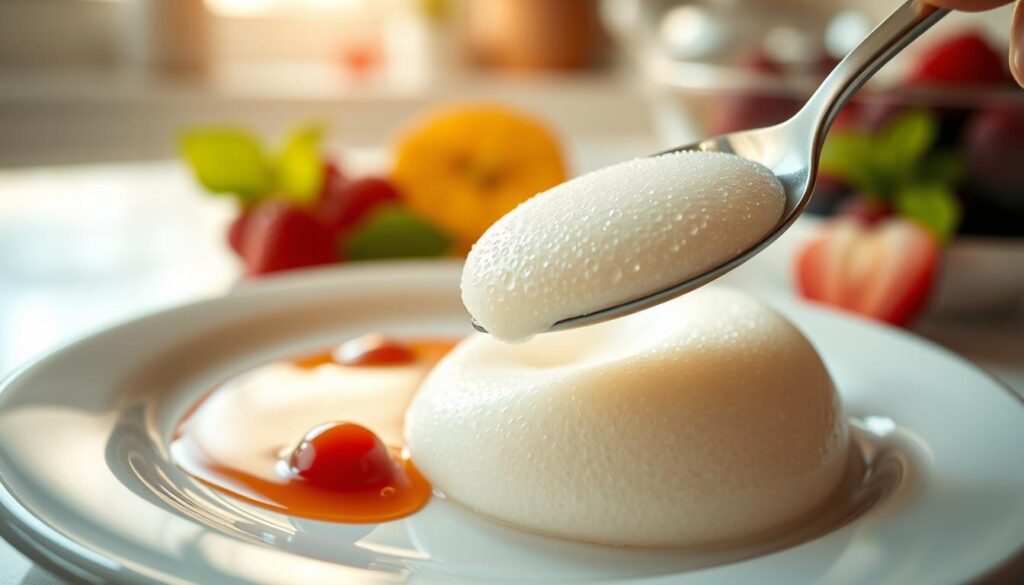
The instability of these ingredients in heat is a significant challenge. However, by understanding the science behind this instability, we can explore alternatives that enhance foam stability, such as the use of Nitrogen for achieving a more durable mousse.
The secret to achieving extreme aeration lies in the cryogenic properties of nitrogen. When nitrogen is used in molecular gastronomy, it allows for the creation of very fine ice crystals and air bubbles, significantly enhancing the texture of the mousse.
Nitrogen’s extremely low temperature preserves the delicate structure of the mousse, ensuring that it remains light and airy. This is particularly important in the context of hyper-aerated summer mousse, where the goal is to achieve 0.5-micron air bubbles.
The process of incorporating nitrogen into your mousse recipe involves several key steps. Here’s how you can achieve the desired lightness and aeration:
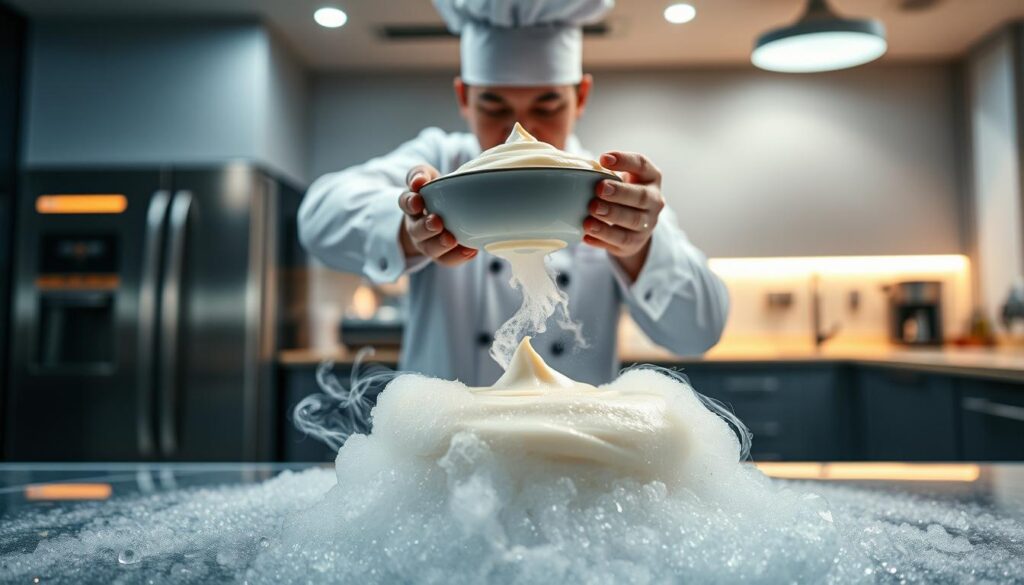
By following these steps and utilizing the cryogenic properties of nitrogen, you can create a truly unique and hyper-aerated summer mousse that will impress your guests. The use of nitrogen in molecular gastronomy opens up new possibilities for dessert-making, allowing for the creation of light, airy, and visually stunning desserts.
Molecular gastronomy techniques, such as those involving nitrogen, can elevate your dessert-making skills and provide a new level of creativity in the kitchen.
Creating the perfect cryogenic mousse requires precision and an understanding of Overrun Science. To achieve 0.5-micron air bubbles, you must carefully balance the ingredients and incorporate Nitrogen.
Begin by combining your base ingredients, taking care to maintain a consistent temperature. Next, introduce Nitrogen into the mixture, ensuring that it is evenly distributed to enhance Foam Stability.
To complete your zero-gravity foam, carefully pour the mixture into your desired mold. As the Nitrogen expands, the mousse will take on a light and airy texture. Monitor the temperature and humidity to ensure optimal Foam Stability.
With these steps, you can create a professional-grade cryogenic mousse that showcases the principles of Overrun Science. By incorporating Nitrogen and controlling the aeration process, you can achieve a truly unique dessert experience.