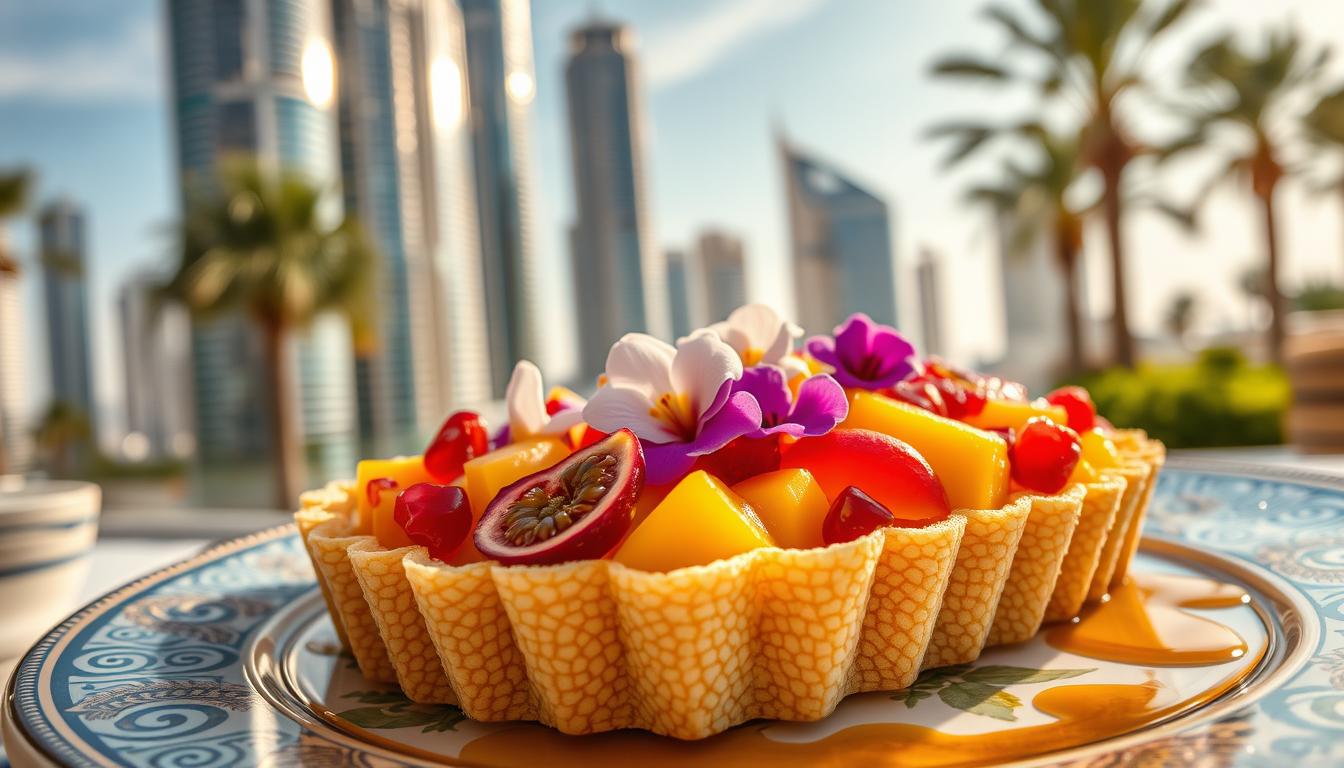
Dubaï Summer Tart

Summer Dubaï Tart: Keeping Kataifi Crunchy Under High Humidity

Discover the secrets to crafting a Dubai Summer Tart with a crisp, flaky kataifi base that withstands high humidity. Follow this tutorial.

You can master the art of crispy pastry even when the weather turns humid. This requires a deep understanding of how ingredients react to moisture in the air.

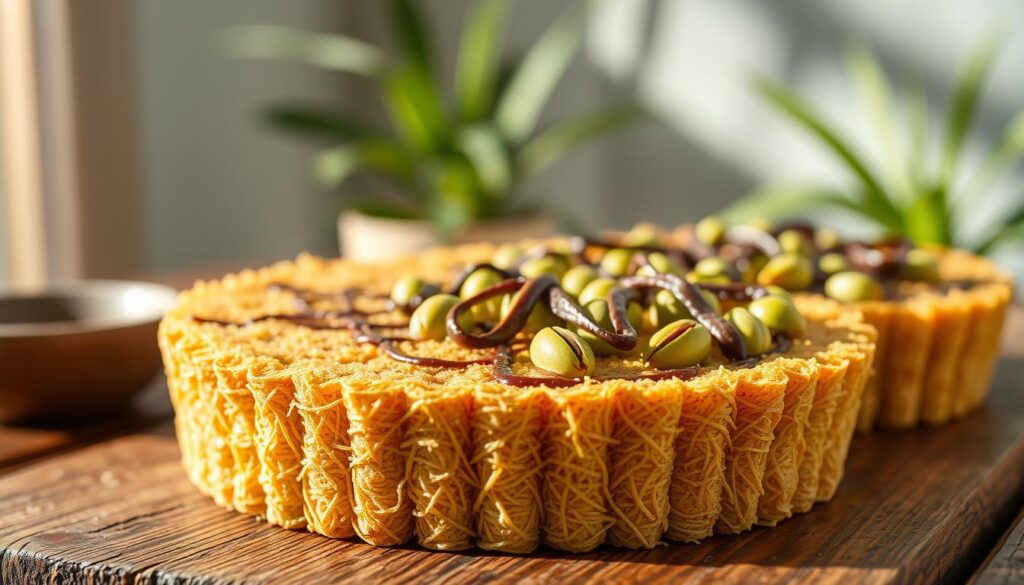
A perfect Dubaï Summer Tart relies on a crisp kataifi base that resists softening. You will achieve this by creating a specialized moisture barrier during the preparation phase.

Follow this professional ratio and method to ensure your dessert remains structurally sound and delicious for your guests. Precision is your best tool when battling environmental elements.

Ingredient Baker’s Percentage
Kataifi Dough 100%
Clarified Butter 40%
Cocoa Butter (Sealant) 12%
Pistachio Filling 65%
  1. Shred the fresh kataifi into small pieces for a uniform texture.
  2. Mix the dough with melted clarified butter until every strand is coated.
  3. Bake the mixture at 325°F until it reaches a deep golden brown.
  4. Brush a thin layer of melted cocoa butter over the hot pastry to seal it.
  5. Let the base cool completely before adding your signature fillings.

Key Takeaways

  • Apply a fat-based coating to shield the pastry from air moisture.
  • Use Baker’s percentages to maintain consistent results every time.
  • Bake the kataifi longer at a lower temperature for maximum dryness.
  • Seal the pastry while it is still warm to create an effective bond.
  • Store the finished product in a cool, low-humidity environment.
  • Choose high-quality clarified butter to enhance the flavor profile.

Spraying Cocoa Butter as a Moisture Shield

To protect your Summer Dubaï Tart from the adverse effects of high humidity, consider employing a moisture shield. Spraying cocoa butter on the kataifi base acts as an effective barrier against moisture, ensuring your tart remains crunchy.

The application of cocoa butter is a technique that has been used to enhance the texture and longevity of various pastries. By creating a hydrophobic layer, cocoa butter prevents the kataifi from absorbing moisture from the air, thus maintaining its desired crunchiness.

The Science Behind Cocoa Butter Spraying

Cocoa butter, particularly when clarified (beurre clarifié), serves as an excellent moisture barrier. The process of clarifying butter removes milk solids, leaving behind a pure fat that is more stable at high temperatures and has a higher smoke point. This characteristic makes it ideal for spraying over the kataifi base.

The science behind this technique lies in the hydrophobic nature of cocoa butter. When applied to the kataifi, it forms a protective layer that repels water molecules, thereby preventing the pastry from becoming soggy.

Application Techniques for Optimal Results

To achieve the best results, follow these steps:

  1. Melt the clarified cocoa butter to a temperature that makes it suitable for spraying.
  2. Use a spray bottle or an airbrush to evenly coat the kataifi base with the melted cocoa butter.
  3. Ensure the kataifi is completely covered but avoid over-saturating it.
  4. Allow the cocoa butter to solidify before assembling the tart.

By following these steps, you can create a robust moisture barrier that protects your Summer Dubaï Tart. This technique not only enhances the texture but also extends the shelf life of your pastry.
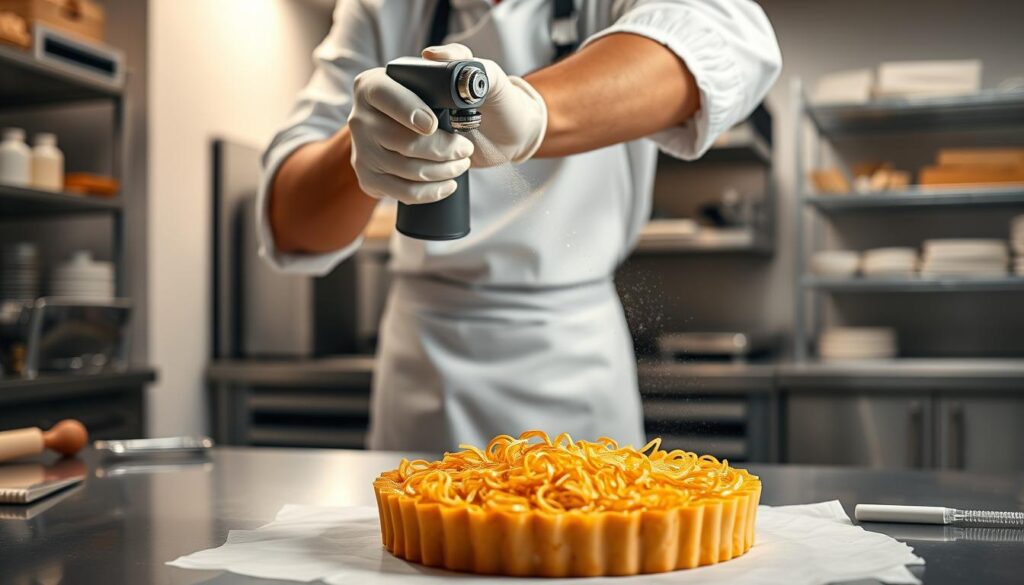
cocoa butter spraying technique

As noted by pastry experts, the use of beurre clarifié in baking provides a stable and effective moisture barrier, crucial for maintaining the texture of delicate pastries like the Summer Dubaï Tart.

“The application of clarified cocoa butter is a game-changer in pastry making, especially in humid climates. It ensures that the pastry remains crisp and fresh for a longer period.”

Optimizing the Pistachio-to-Cacao Ratio

The balance of flavors and textures in your Dubaï Summer Tart hinges on optimizing the pistachio-to-cacao ratio. Achieving this balance is not just about taste; it’s also about understanding the texture science that underpins the experience of consuming your tart.

Understanding Texture Science

Texture science plays a crucial role in the overall perception of your Dubaï Summer Tart. The ratio of pistachios to cacao affects not just the flavor but also the mouthfeel and appearance. A higher proportion of pistachios can introduce a satisfying crunch, while a higher cacao content can result in a smoother, more luxurious texture.

To optimize the pistachio-to-cacao ratio, consider the following factors:

  • The type of pistachios used (e.g., roasted or raw)
  • The quality and cocoa percentage of the cacao
  • The desired texture profile (e.g., crunchy, smooth, or a balance)

Tips for Achieving the Perfect Ratio:

  1. Start with a baseline ratio and adjust based on taste preferences.
  2. Experiment with different types of pistachios and cacao to find the optimal combination.
  3. Consider the other ingredients in your tart and how they interact with the pistachio and cacao components.

Dubaï Summer Tart texture science

By understanding and applying the principles of texture science, you can create a Dubaï Summer Tart that is not only delicious but also visually appealing and texturally engaging.

2026 Viral Trend Evolution

As you refine your Dubaï Summer Tart recipe, staying informed about the latest viral trends is crucial. The 2026 viral trend evolution is expected to bring new flavors and presentation styles that can elevate your baking.

Adapting to Emerging Trends

You can incorporate viral trends into your Dubaï Summer Tart by experimenting with novel ingredients and decorating techniques. For instance, using edible flowers or micro-greens can add a unique touch to your tart, making it more appealing to those following the latest culinary trends.

To stay ahead, follow top pastry chefs and food bloggers on social media platforms. Analyze their creations and identify patterns or common themes that could be applied to your Dubaï Summer Tart. By doing so, you can ensure your bakes remain relevant and sought after, even as viral trends continue to evolve.

FAQ

Why is humidity the primary challenge when preparing a Summer Dubaï Tart?

High humidity introduces water vapor into the atmosphere, which the porous structure of kataifi quickly absorbs. This causes the pastry to lose its signature snap and become chewy. To combat this, you must focus on creating an effective moisture barrier using specialized fats and precise cooling techniques to ensure your tart remains professional-grade in any climate.

How does the use of beurre clarifié improve the texture of the kataifi base?

Beurre clarifié, or clarified butter, is essential because it has had all water and milk solids removed. When you toast your kataifi in this pure fat, you are not introducing any hidden moisture into the strands. This results in a cleaner, more resilient crunch that serves as the perfect foundation for the heavy fillings used in the Summer Dubaï Tart.

What is the benefit of spraying cocoa butter over the pastry?

Utilizing a professional spray gun to apply Cacao Barry cocoa butter creates a micro-thin, hydrophobic seal. This moisture barrier prevents the pistachio cream and environmental humidity from softening the dough. By applying this technique, you leverage texture science to maintain a contrast between the creamy interior and the brittle exterior.

How do I determine the ideal pistachio-to-cacao ratio for my filling?

Finding the right balance requires an understanding of texture science. If the ratio of Pistaché paste is too high, the filling may become too fluid at room temperature; if the Valrhona cacao content is too high, the tart may become overly dense. You should aim for a ratio that allows the nut oils to provide flavor while the cocoa solids provide the structural integrity needed for a clean slice.

How can I ensure my pastry creations remain relevant to 2026 viral trends?

To stay ahead of viral trends, you must evolve beyond simple aesthetics and focus on “sensory architecture.” By 2026, the market will shift toward high-contrast textures and transparent ingredient sourcing. Mastering the Summer Dubaï Tart today allows you to experiment with these elements, ensuring your work remains at the forefront of global culinary innovation and social media visibility.

Does the temperature of the cocoa butter matter during application?

Absolutely. For the most effective moisture barrier, your cocoa butter should be heated to approximately 104°F (40°C) before spraying. This ensures a fine mist that coats the kataifi evenly without clumping, which preserves the delicate texture science of the pastry layers.

Leave a Reply

Your email address will not be published. Required fields are marked *