All the world of cacao in one click.

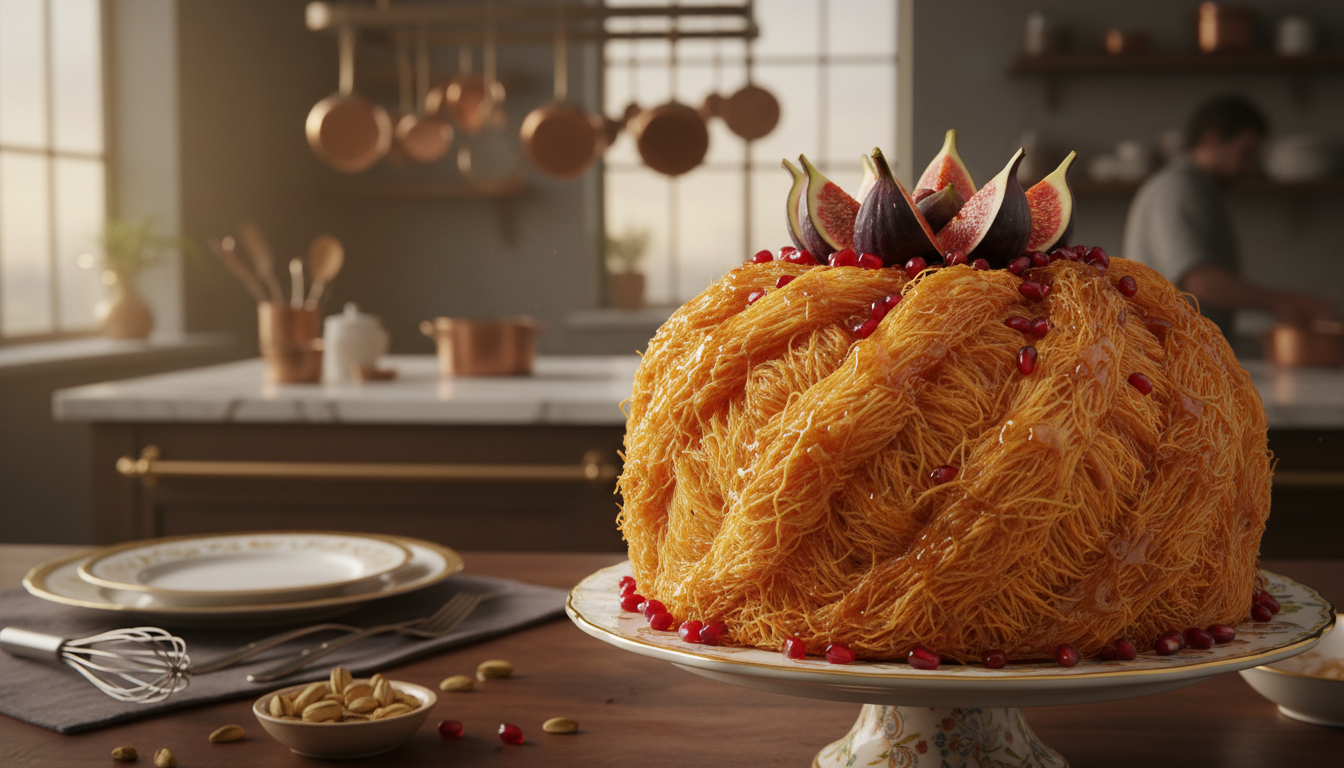
Learn the Dubai "Angel Hair" Tart technique to stabilize kataifi in high humidity conditions.
Mastering this delicate pastry requires precision and a deep understanding of your ingredients. When you work with kataifi, moisture is your greatest enemy in the kitchen. High humidity can quickly soften the thin strands, but applying texture science helps you preserve the necessary crunch.
Implementing a strong moisture barrier is essential for long-lasting crispness. You must coat the pastry strands carefully to block water absorption from the air. This professional method ensures your creation remains perfect even in challenging climates.
| Ingredient | Baker’s Percentage |
|---|---|
| Kataifi Pastry | 100% |
| Clarified Butter | 45% |
| Pistachio Paste | 60% |
| Chocolate Coating | 35% |
To successfully create the Dubai ‘Angel Hair’ Tart, you must first understand the science behind how humidity impacts its key components, such as kataifi and pistachio praline. High humidity can significantly affect the texture and stability of desserts, particularly those involving kataifi.
Kataifi, made from shredded phyllo dough, is highly susceptible to absorbing moisture from the air. This absorption can lead to sogginess or clumping, compromising the delicate texture of the tart.
Humidity’s impact on kataifi and other ingredients is rooted in the principles of moisture absorption and the structural changes that occur as a result. When kataifi absorbs moisture, its shredded structure begins to break down.
The effects of humidity on kataifi are multifaceted:
Incorporating components like pistachio praline into the Dubai ‘Angel Hair’ Tart adds another layer of complexity due to its sensitivity to moisture. Managing humidity is crucial to maintaining the tart’s structural integrity and aesthetic appeal.
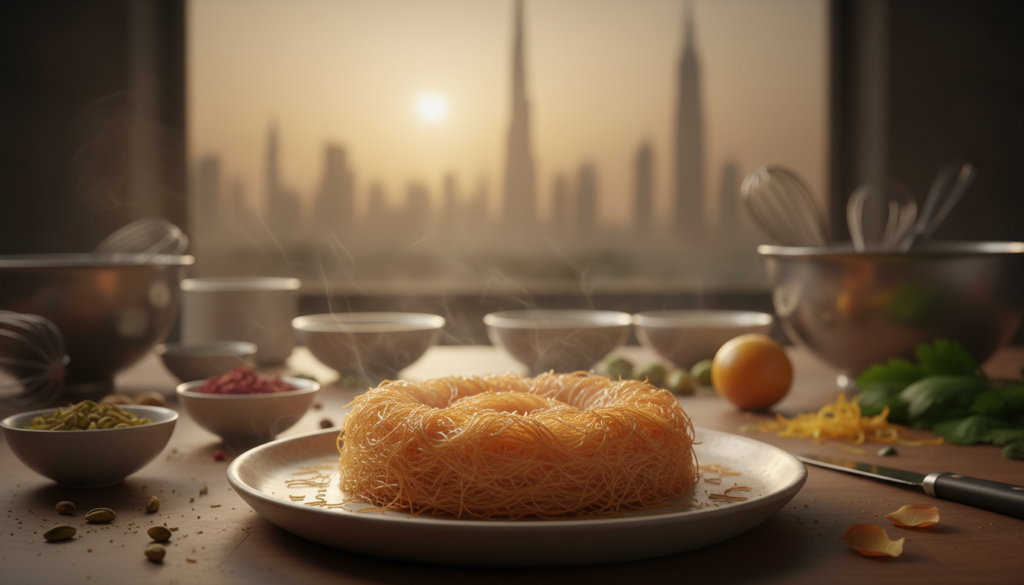
By understanding these effects, you can better prepare your ingredients and environment to mitigate the negative impacts of humidity, ensuring a superior final product.
To create a truly exceptional Dubai “Angel Hair” Tart, you need to master the art of making ganache with a 65% dark chocolate ratio. This ratio is crucial for achieving a deep, rich flavor that complements the kataifi’s delicate texture.
The ganache is a critical component of the Dubai “Angel Hair” Tart, providing a luxurious and velvety texture. Achieving the perfect consistency is key to the tart’s overall success. The 65% dark chocolate ganache ratio is recommended for its ability to provide a smooth and stable emulsion.
To make the ganache, you will need to heat the cream to a specific temperature and then cool it to a point where it can be effectively mixed with the chocolate. Understanding the science behind the emulsion and texture of ganache will help you in creating a smooth and stable ganache.
Here’s a breakdown of the ingredients you’ll need for the ganache:
| Ingredient | Quantity | Purpose |
|---|---|---|
| Dark Chocolate (65%) | 200g | Provides deep, rich flavor |
| Heavy Cream | 150ml | Adds creamy texture |
| Unsalted Butter | 20g | Enhances flavor and texture |
To achieve the perfect ganache consistency, it’s essential to temper the chocolate correctly. Tempering involves heating and cooling the chocolate to create a stable crystal structure that gives the ganache its glossy appearance and snappy texture.
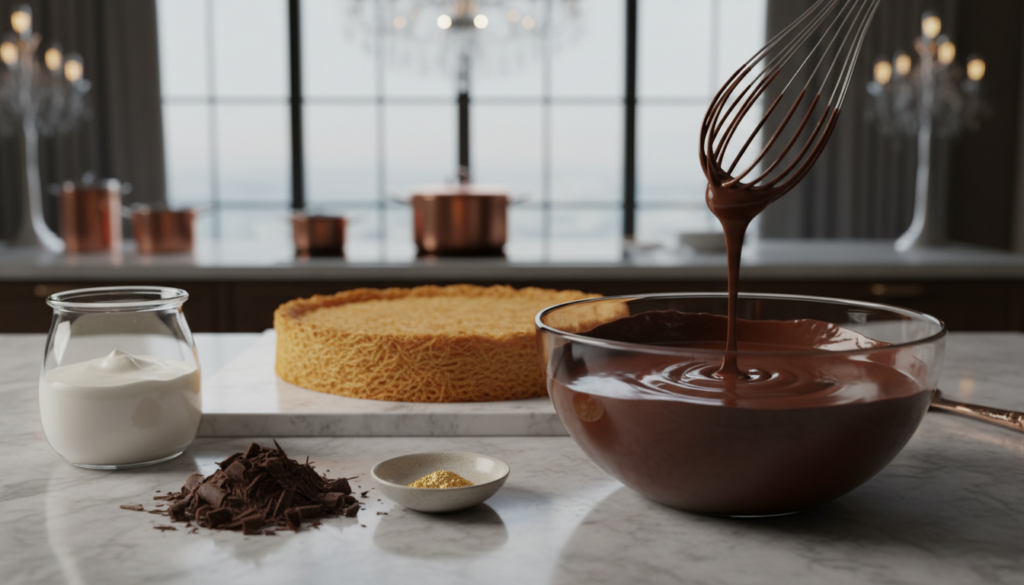
By following these steps and using the right ratio of chocolate to cream, you’ll be able to create a ganache that is both rich and velvety, perfect for the Dubai “Angel Hair” Tart. This attention to detail is what will make your tart stand out, especially when it comes to Texture science and the viral sensation it is expected to be in Viral 2026.
To ensure your Dubai “Angel Hair” Tart retains its desired texture, follow these steps to assemble and test it. First, apply a moisture barrier to protect the kataifi from humidity, a crucial step in Dubai Tart Tech. This barrier will help maintain the crunchiness of the pistachio praline.
To assemble, place the kataifi on a serving plate, followed by a layer of ganache, and finally, the pistachio praline. Conduct crunch retention tests by storing the tart in a controlled environment and assessing its texture at regular intervals.
Evaluate the tart’s texture using the following steps:
1. Store the tart at room temperature (around 75°F to 78°F) for 2 hours.
2. Assess the crunchiness of the pistachio praline and the kataifi’s texture.
3. Repeat the assessment at 24-hour intervals for 3 days to ensure texture stability, applying principles from Texture science.
By following these steps and utilizing a moisture barrier, you can achieve a professional finish and enjoy a dessert that is both visually appealing and texturally complex.