All the world of cacao in one click.

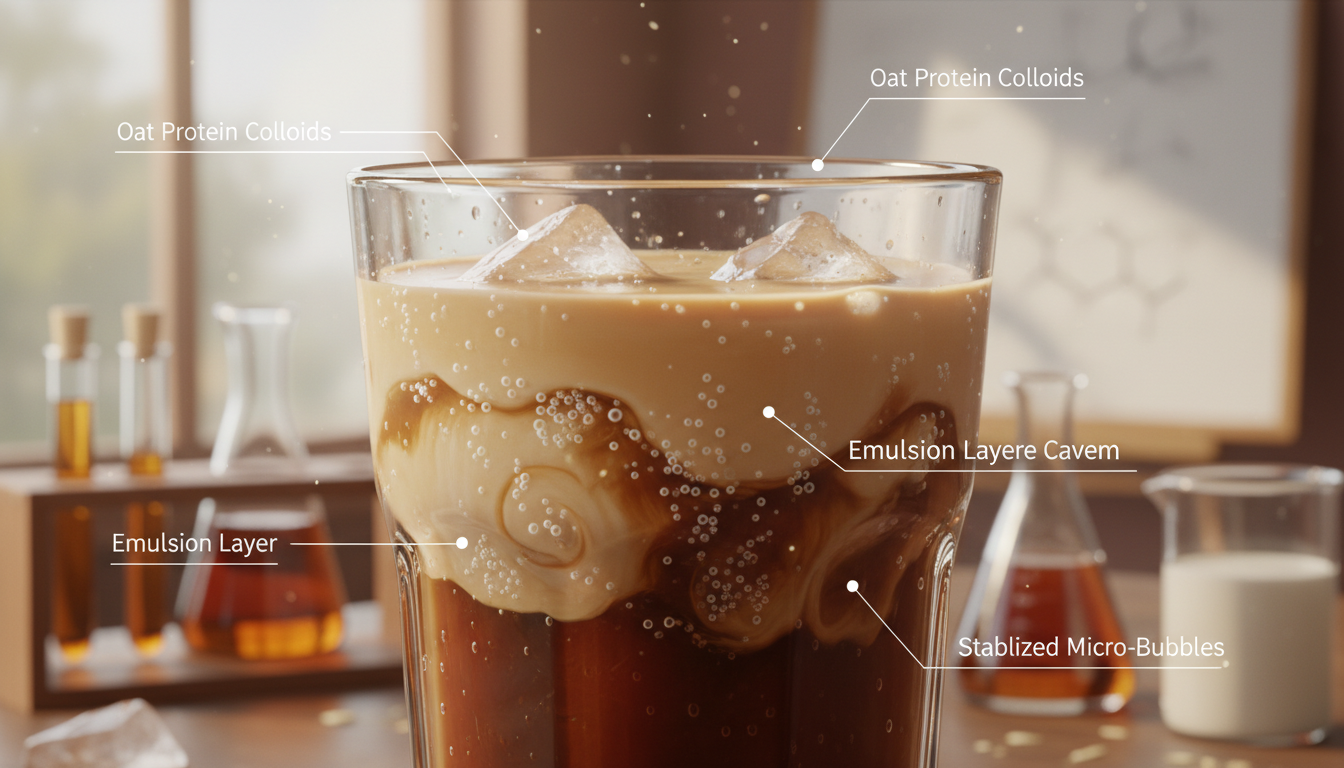
Master the art of iced mocha perfection by understanding phase-separation and leveraging oat proteins as effective emulsifiers.
Phase-separation often ruins the visual appeal and texture of your favorite chilled coffee drinks. You can solve this common issue by using oat proteins as natural emulsifiers. These plant-based molecules bridge the gap between water and fats. This unique bonding creates Colloidal Stability throughout the entire beverage.
You will achieve professional results by following a structured approach. This recipe transforms your kitchen into a high-end Iced Mocha Lab setup. Precision is the secret to keeping your drink smooth and uniform until the last sip. Use the table below to master the correct proportions.
| Ingredient | Baker’s Percentage (%) |
|---|---|
| Strong Brewed Coffee | 100% |
| Whole Milk or Plant Alternative | 45% |
| Chocolate Syrup | 15% |
| Oat Protein Isolate | 1.5% |
You may have noticed that your favorite iced mocha sometimes separates into distinct layers, which can be unappealing. This phenomenon is not unique to iced mochas; many cold beverages suffer from phase separation.
The underlying cause of this issue lies in the instability of the colloidal system within these drinks. When the ingredients in your cold drink don’t stay mixed, it can result in an unappealing texture and appearance.
Cold drinks like iced mochas are complex mixtures of various ingredients such as milk, coffee, and sugar. When these ingredients are combined, they form a colloidal system where particles are dispersed in another substance.
Colloidal stability is crucial for maintaining the uniform distribution of these particles. However, when this stability is compromised, the particles start to aggregate or separate, leading to an unappealing appearance.
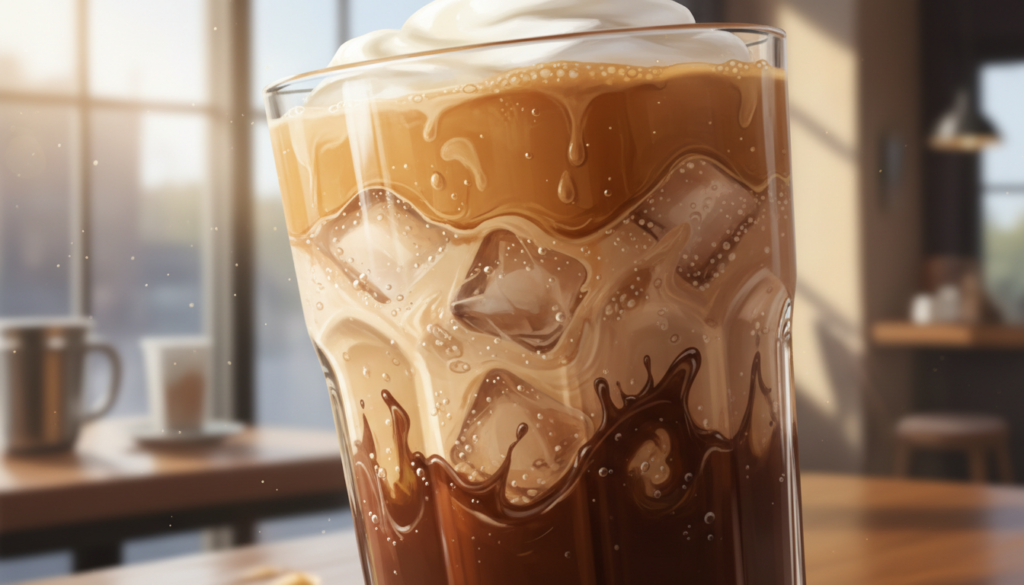
The role of plant proteins, such as oat protein, is vital in enhancing the stability of these emulsions. These proteins can act as natural emulsifiers, helping to maintain the dispersion of particles and prevent separation.
Understanding the principles of colloidal stability is essential for creating more stable emulsions in cold drinks. By leveraging the properties of plant proteins, you can improve the texture and appearance of your favorite cold beverages.
In the quest for perfect iced mochas, oat-milk protein is being utilized as an effective emulsifier. This development is particularly significant for baristas looking to enhance the quality and consistency of their beverages.
Oat-milk protein, a form of Plant Protein, has shown great promise in stabilizing iced mochas. Its ability to emulsify and stabilize mixtures makes it an ideal ingredient for improving the texture and preventing phase separation.
Oat proteins play a crucial role in the emulsification process by forming a protective layer around fat droplets, thereby preventing them from coalescing and separating from the rest of the mixture. This results in a more stable and consistent texture in iced mochas.
By incorporating oat proteins into your iced mocha recipe, you can significantly enhance the stability of the beverage. The proteins help in maintaining a uniform distribution of ingredients, which is key to achieving a high-quality iced mocha.
Here’s a comparison of the stability of iced mochas with and without oat-milk protein:
| Characteristics | Without Oat-Milk Protein | With Oat-Milk Protein |
|---|---|---|
| Texture | Separation observed | Uniform texture |
| Stability | Less stable | More stable |
| Customer Satisfaction | Lower | Higher |

As a barista, leveraging Barista Tech and incorporating oat-milk protein into your recipes can significantly improve the quality of your iced mochas, leading to higher customer satisfaction.
To create high-quality iced mochas, achieving the right mixing ratios is crucial. By understanding the principles of Beverage Science, you can determine the ideal ratios for your ingredients. A sample ratio could be: 20% coffee, 60% milk, 10% sugar, and 10% oat protein.
Achieving stable emulsions is key to maintaining the quality of your iced mochas. By utilizing oat proteins as emulsifiers, you can create a consistent texture and prevent phase separation. Barista Tech innovations have made it possible to optimize the mixing process, ensuring a smooth and creamy texture.
The summer beverage market in 2026 is expected to be driven by the demand for stable, high-quality cold drinks. As consumers become more discerning, businesses must adapt to stay ahead. By incorporating Beverage Science and Barista Tech into your products, you can capitalize on this trend and offer unique, high-quality beverages that meet consumer expectations.