All the world of cacao in one click.

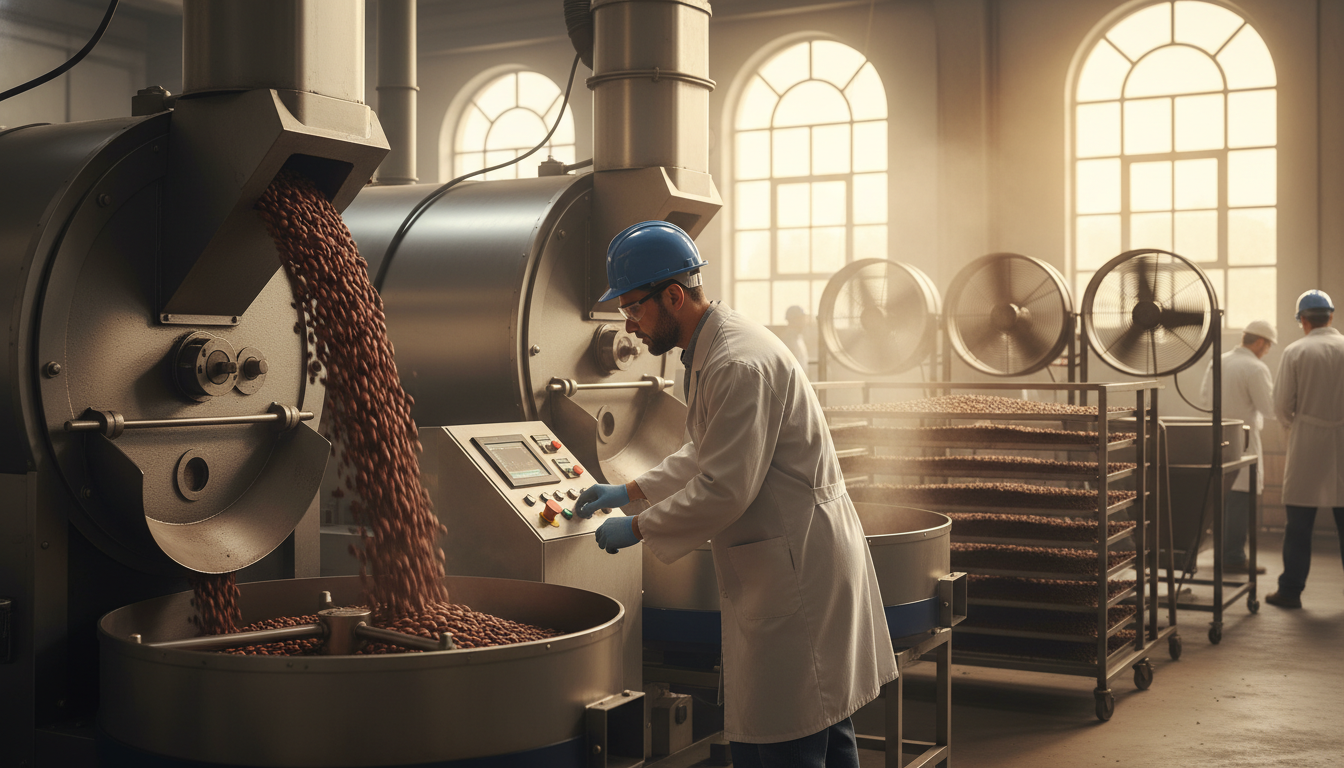
The global chocolate market exceeds $58.6 billion with explosive 12.5% annual growth. This massive industry depends on one critical transformation stage where raw materials become premium products.
This pivotal stage turns fermented cacao into the flavor foundation for exceptional chocolate. It requires precise technical control and deep understanding of chemical processes. Modern manufacturers face intense pressure for consistency and differentiation in this competitive landscape.
Europe consumes 45% of the world’s chocolate, while Latin America produces 60% of the raw beans. This global supply chain demands equipment with over 85% energy efficiency and full regulatory compliance. The stakes for getting this process right have never been higher.
This comprehensive guide reveals seven technical secrets that separate mediocre results from flavor excellence. It covers essential aspects like temperature profiling, equipment selection, and chemical reactions. Professionals will learn to establish repeatable processes that deliver consistent quality batch after batch.
Modern chocolate production has undergone a remarkable transformation in processing methods. This evolution spans from basic approaches to sophisticated systems that define today’s industry standards.
The journey from traditional open-fire techniques to computer-controlled systems represents significant progress. Early operations often adapted equipment from coffee roasters, but this approach had limitations.
Contemporary systems now process thousands of kilograms per cycle with ±1°C accuracy. Purpose-built equipment addresses the unique chemical composition of chocolate ingredients.
Vertical integration strategies now dominate the landscape. Chocolate manufacturers invest in their own capabilities rather than purchasing pre-processed materials.
This approach provides complete control over flavor development while reducing costs by up to 30%. Modern standards require systems that handle multiple bean origins and maintain full regulatory compliance.
European and Latin American leaders combine traditional wisdom with data-driven optimization. They utilize advanced sensors and quality control protocols throughout the entire process.
Premium chocolate quality depends on understanding the fundamental chemistry occurring during heat application. More than 600 simultaneous chemical reactions transform raw materials into complex flavor profiles.
The Maillard reaction represents the most critical chemical transformation. It occurs between 140°C and 165°C when amino acids interact with reducing sugars.
This process generates hundreds of complex flavor and aroma compounds. Modern systems maintain ±1°C accuracy to optimize reaction kinetics. Precise temperature control ensures consistent flavor development.
Strecker degradation works in concert with Maillard reactions. Amino acids undergo oxidative deamination and decarboxylation processes.
This produces aldehydes that contribute specific flavor notes. These include cocoa, malty, and nutty characteristics essential to premium chocolate profiles.
Understanding these chemical pathways enables strategic manipulation of roasting parameters. Professionals can develop proprietary flavor signatures through controlled reaction rates.
Temperature management separates amateur operations from professional chocolate production facilities. Precise thermal parameters determine whether delicate flavor compounds develop properly or become destroyed.
Three distinct roast categories enable manufacturers to target specific flavor profiles. Each requires different temperature ranges and timing considerations.
Light processing suits delicate Criollo varieties needing gentle heat. These beans require 25-30 minutes at 115-130°C to preserve subtle notes.
Extended time ensures adequate moisture reduction from 7.5% to the target 2-3%. This approach maintains floral and fruity characteristics while achieving microbial safety.
Medium profiles balance flavor development with efficiency. Trinitario beans excel at 120-135°C for 20-25 minutes, creating complex aromas.
Dark roasting employs 140-150°C temperatures for robust Forastero varieties. Shorter 15-20 minute cycles develop intense chocolate flavors.
Safety requires minimum 15 minutes above 100°C. Laboratory analysis confirms proper bean transformation before further processing.
Two primary roasting systems dominate contemporary chocolate production facilities with distinct operational philosophies. Equipment selection significantly impacts production efficiency and final product quality.
Drum roasters represent established technology in chocolate processing. These systems use rotating perforated drums that tumble beans continuously.
The primary advantages include superior roast uniformity and precise temperature control. Drum roasters handle various bean origins with customizable profiles.
Limitations center on batch processing constraints. Cycle times of 15-30 minutes restrict daily capacity. Higher energy consumption occurs due to heating both bean and shell.
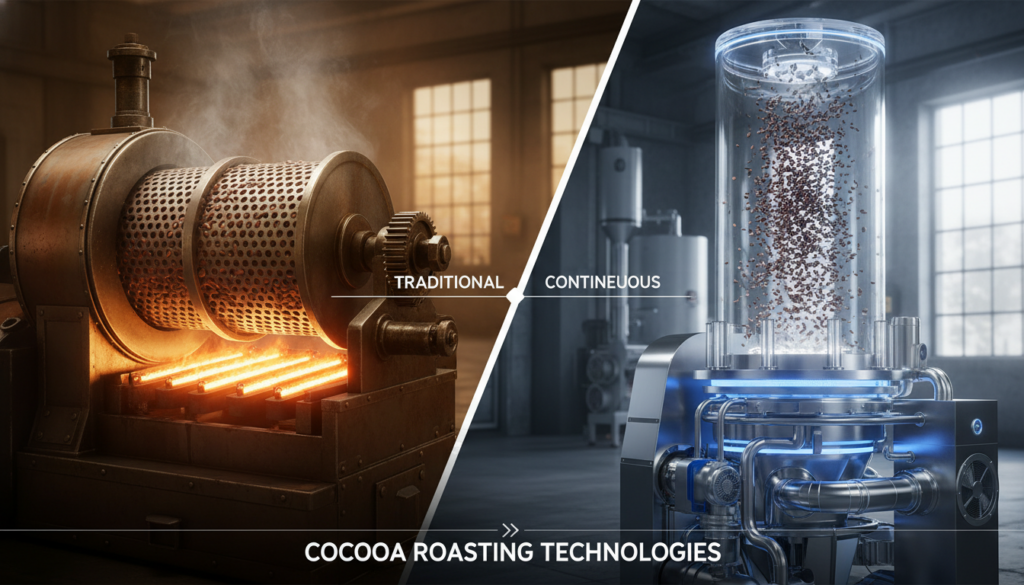
Continuous liquid bed systems represent advanced technology. Heated air suspends and agitates cocoa nibs in a fluidized state.
These roasters achieve remarkably even heat distribution. They process volumes of 1,000-3,000 kg per cycle with enhanced efficiency.
The system requires pre-processing infrastructure for bean cracking. This represents higher initial investment but delivers superior operational efficiency.
| Feature | Drum Roaster | Continuous Liquid Bed | Best Application |
|---|---|---|---|
| Processing Method | Batch | Continuous | Volume vs Flexibility |
| Cycle Time | 15-30 minutes | 8-15 minutes | Production Speed |
| Capacity Range | 60-500 kg | 1,000-3,000 kg | Scale of Operation |
| Energy Efficiency | Standard | 25% Better | Cost Management |
| Material Processed | Whole Beans | Cocoa Nibs | Product Strategy |
Superior aroma profiles in chocolate products depend heavily on precise air-to-bean ratio optimization throughout the heating cycle. This critical parameter determines heat transfer efficiency and flavor compound development. Proper management separates exceptional results from mediocre outcomes.
Airflow directly influences chemical reactions within each bean. Insufficient circulation creates uneven heating and inconsistent flavor development. Excessive air volume can strip delicate aromatic compounds before they fully form.
Optimal ratios ensure uniform Maillard reaction progression across the entire batch. This creates balanced flavor profiles with complex aromatic notes. The right balance prevents burnt or grassy characteristics.
Different roasting systems require specific airflow strategies. Continuous liquid bed units suspend nibs in controlled air streams for maximum surface contact. Drum systems use perforated designs with variable speed fans.
Advanced operations document airflow settings relative to batch weight. They validate parameters through sensory evaluation. This data-driven approach ensures consistent quality across production runs.
| System Type | Airflow Method | Optimization Approach | Best For |
|---|---|---|---|
| Continuous Liquid Bed | Fluidized air suspension | Precise air velocity control | Large-scale consistency |
| Drum Roaster | Perforated convection | Variable frequency drives | Batch flexibility |
| Hybrid Systems | Combined techniques | Dynamic adjustment | Multi-origin processing |
Professional operations establish specific ratios for each bean origin. They balance heat transfer efficiency against flavor preservation. This sophisticated approach delivers the aromatic excellence consumers expect.
Immediate temperature reduction represents the unsung hero of quality chocolate production. Many operations overlook this critical phase, yet it determines whether carefully developed flavors are preserved or compromised.
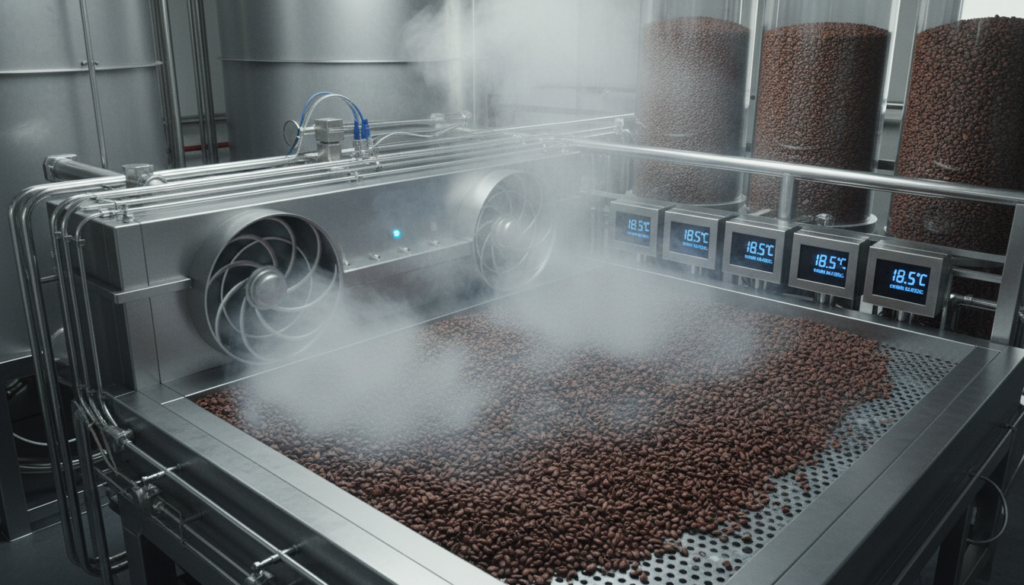
The chemical transformations initiated during heating continue as long as beans remain warm. This means the cooling rate proves almost as crucial as the roast itself. Different cooling times can yield dramatically different results from identical heating profiles.
Rapid cooling halts flavor development at the precise moment desired by operators. It prevents chemical reactions from progressing beyond optimal parameters. This crucial step stops the development of bitter or burnt characteristics.
Proper quenching also helps maintain target moisture content. Slow cooling allows additional moisture loss that can affect subsequent processing steps. Immediate temperature reduction preserves the delicate balance achieved during the heating phase.
Commercial operations typically employ dedicated cooling trays with wire mesh surfaces. These maximize airflow around individual beans for uniform heat dissipation. High-velocity fans force ambient air through the bean mass.
Advanced systems feature automated transfer mechanisms. They move beans from heating drums to cooling trays within seconds. This minimizes the transition period when uncontrolled heat can alter flavor profiles.
Temperature monitoring during cooling proves equally important as heating control. Professional operations track descent rates to maintain consistency across production batches.
Maintaining rigorous process control and safety protocols represents the foundation of professional chocolate manufacturing operations. These systems ensure every batch meets quality standards while protecting consumer health.
Continuous tracking of thermal parameters and moisture content is essential for consistent results. Temperature sensors must measure multiple points throughout the heating cycle.
Moisture management requires careful attention. Beans typically enter with about 7.5% moisture content. The target is reducing this to 2-3% for optimal preservation.
Data logging systems capture this information for full traceability. This documentation supports quality assurance and process optimization efforts.
Food safety regulations demand validated processes that eliminate biological hazards. Roasting serves as the critical control point for pathogen reduction.
Proper documentation proves compliance with HACCP and FDA requirements. Makers must maintain records showing consistent achievement of safety parameters.
This step cannot address chemical hazards like heavy metals. Supplier testing and certification programs handle these concerns before processing begins.
Successful chocolate makers recognize that superior flavor development begins with scientific precision in thermal processing. Mastering the seven technical aspects covered—from chemical reactions to rapid cooling—separates exceptional producers from average operations.
Investment in advanced processing capabilities delivers measurable returns. Companies report 15-25% gross margin increases and 35% higher customer satisfaction scores. This technical mastery enables unique flavor signatures that competitors cannot replicate.
The transformation of raw cacao beans into premium chocolate represents both science and art. Professionals who command these technical elements gain significant competitive advantages in today’s demanding market. This expertise ensures consistency, efficiency, and access to premium consumer segments.
As consumer expectations evolve, technical excellence in bean processing becomes essential for long-term success. The knowledge presented here provides the foundation for developing distinctive products and scaling operations while maintaining artisanal quality standards.