All the world of cacao in one click.

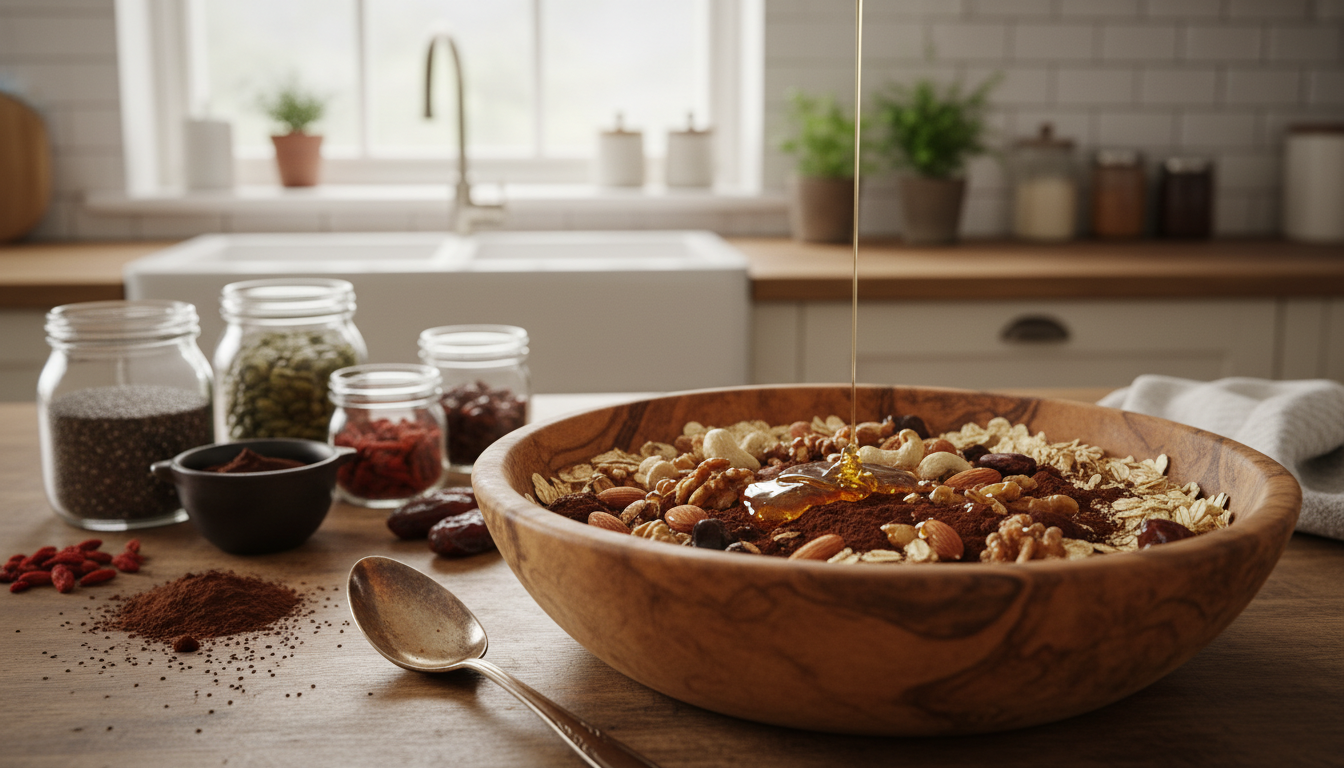
Learn the trick to crafting low-GI granola with a honey-binding method for perfect crunch.
Starting your morning with a nutrient-dense meal sets the tone for your whole day. You can create a professional-grade breakfast by focusing on ingredient synergy and temperature control. You deserve a snack that provides long-lasting energy without the typical sugar crash.
Creating a quality Low-GI Granola requires a deep understanding of how natural sugars interact with grains. You will learn to use honey as a strategic binder to create those sought-after crispy clusters. This process ensures a perfect texture while maintaining a superior nutritional profile.
Practicing Healthy Snacking becomes effortless when you prepare your own batches with precision. You will appreciate the deep, complex notes of raw cacao paired with a hint of sea salt. Follow the specific ratios below to scale your production and maintain consistency.
| Ingredient | Baker’s Percentage (%) |
|---|---|
| Rolled Oats | 100% |
| Raw Cacao Powder | 12% |
| Raw Honey | 35% |
| Coconut Oil | 18% |
| Sea Salt | 1.5% |
The GI index is a vital metric for assessing how different ingredients affect the overall nutritional quality of Clustered Granola. It’s a measure of how quickly foods raise blood sugar levels, ranking them on a scale from 0 to 100.
Understanding this index is crucial for creating granola that not only tastes great but also supports stable energy levels and overall health. Clustered Granola, made with honey-binding techniques, is not just a tasty snack; it’s also a healthier option when made with low GI ingredients.
The GI index is particularly important for consumers who monitor their blood sugar levels. Foods with a low GI index are digested more slowly, causing a gradual and lower peak in blood glucose levels. This is beneficial for maintaining energy and supporting overall health.
For granola, using ingredients with a low GI is crucial. This includes choosing the right types of grains, nuts, and sweeteners. For instance, using rolled oats and nuts like almonds can help keep the GI index low.
Snacking on low GI foods like Clustered Granola can help manage hunger and support weight management. It also contributes to a more stable blood sugar level, which is particularly important for individuals with diabetes or those trying to manage their blood sugar levels.
By understanding and applying the principles of the GI index, you can create Clustered Granola that is not only delicious but also provides significant health benefits.
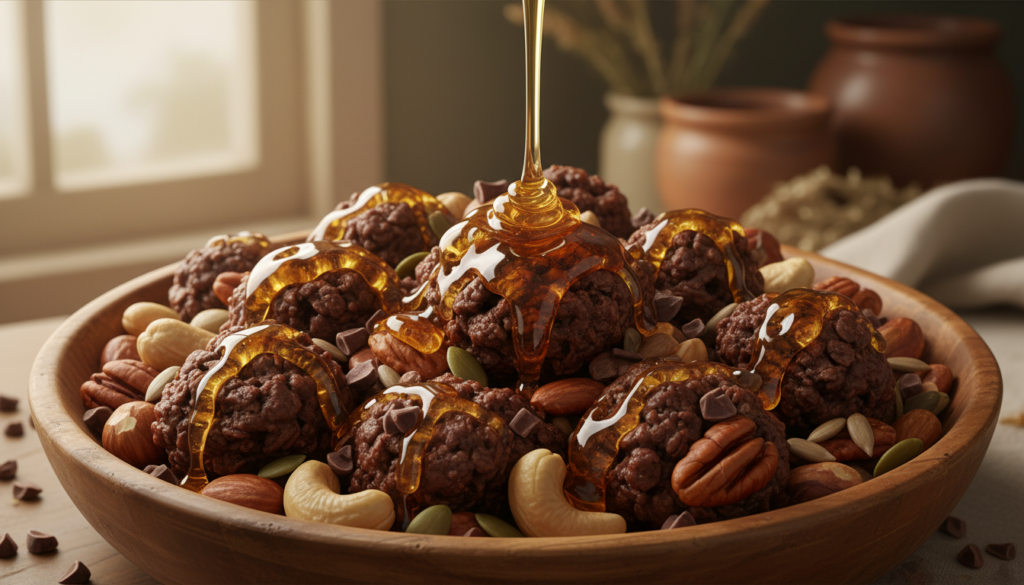
Cacao fiber plays a pivotal role in enhancing the binding properties of your granola. The incorporation of cacao fiber into your granola recipe not only improves its texture but also boosts its nutritional value. By mixing cacao fiber with other ingredients in a specific ratio, you can achieve the desired binding effect that results in a crunchy and delicious granola.
The role of cacao fiber in binding is multifaceted. It helps in creating clusters within the granola, giving it a crunchy texture that is both appealing and satisfying. Moreover, cacao fiber is rich in antioxidants, which contribute to its nutritional benefits. Being a component of slow carbs, cacao fiber ensures the slow digestion of carbohydrates, thereby maintaining your energy levels over a longer period.
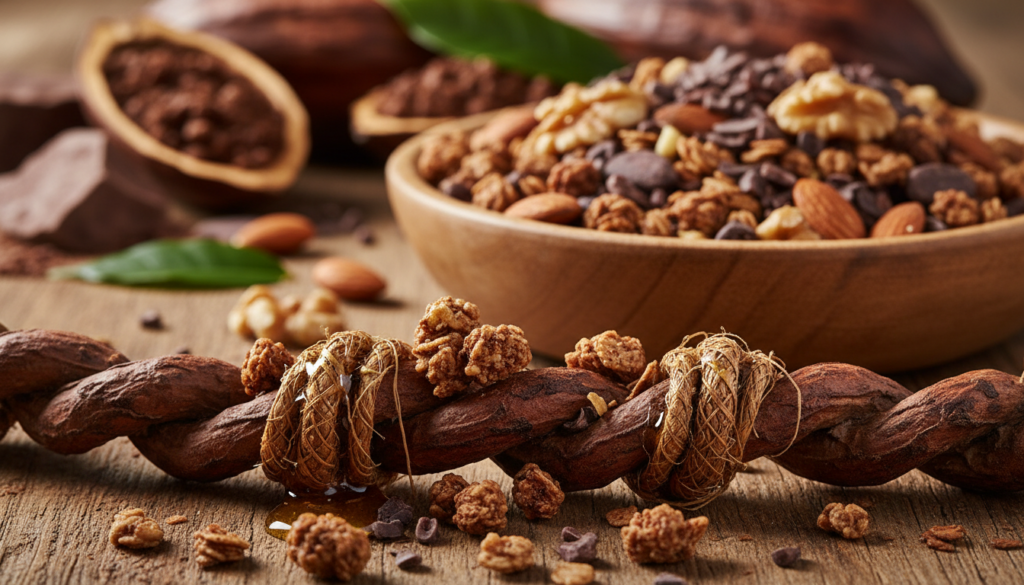
To effectively utilize cacao fiber as a binding agent, it’s essential to understand the right proportion in which it should be mixed with other ingredients. The synergy between cacao fiber and other components like honey is crucial for achieving the perfect binding. Honey, with its natural adhesive properties, complements cacao fiber by enhancing the overall binding effect.
When you incorporate cacao fiber into your granola, you’re not only improving its texture but also enhancing its health benefits. The antioxidants present in cacao fiber add to the overall nutritional profile of your granola, making it a healthier snacking option.
By understanding the role of cacao fiber in binding and its benefits, you can create a granola that is not only delicious but also nutritious. The use of cacao fiber as a binding agent is a step towards making healthier and tastier granola that appeals to a wide range of consumers.
Enhancing your Low-GI Cacao Granola with prebiotics can significantly boost its nutritional value. By incorporating prebiotic-rich ingredients, you can create a product that not only tastes great but also supports gut health.
Prebiotics are non-digestible parts of food that promote the growth of beneficial microorganisms in the intestines. This contributes to a healthy gut microbiome, linked to various health benefits, including improved digestion and immune system function. You can incorporate prebiotics into your granola recipe through ingredients like chicory root or Jerusalem artichoke.
By combining the benefits of low-GI cacao, honey-binding, and prebiotic additions, you can create a granola product that appeals to health-conscious consumers in the United States. This holistic approach to granola formulation can set your product apart in a competitive market.