All the world of cacao in one click.

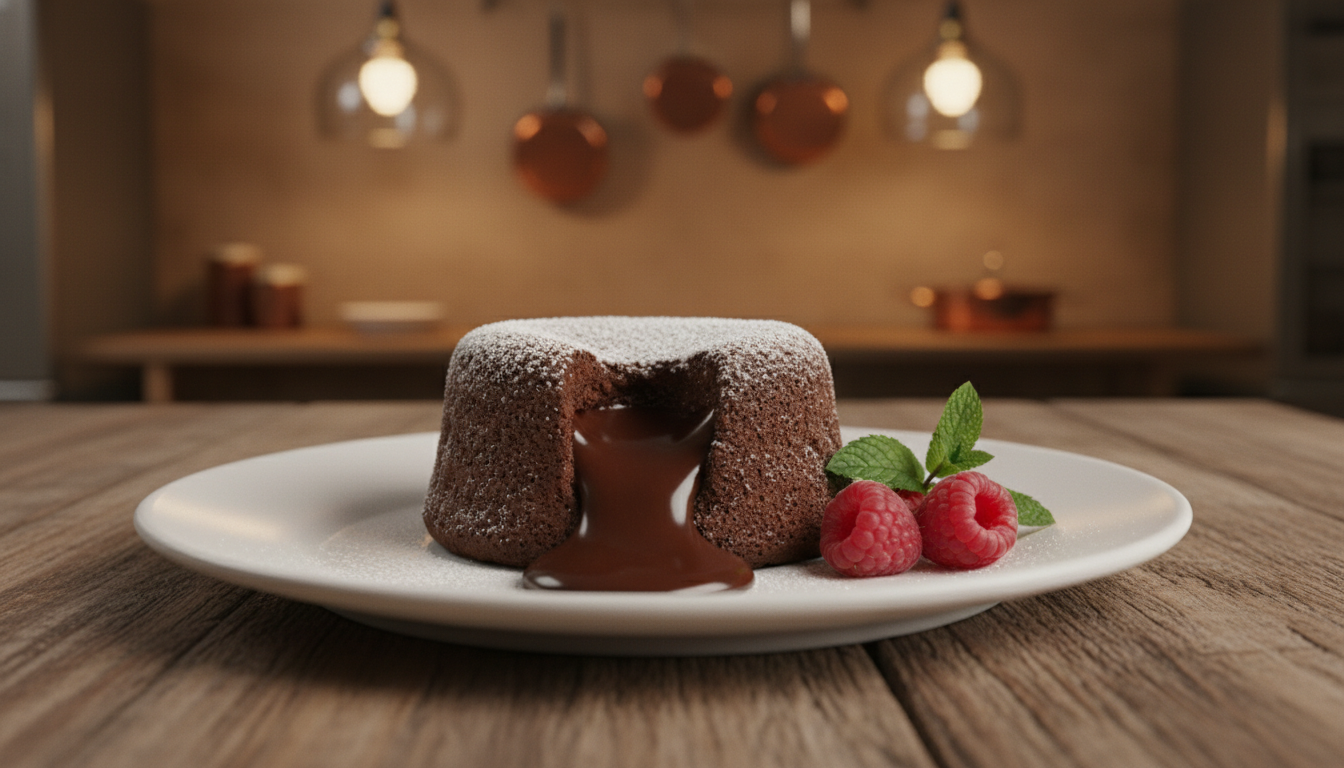
Learn the foolproof technique for creating a perfectly gooey Molten Chocolate Lava Cake with this comprehensive guide.
Creating the perfect Molten Chocolate Lava Cake is a challenge many bakers face. Achieving that gooey molten center requires precision and high-quality ingredients.
You will need to focus on using the finest dark chocolate and understanding the importance of each component in the recipe.
To help you succeed, this guide provides a detailed recipe formatted as a professional baking process. You will find a table listing ingredients with their respective Baker’s percentages, followed by clear, numbered steps to ensure your cake turns out perfectly.
The molten chocolate lava cake, known for its irresistible molten center, has a fascinating history that contributes to its widespread popularity. This dessert has become a staple in fine dining, captivating the hearts of many with its rich, gooey chocolate core.
The molten chocolate lava cake originated in French patisserie, where it was perfected as a dessert that combines the simplicity of cake with the luxury of molten chocolate. Its popularity can be attributed to its rich flavor profile and the dramatic presentation it offers, making it a favorite among dessert enthusiasts. As Jean-Georges Vongerichten, a renowned chef, once noted, “The key to a great lava cake is in the balance of its components and the precision of its baking time.”
“The key to a great lava cake is in the balance of its components and the precision of its baking time.” – Jean-Georges Vongerichten
Molten chocolate lava cake is versatile and can be served at various occasions, from romantic dinners to dinner parties. Its luxurious appeal makes it an ideal dessert for celebrations and special events. To enhance its presentation, consider creative dessert plating techniques, such as garnishing with fresh berries or a sprinkle of powdered sugar.
When serving, maintaining the right baking temperature is crucial to achieve that perfect molten center. Ensuring your oven is at the correct temperature will make all the difference in the quality of your lava cake.
By following these steps and understanding the history and ideal serving occasions of molten chocolate lava cake, you’ll be well on your way to mastering this decadent dessert.
To create a truly exceptional Molten Chocolate Lava Cake, it’s crucial to understand the role of each key ingredient. The quality and characteristics of these ingredients directly impact the final product’s flavor, texture, and overall appeal.
The type of chocolate used is paramount. High-quality cocoa gives your lava cake a deep, rich flavor. Dark chocolate, with its high cocoa content, is preferred for its intense chocolate flavor and is typically used in lava cakes. The cocoa content can vary, but for a molten lava cake, a higher percentage is often chosen for its robust flavor.
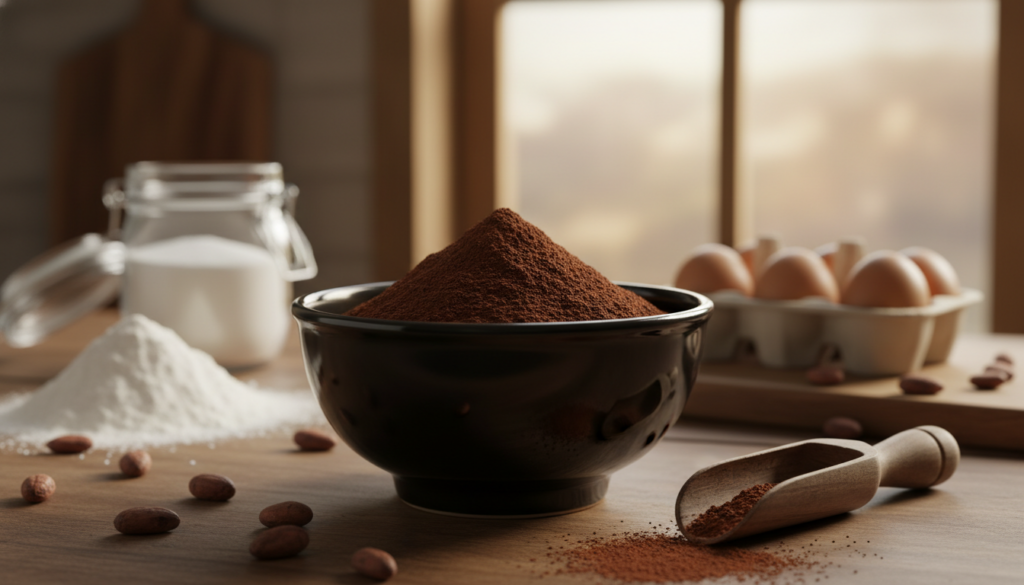
Eggs provide structure and moisture, while flour adds necessary structure to the cake. The ratio of these ingredients is critical. Eggs help in leavening and enriching the cake, whereas flour must be used judiciously to avoid a dense cake.
The right butter enhances the flavor and tenderness of the cake. Using high-quality butter is essential for the richness it adds. The butter, along with chocolate, creates a smooth, velvety texture in the lava cake.
Understanding the proportions of these ingredients is key. Here’s a breakdown using Baker’s percentage, a method that expresses the weight of each ingredient as a percentage of the total flour weight.
| Ingredient | Baker’s Percentage (%) |
|---|---|
| Flour | 100 |
| Dark Chocolate | 200 |
| Eggs | 150 |
| Butter | 120 |
| Sugar | 80 |
By focusing on these key ingredients and their proportions, you can create a Molten Chocolate Lava Cake that is both decadent and refined. The folding technique used to incorporate these ingredients also plays a crucial role in the cake’s final texture.
To make a perfect Molten Chocolate Lava Cake, you’ll need the right tools and equipment. The quality and type of equipment can significantly affect the outcome of your cake, from the texture to the presentation.
The baking mold is a critical component in making Molten Chocolate Lava Cake. Traditionally, ramekins are used because they provide the perfect individual serving size and help in achieving the signature lava center. Ramekins are small, straight-sided dishes made of ceramic or porcelain. When choosing ramekins, ensure they are heat-resistant and can withstand high oven temperatures.
Preparing your ramekins properly is crucial. Greasing and dusting the ramekins with butter and flour or cocoa powder can prevent the cakes from sticking, making them easier to remove once baked. “A well-prepared ramekin is key to a perfectly baked lava cake,” as noted by experienced bakers.
The right mixing bowls and utensils are essential for efficiently preparing the cake batter. Stainless steel or glass bowls are preferred because they are non-reactive and can be chilled or heated as needed. A whisk is necessary for mixing wet ingredients, while a rubber spatula is ideal for gently folding dry ingredients into the wet mixture.
Using the correct utensils can prevent overmixing, which is crucial for maintaining the delicate structure of the lava cake. As
“The gentler you are with the batter, the lighter and more tender your lava cake will be.”
An accurate oven temperature is vital for baking Molten Chocolate Lava Cakes. An oven thermometer ensures that your oven is at the correct temperature, which is crucial for the cakes to bake evenly and achieve the desired lava center. Preheating the oven and letting it stabilize before baking is also important.
Understanding your oven’s quirks and adjusting baking times or temperatures as needed can make a significant difference in the outcome of your cakes. As a general rule, it’s better to err on the side of underbaking slightly than overbaking, as the cakes will continue to cook a bit after being removed from the oven.
To ensure your lava cakes release perfectly and have a molten center, you need to prepare your molds with care. Proper mold preparation is crucial for both the presentation and the texture of your cakes.
Greasing your molds is essential to prevent the cakes from sticking. You can use butter or a non-stick cooking spray to grease the molds thoroughly. After greasing, dust the molds with a small amount of granulated sugar or cocoa powder. This step not only helps in releasing the cake but also adds a nice texture to the crust.
Tips for Effective Greasing and Dusting:
While traditional ramekins are commonly used for lava cakes, you can experiment with different shapes and sizes of molds to create unique presentations. Silicone molds are a great alternative as they are flexible and make it easy to release the cakes.
| Mold Type | Advantages | Disadvantages |
|---|---|---|
| Ceramic Ramekins | Even heating, traditional look | Can be heavy, may require more greasing |
| Silicone Molds | Flexible, easy to release cakes | May not provide even browning |
| Metal Molds | Good heat conduction, modern look | Can be prone to rust if not properly cared for |
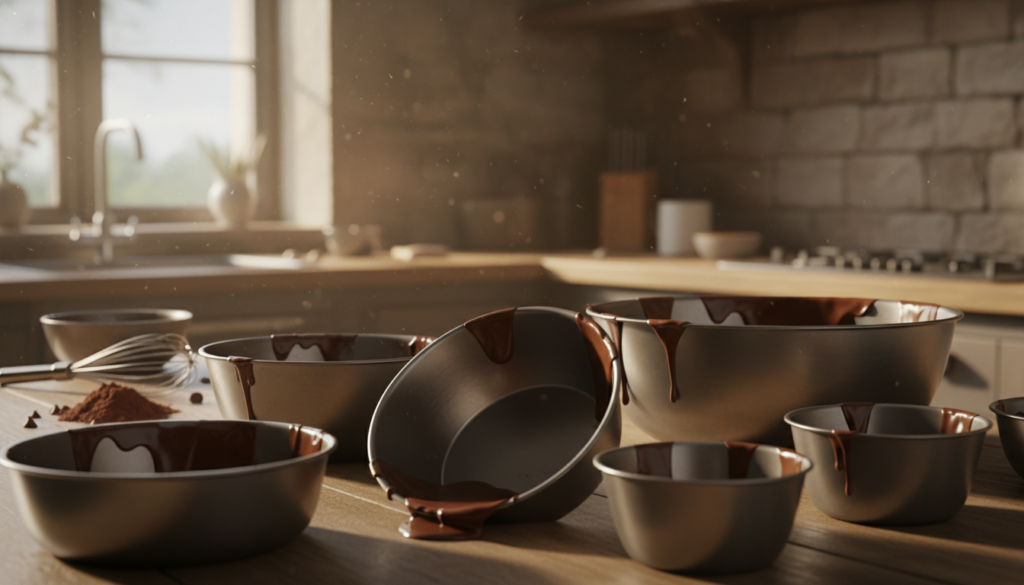
Experimenting with different molds can add a creative twist to your lava cake presentation. Whether you choose to stick with traditional ramekins or opt for something more unique, the key is to ensure that your molds are properly prepared.
To achieve a decadent lava cake, you must first master the art of making the molten chocolate mixture. This process involves several key steps that, when executed correctly, result in a rich, gooey center that defines a perfect lava cake.
The first step in making the molten chocolate mixture is melting the chocolate and butter together. This is best done in a double boiler or in a microwave-safe bowl in short increments, stirring between each heating.
Once the chocolate and butter mixture has cooled slightly, it’s time to incorporate the sugar and eggs. This step is crucial for achieving the right texture and structure.
The final step in making the molten chocolate mixture is gently folding in the flour. This requires a delicate touch to maintain the mixture’s integrity.
Folding Technique: Use a spatula to gently fold the flour into the chocolate mixture. The goal is to just combine; overmixing can lead to a dense cake.
| Ingredient | Quantity | Purpose |
|---|---|---|
| Dark Chocolate | 8 oz | Provides rich, deep flavor |
| Unsalted Butter | 1/2 cup | Adds moisture and tenderness |
| Granulated Sugar | 1 cup | Contributes to texture and sweetness |
| Eggs | 2 large | Binds ingredients together |
| All-purpose Flour | 1/2 cup | Provides structure |
Now that you’ve prepared your molds, it’s time to pour in the batter and bake your molten chocolate lava cakes to perfection. This step is crucial as it determines the final texture and presentation of your cakes.
To fill the molds, simply pour the prepared chocolate batter into each one, filling them about 3/4 of the way full. This allows room for the cakes to rise during baking. Make sure to:
Baking the cakes at the right temperature and for the correct amount of time is vital. Preheat your oven to 425°F (220°C). The ideal baking time is between 12 to 15 minutes, depending on your oven and the size of your molds. It’s essential to not overbake, as this will result in a cake that’s more like a regular chocolate cake rather than a lava cake.
To achieve the perfect molten center, follow these steps:
A perfectly baked lava cake should have:
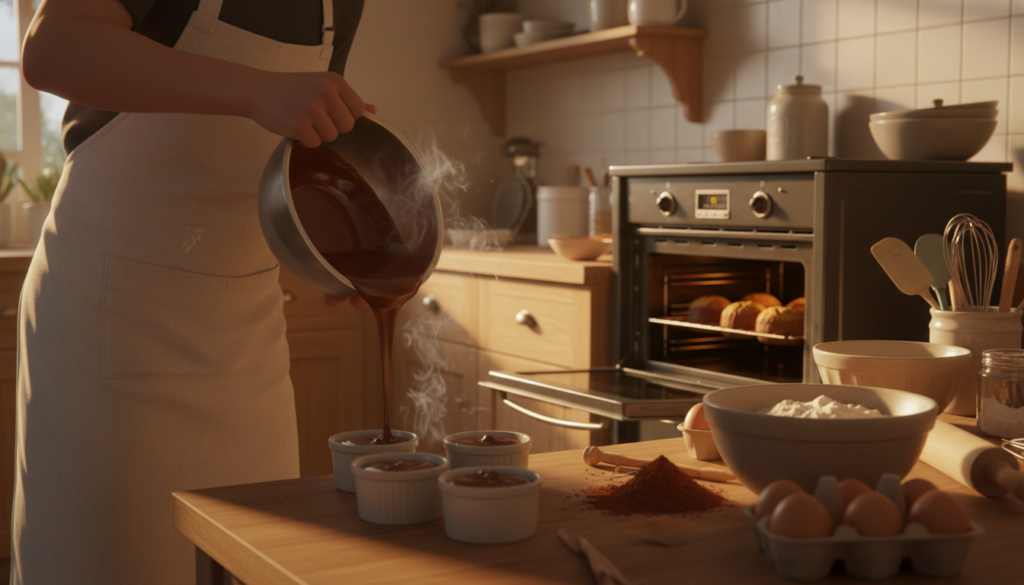
By following these guidelines, you’ll be able to achieve a beautifully baked molten chocolate lava cake with a gooey center. Remember, practice makes perfect, so don’t be discouraged if it takes a few tries to get it just right.
Once your Molten Chocolate Lava Cakes are baked to perfection, the next crucial step is cooling and serving them correctly. This stage is vital for maintaining the integrity of the cake and ensuring it is presented in an appealing manner.
To prevent your Molten Chocolate Lava Cakes from breaking apart, it’s essential to cool them properly. Remove the cakes from the oven and let them cool in the molds for a minute or two. Then, invert them onto plates or serving dishes. If a cake sticks, gently run a knife around its edges to loosen it.
The presentation of your Molten Chocolate Lava Cakes can be just as impressive as their taste. Consider dusting the tops with powdered sugar or cocoa powder for a simple yet elegant look. You can also add a scoop of vanilla ice cream or whipped cream to contrast the warm cake with a cold, creamy texture.
For a more elaborate presentation, consider the following plating ideas:
| Plating Idea | Description |
|---|---|
| Fresh Fruits | Add a selection of fresh berries or sliced fruits around the cake. |
| Caramel Sauce | Drizzle caramel sauce over the cake and around the plate. |
| Mint Leaves | Garnish with fresh mint leaves for a pop of color and freshness. |
By combining these cooling techniques with creative plating ideas, you’ll be able to serve your Molten Chocolate Lava Cakes with confidence and style.
To create a truly decadent Molten Chocolate Lava Cake, you need to master the art of achieving a perfect lava center. The molten center is, after all, the defining feature of this dessert, and its richness is what sets it apart from other cakes.
Testing for Doneness is a critical step in ensuring your Lava Cake has the perfect molten center. You want to bake the cake until it’s just set on the edges but still jiggly in the center. This usually means baking it for the minimum time recommended in your recipe and checking it frequently towards the end.
One way to test for doneness is to gently shake the mold; if the center is still slightly jiggly, it’s done. Another method is to insert a toothpick into the center; for a Lava Cake, the toothpick should come out with a few moist crumbs attached, indicating that the center is still gooey.
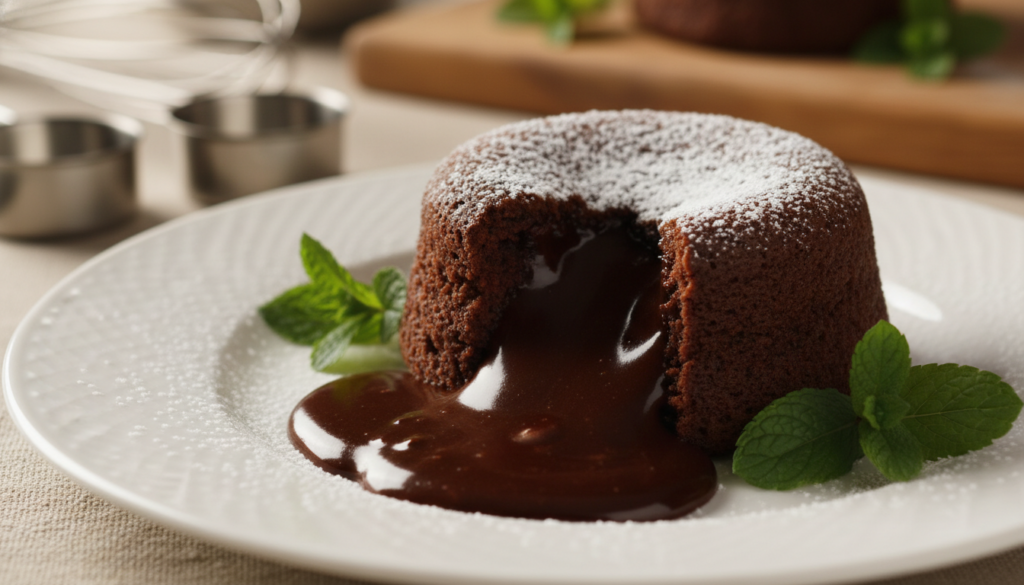
The type of chocolate you use can significantly affect the molten center of your Lava Cake. High-quality cocoa or dark chocolate with a high cocoa content will give your cake a deeper, richer flavor. Experimenting with different types of chocolate can help you achieve the perfect balance of flavor and texture.
For instance, using a high-quality dark chocolate can enhance the molten center, making it more luxurious and decadent. On the other hand, milk chocolate can add a sweeter, creamier element to your Lava Cake. The key is to experiment and find the chocolate that works best for you.
By mastering the art of testing for doneness and selecting the right chocolate, you can consistently produce Molten Chocolate Lava Cakes with a perfectly gooey molten center.
Even with a foolproof recipe, issues can arise when baking Molten Chocolate Lava Cakes. Understanding how to troubleshoot these problems is crucial for achieving the perfect dessert.
Overcooking is one of the most common issues when making Molten Chocolate Lava Cakes. It can result in a cake that is dry and lacks the signature gooey center. To avoid overcooking, it’s essential to keep an eye on the baking time and temperature. As a general rule, the cakes should be baked until the edges are set, and the centers are still slightly jiggly.
“The perfect lava cake is all about balance – a delicate crust giving way to a molten center.” Achieving this balance requires precision in baking time. If you find that your cakes are consistently overcooking, consider reducing the baking time by 30 seconds to 1 minute.
Sometimes, you may need to adjust the ingredient ratios in your Molten Chocolate Lava Cake recipe to accommodate different tastes or dietary requirements. For instance, using different types of chocolate or substituting ingredients can affect the final product. Proper ramekin preparation and folding technique are critical in these situations, as they help maintain the cake’s structure and texture.
When adjusting ingredient ratios, it’s crucial to understand the role of each component. For example, eggs contribute to the cake’s richness and moisture, while flour provides structure. By making informed adjustments, you can create a Molten Chocolate Lava Cake that suits various preferences without compromising its signature characteristics.
By troubleshooting common issues and making necessary adjustments, you can consistently produce Molten Chocolate Lava Cakes that are sure to impress.
Mastering the Molten Chocolate Lava Cake is a journey that requires practice and patience, but with this comprehensive guide, you’re well on your way to baking success. By understanding the key ingredients, essential tools, and techniques outlined in this Molten Chocolate Lava Cake Guide, you’ll be able to create decadent desserts that impress.
You can experiment with different flavors and add-ins to create unique variations. Try incorporating nuts, citrus zest, or espresso powder to give your cakes a distinct twist. The possibilities are endless, and with this guide, you have the foundation to explore and innovate.
To achieve consistent results, focus on using high-quality ingredients, precise measurements, and controlled baking times. By following these best practices and continuing to practice, you’ll refine your skills and become a master of the Molten Chocolate Lava Cake.