Nitrogen Mousse

Cryogenic Chocolate Mousse: Achieving 0.5-Micron Air Bubbles

Master the art of Nitrogen Mousse and achieve a decadent dessert with airy, 0.5-micron bubbles.

You can master the art of fine dining by exploring modern scientific methods. Molecular Gastronomy is the secret to refining the texture of your desserts. This field combines chemistry and professional cooking to create unique sensory experiences for your guests.

By utilizing liquid nitrogen, you can flash-freeze ingredients to maintain structural integrity. This technique produces microscopic air bubbles that feel like silk on the tongue. The rapid cooling prevents large ice crystals from ruining your creation.

Precision is vital when you work with advanced culinary tools. Measuring your components carefully will ensure the perfect balance of flavor and stability. Use the following ratios to achieve professional results in your kitchen.

Ingredient Baker’s Percentage (%)
Dark Chocolate (70% Cacao) 100%
Heavy Cream 80%
Egg Whites 40%
Granulated Sugar 20%

Follow these steps to complete the preparation:

  1. Melt the dark chocolate over a double boiler until it reaches 115°F.
  2. Whip the heavy cream until it forms soft peaks.
  3. Gently fold the aerated egg whites and sugar into the chocolate base.
  4. Apply cryogenic cooling to freeze the mixture instantly and stabilize the bubbles.

Key Takeaways

  • Molecular techniques allow for microscopic texture control.
  • Rapid freezing prevents the formation of large, grainy ice crystals.
  • Achieving 0.5-micron bubbles results in a superior, silky mouthfeel.
  • Baker’s percentages ensure consistent results in high-end pastry work.
  • Temperature control is essential for maintaining ingredient stability.
  • Cryogenic tools transform traditional recipes into modern culinary art.

Aeration vs. Density Nitrogen Flash-Freezing

To create a light and airy cryogenic chocolate mousse, understanding the role of aeration versus density is crucial. Aeration refers to the incorporation of air into the mixture, which directly affects the texture and mouthfeel of the final product. On the other hand, density is a measure of how heavy or light the mousse is, which is significantly influenced by the aeration process.

The balance between aeration and density is delicate and is largely achieved through the process of nitrogen flash-freezing. This technique involves the use of liquid nitrogen to rapidly freeze the chocolate mousse mixture.

Nitrogen Flash-Freezing

Nitrogen flash-freezing is a critical step in creating cryogenic chocolate mousse. Here’s how you can achieve the perfect texture using this method:

  1. Slowly pour liquid nitrogen into the chocolate mousse mixture while blending.
  2. Continue blending until the mixture starts to froth and expand, indicating that aeration is occurring.
  3. Monitor the consistency and stop once the desired texture is achieved.

The rapid freezing facilitated by liquid nitrogen helps in incorporating air into the mixture, thus enhancing aeration and reducing density. This results in a light and airy texture that is characteristic of high-quality cryogenic chocolate mousse.
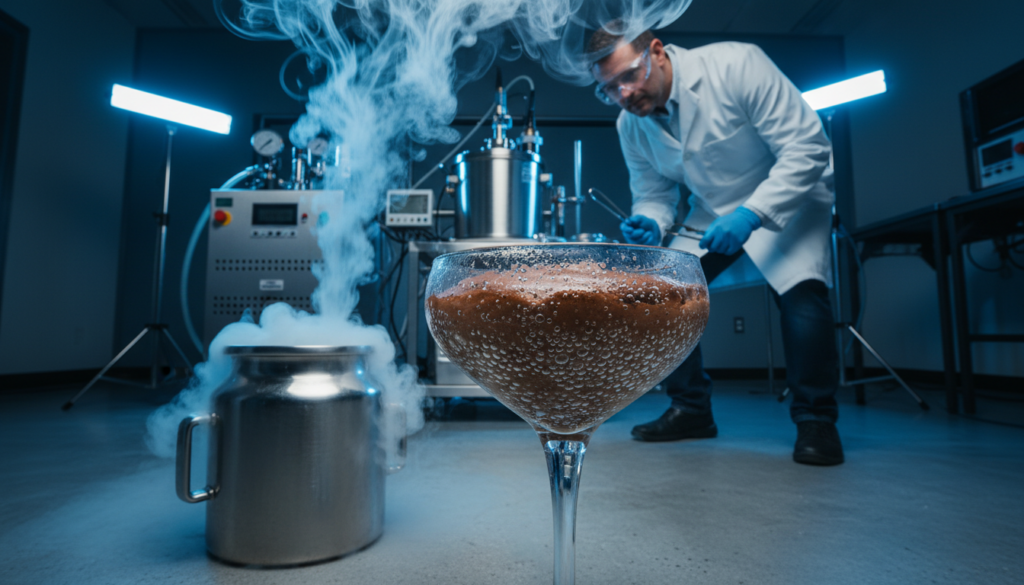
Liquid Nitrogen Freezing Process

By carefully controlling the amount of liquid nitrogen and the blending process, you can achieve the perfect balance between aeration and density, resulting in a superior cryogenic chocolate mousse.

Stabilizing Vegan Foams

Stabilizing vegan foams is a multifaceted process that involves understanding the role of overrun and its impact on foam stability. To achieve the perfect vegan foam, you need to balance the ingredients and processing techniques carefully.

Stabilizing Foams

The key to stabilizing foams lies in controlling the amount of air incorporated into the mixture, a concept known as overrun. To achieve the desired overrun, you must adjust the amount of liquid nitrogen used and the blending time.

Overrun and Foam Stability

To stabilize your vegan foams, follow this recipe:

  • Start by preparing your base mixture according to your recipe.
  • Slowly add liquid nitrogen while blending the mixture.
  • Continue blending until you achieve the desired consistency and overrun.
  • Monitor the texture closely to avoid over-blending, which can result in a dense texture.

The ideal overrun is achieved when the mixture becomes lighter and more aerated. Be cautious not to over-blend, as this can negatively impact the foam’s stability.
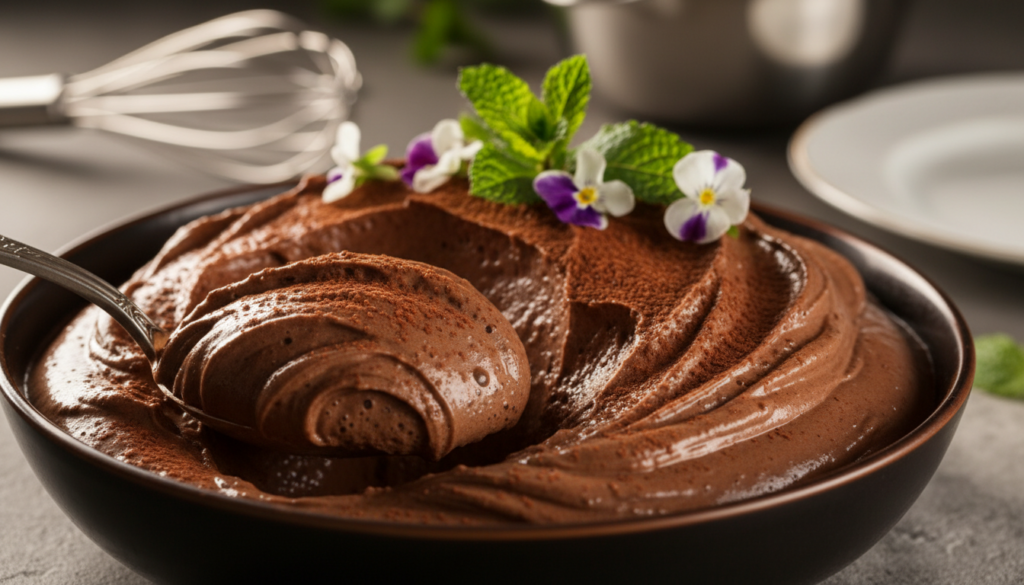
overrun in vegan foams

By mastering the concept of overrun and adjusting your techniques accordingly, you can create stable and appealing vegan foams for your desserts.

Serving Temperature Curves

To achieve the perfect cryogenic chocolate mousse, serving it at the right temperature is crucial. The stability and texture of the mousse are significantly affected by temperature, making temperature control a vital aspect of Foam Physics.

Optimal Temperature Conditions

Understanding how temperature impacts the mousse’s texture is essential. By creating a serving temperature curve, you can visualize the ideal temperature range for maintaining the mousse’s light and airy texture.

Foam Physics and Temperature

The physics behind foam stability dictates that temperature fluctuations can cause the mousse to degrade. A temperature curve illustrating the ideal serving temperature can help you maintain the desired texture. For instance, a curve might show that between 10°C to 15°C, the mousse retains its optimal texture and stability.

Temperature (°C) Texture Stability
5 Poor
10 Good
15 Excellent
20 Poor

By controlling the serving temperature and understanding Foam Physics, you can ensure that your cryogenic chocolate mousse remains a delightful and creamy dessert.


FAQ

How does Molecular Gastronomy enhance the structure of a cryogenic chocolate mousse?

By utilizing Molecular Gastronomy, you are applying scientific principles to culinary techniques to manipulate the physical properties of your ingredients. In the case of cryogenic mousse, it allows you to precisely control the size of air bubbles at the sub-micron level, creating a silkier, more complex texture that traditional methods simply cannot achieve.

What is the benefit of using Liquid Nitrogen over traditional chilling methods?

Liquid Nitrogen allows for an almost instantaneous flash-freezing process. Because the mixture freezes so rapidly, air bubbles are trapped at a size of approximately 0.5 microns before they have a chance to expand or coalesce. This results in a much smoother mouthfeel and a dessert that dissipates elegantly on the palate.

Why is it necessary to monitor Overrun when stabilizing vegan foams?

Overrun is the measure of the volume of air incorporated into your mixture relative to the original liquid volume. Achieving the perfect Overrun is essential for Foam Stability in vegan recipes, which lack the proteins found in dairy. By balancing the blending time with the application of nitrogen, you ensure the foam remains voluminous without becoming overly brittle or collapsing into a liquid state.

How do Foam Physics and temperature affect the final presentation?

The science of Foam Physics suggests that the stability of your mousse is directly tied to its thermal state. As the temperature rises, the surface tension of the bubbles changes; therefore, following a specific serving temperature curve is vital. Serving the mousse at the peak of this curve ensures that the 0.5-micron bubbles remain intact long enough for the guest to experience the intended texture.

Does the Baker’s percentage significantly impact the success of nitrogen flash-freezing?

Absolutely. Using a table based on the Baker’s percentage ensures that your ratios of fats, solids, and liquids are mathematically sound. For cryogenic applications, even a slight deviation in the percentage of fats can prevent the Liquid Nitrogen from aerating the mixture properly, leading to a dense product rather than a light, airy mousse.

What equipment is essential for achieving 0.5-micron air bubbles?

To reach this level of precision, you will need a high-performance blender, such as a Vitamix Commercial, and a vacuum-insulated dewar to safely handle the Liquid Nitrogen. Standard kitchen mixers do not provide the rotational speed or the rapid cooling required to stabilize foams at such a microscopic scale.

Leave a Reply

Your email address will not be published. Required fields are marked *