All the world of cacao in one click.

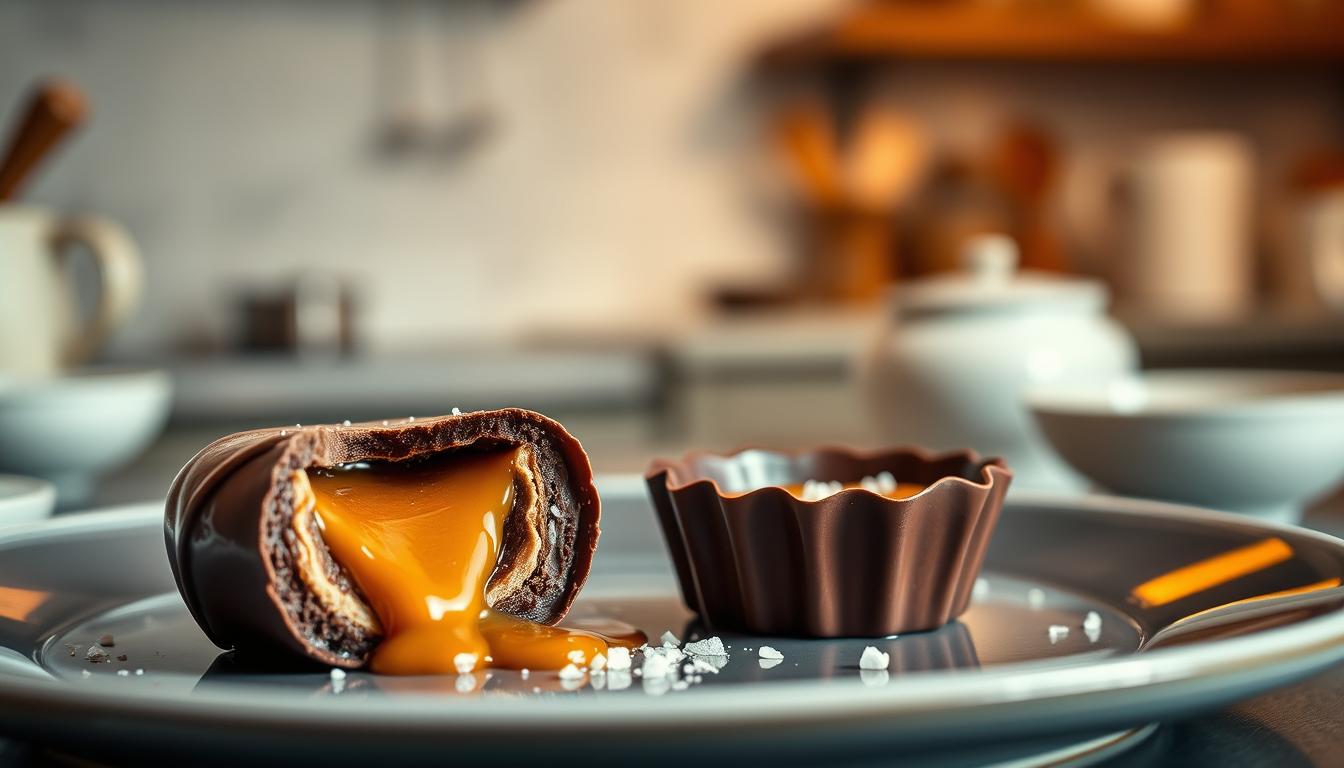
Learn to make the perfect "Oozing Two-Heart Mousse" - a salted caramel core with a snap shell. Indulge in this decadent tutorial.
Creating the perfect dessert involves a combination of art and science. To achieve a delightful surprise effect, you will need to master the technique of creating a liquid insert. This involves preparing a salted caramel filling that will be frozen and then inserted into a chocolate sphere, resulting in a unique dessert experience.
To start, gather your ingredients and equipment. The process requires precision and patience, but the result is well worth the effort. You will be guided through the steps to create your own “Oozing” dessert, including a table for ingredients with percentages to ensure accuracy.
To create a salted caramel core that remains stable at room temperature, you need to understand the intricacies of molecular pastry. This involves not just the ingredients, but also the techniques used to prepare the caramel.
The stability of caramel at room temperature is crucial for desserts like the ‘oozing’ mousse, where the caramel core is expected to retain its texture despite being encased in a chocolate shell. A room-temperature stable caramel recipe is essential for maintaining the desired texture and consistency.
Frozen liquid inserts are a technique used in molecular pastry to create a stable caramel core. This involves freezing a liquid caramel mixture and then inserting it into the mousse. The freezing process helps in maintaining the texture of the caramel.
To make a salted caramel using this technique, you will need the following ingredients in the specified proportions:
| Ingredient | Baker’s Percentage (%) |
|---|---|
| Sugar | 100 |
| Cream | 50 |
| Butter | 20 |
| Sea Salt | 2 |
| Vanilla Extract | 1 |
As Chef Pierre Hermé once said, “The key to a great caramel is not just the quality of the ingredients, but also the technique used to prepare it.”
“Caramel is a delicate balance of sugar, cream, and butter; it’s a dance between texture and flavor.”
To achieve a room-temperature stable caramel, it’s crucial to cook the sugar to the right temperature and then slowly incorporate the cream and butter. The mixture should be heated to 248°F (120°C) to ensure that it reaches the firm-ball stage, which is essential for stability.
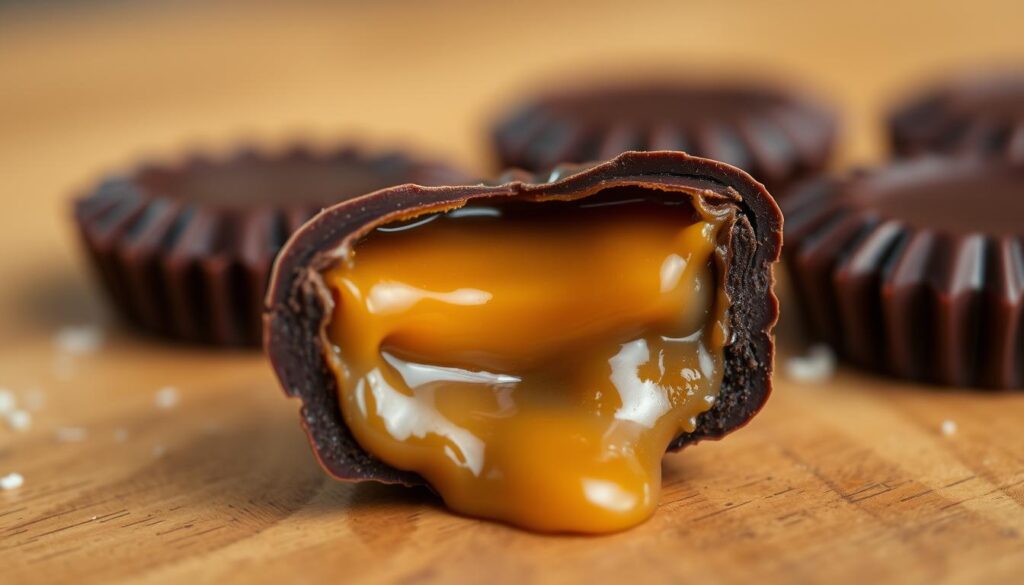
Once the caramel is prepared, it needs to be frozen before being inserted into the mousse. This freezing step is what gives the caramel its stability at room temperature. By mastering this technique, you can create a salted caramel core that complements the chocolate shell perfectly.
The texture of your mousse can make or break the “Oozing Two-Heart Mousse” dessert, with two main techniques at your disposal. You can either use a siphon or whip the mousse to achieve the desired texture. Both methods have their advantages and can significantly impact the overall experience of your dessert, particularly when paired with a delicate chocolate sphere.
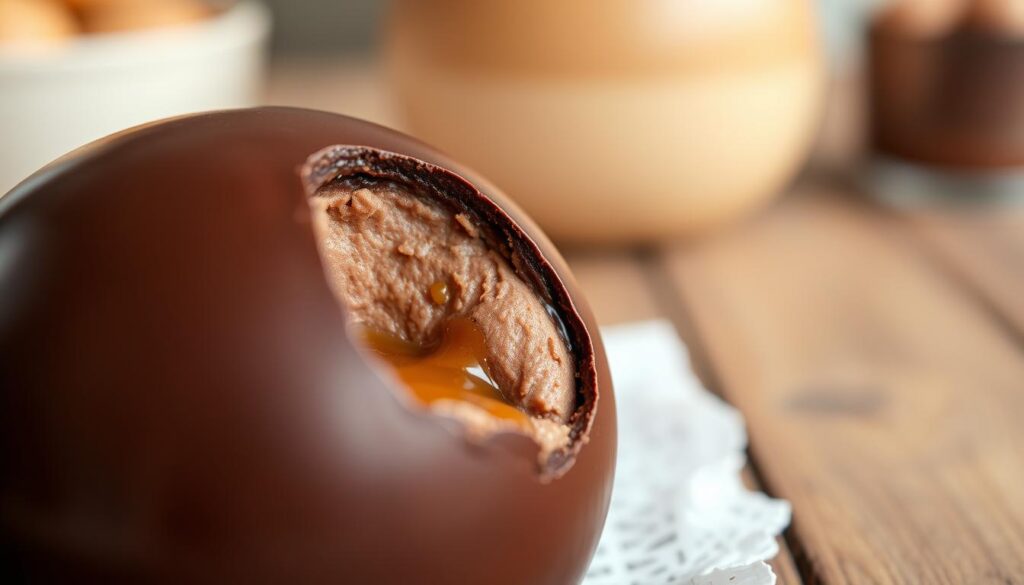
Using a siphon to create the mousse texture involves incorporating air into the mixture under pressure, resulting in a lighter and airier texture. This method is particularly effective for creating a mousse that is not too dense, allowing the flavors to meld together seamlessly with the chocolate sphere.
On the other hand, whipping the mousse incorporates air through mechanical means, resulting in a denser and potentially more stable texture. This method gives you more control over the final texture, which can be beneficial when aiming for a specific consistency that complements the snap shell of the chocolate sphere.
To help you decide between siphoning and whipping, consider the following comparison:
| Method | Texture Outcome | Control Level |
|---|---|---|
| Siphoning | Lighter, airier | Moderate |
| Whipping | Denser, more stable | High |
Ultimately, the choice between siphoning and whipping your mousse depends on the texture you wish to achieve and the equipment you have available. By mastering both techniques, you can create a chocolate sphere dessert that is both visually appealing and delightful to eat.
To give your chocolate sphere a stunning appearance, mastering the dip-coating process is essential. This technique is a cornerstone of molecular pastry, allowing you to create visually appealing desserts that are as delightful to the eyes as they are to the palate.
The first step in achieving a high-gloss finish is preparing your chocolate coating to the right temperature and consistency. This involves melting your chocolate to a precise temperature, typically between 82°F to 90°F, depending on the type of chocolate you’re using. Tempering your chocolate is crucial as it ensures that your chocolate coating will have a smooth, glossy finish.
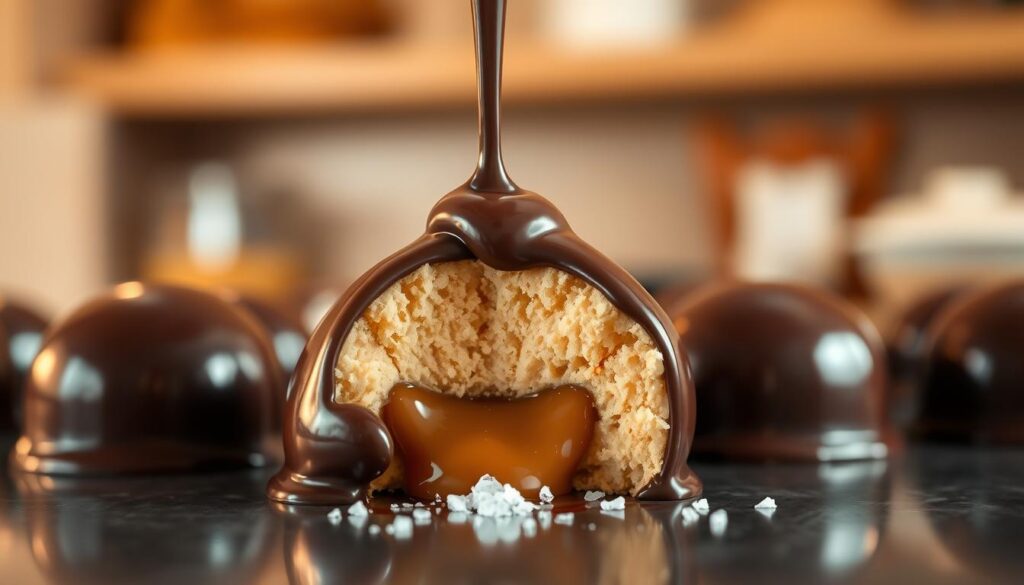
Once your chocolate is tempered, it’s time to dip-coat your sphere. This process requires a steady hand and a bit of practice to achieve an even coat. Start by gently lowering the sphere into the chocolate, making sure it’s fully submerged. Then, carefully lift it out, allowing any excess chocolate to drip off. The key is to move slowly and smoothly to avoid creating air bubbles or unevenness in the coating.
As you work on your dip-coating technique, you might find it helpful to refer to expert advice or tutorials. For instance, a well-known pastry chef once said,
“The art of chocolate making is not just about following a recipe; it’s about understanding the behavior of chocolate and using that knowledge to create something truly beautiful.”
This quote encapsulates the essence of mastering dip-coating and other chocolate-making techniques.
To further enhance your skills, consider the following tips for achieving a flawless dip-coat:
By mastering the dip-coating process and incorporating liquid inserts into your creations, you can elevate your desserts to the next level, combining the art of molecular pastry with the delight of chocolate. Whether you’re creating desserts for a special occasion or simply to impress, the high-gloss finish achieved through dip-coating is sure to make your chocolate sphere a standout.
To maximize the “Instagrammability” of your “Oozing Two-Heart Mousse,” you need to present it in a way that highlights its most appealing features, such as the surprise effect of the oozing caramel core and the chocolate sphere. Here’s how to do it:
First, place the mousse on a plate or a decorative stand to elevate its visual appeal. Next, add a few garnishes around the mousse, such as fresh fruits or edible flowers, to add color and texture. Then, drizzle a small amount of caramel sauce or chocolate glaze around the plate to create a cohesive look.
To highlight the chocolate sphere, consider placing a small decoration or a sprinkle on top of it. The key is to create a balanced composition that draws the viewer’s eye to the mousse. By following these steps, you can create a visually stunning dessert that showcases the surprise effect and is sure to impress on social media.