All the world of cacao in one click.

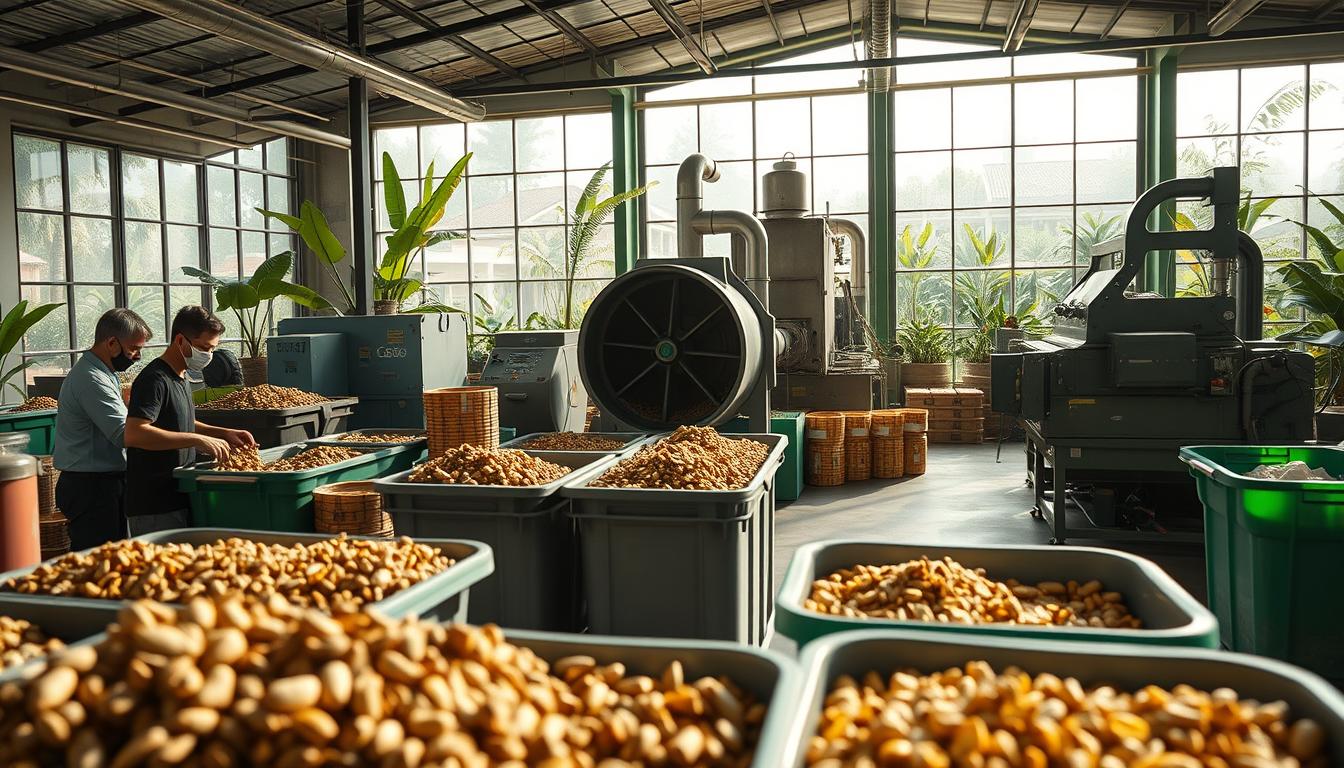
Discover how to valorize post-harvest waste from cacao production and generate extra revenue. Learn sustainable practices for using cacao husks and pulp.
You are about to embark on a journey to transform your cacao production into a circular economy model, valorizing husks and pulp for extra revenue. The process begins with understanding the high-value by-products of your cacao production.
Cacao juice, derived from the pulp, is a valuable product that can be turned into various revenue streams. By adopting a circular economy approach, you can minimize waste and maximize profits.
This section will guide you through the initial steps of identifying these by-products and setting up your production line to create a more sustainable and profitable business.
By understanding and leveraging the value of cacao pulp and husks, businesses can significantly enhance their profitability. The process begins with recognizing the potential uses of these by-products.
Cacao pulp and husks are rich in nutrients and can be processed into various high-value products. The pulp, for instance, can be turned into cacao juice, a product with growing market demand.
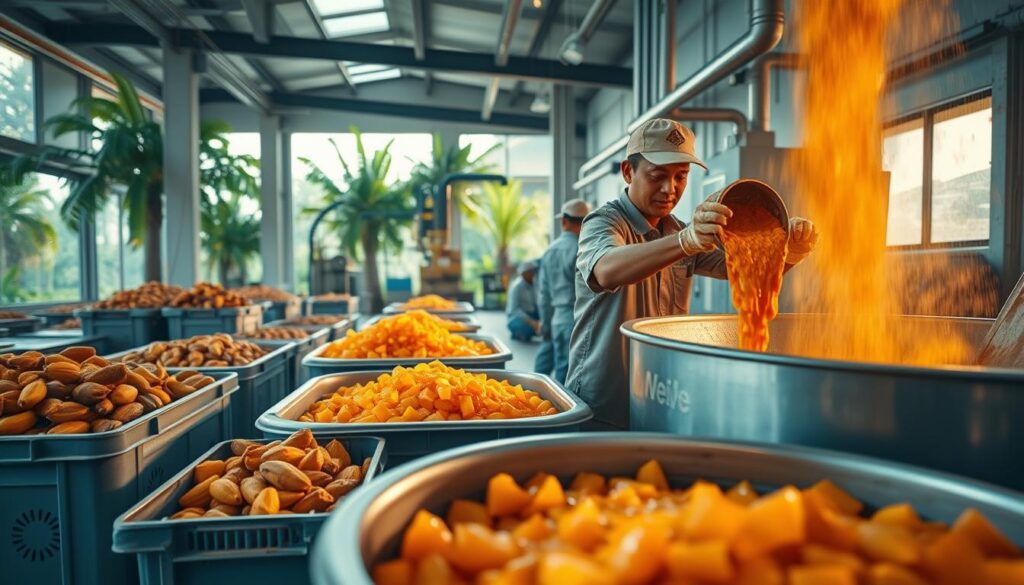
The nutritional value of cacao pulp is significant, making it an attractive ingredient for health-conscious consumers. It is rich in vitamins, minerals, and antioxidants.
To valorize cacao pulp effectively, follow these steps:
Similarly, cacao husks can be transformed into valuable products such as bio-fertilizers. These products not only add value to your business but also contribute to sustainable agricultural practices.
The process of turning husks into bio-fertilizer involves several key steps:
By adopting these strategies, businesses can effectively valorize their cacao by-products, enhancing their revenue and contributing to a more circular economy.
To valorize cacao by-products, extracting and stabilizing the pulp juice is crucial. This process not only enhances the quality of the juice but also opens up additional revenue streams through the extraction of valuable compounds like pectin.
Effective extraction techniques are vital for obtaining high-quality cacao pulp juice. Some of the methods employed include:
The choice of extraction technique depends on the equipment available and the desired quality of the juice. Enzymatic treatment, for instance, can significantly improve the yield and clarity of the juice, making it a valuable step in the extraction process.
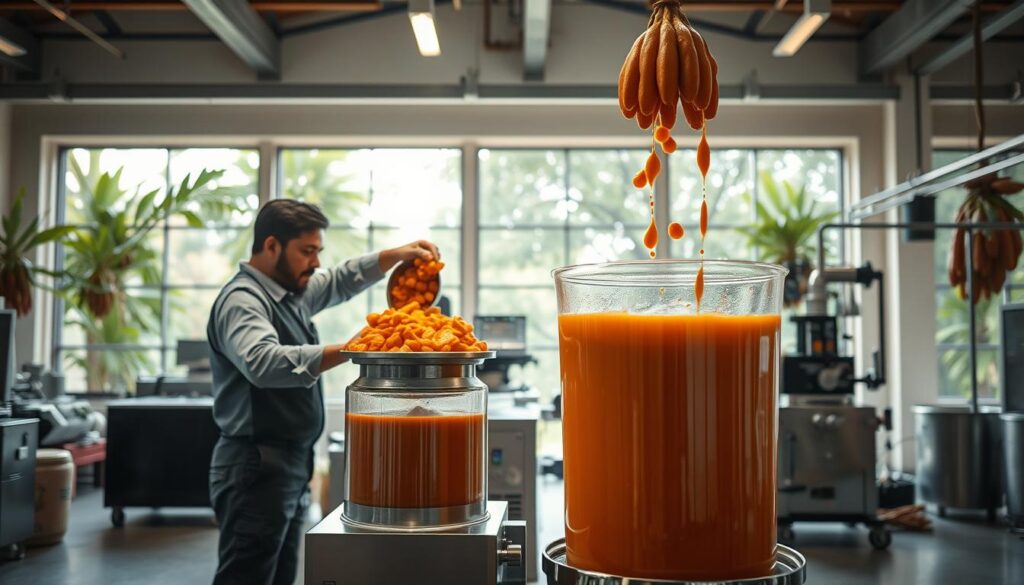
Optimizing the conditions for extraction is critical for maximizing juice yield and quality. This includes controlling factors such as temperature, pH, and the duration of the extraction process.
| Parameter | Optimal Range | Importance |
|---|---|---|
| Temperature | 40°C – 50°C | High |
| pH | 4.5 – 5.5 | Medium |
| Duration | 30 – 60 minutes | High |
After extraction, stabilizing the cacao pulp juice is essential to maintain its quality and shelf life. Stabilization methods can include pasteurization, sterilization, and the addition of natural preservatives.
One of the key aspects of stabilization is preventing the growth of unwanted microorganisms. Pasteurization is a commonly used method that effectively reduces microbial load without significantly affecting the juice’s nutritional and sensory properties.
Pectin extraction from the cacao pulp is another valuable process that can be integrated into the production workflow. Pectin is a versatile compound used in various food applications, including as a gelling agent in jams and jellies.
The process of turning cacao husks into bio-char or paper products is a game-changer for creating a side-stream income. By adopting this approach, you can not only reduce waste but also generate additional revenue streams through the sale of these value-added products.
Bio-char production is one of the most promising ways to valorize cacao husks. Bio-char is a highly stable form of carbon that can be used as a soil amendment to improve soil health, increase crop yields, and mitigate climate change.
To produce bio-char from cacao husks, you can follow these steps:
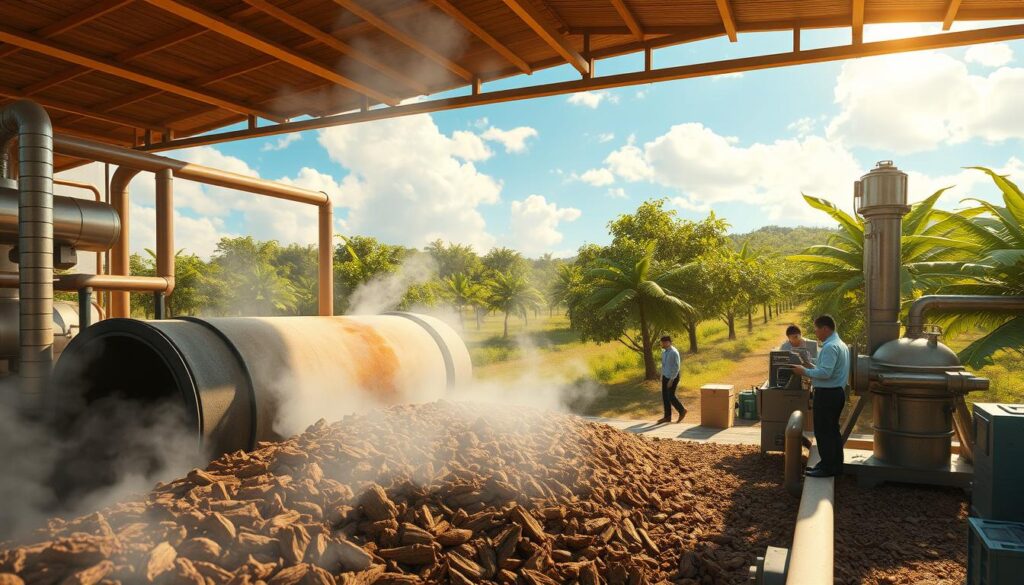
The production of paper from cacao husks is another innovative way to create value-added products. Sustainable paper products are in high demand, and using cacao husks as a raw material can help reduce deforestation and promote a circular economy.
The process of making paper from cacao husks involves several steps:
| Product | Production Process | Market Demand |
|---|---|---|
| Bio-char | Pyrolysis of dried cacao husks | High demand from farmers and gardeners |
| Paper | Pulping, screening, forming, and drying | Growing demand for sustainable paper products |
By transforming cacao husks into bio-char or paper, you can create new revenue streams and contribute to a more sustainable and circular economy.
As you implement strategies to valorize cacao husks and pulp, effectively marketing your “zero-waste” supply chain becomes crucial. By branding your business as a pioneer in the circular economy, you can attract customers who value sustainability and are willing to pay a premium for eco-friendly products.
To successfully brand your business, focus on highlighting the environmental benefits of your “zero-waste” approach. Emphasize how your products are made from what would otherwise be waste, reducing the environmental impact of your operations.
Effective marketing strategies for “zero-waste” products include leveraging social media to showcase your sustainable practices, partnering with eco-conscious influencers, and participating in environmental initiatives. By promoting your circular economy approach, you can differentiate your brand and appeal to a growing market of environmentally aware consumers.