All the world of cacao in one click.

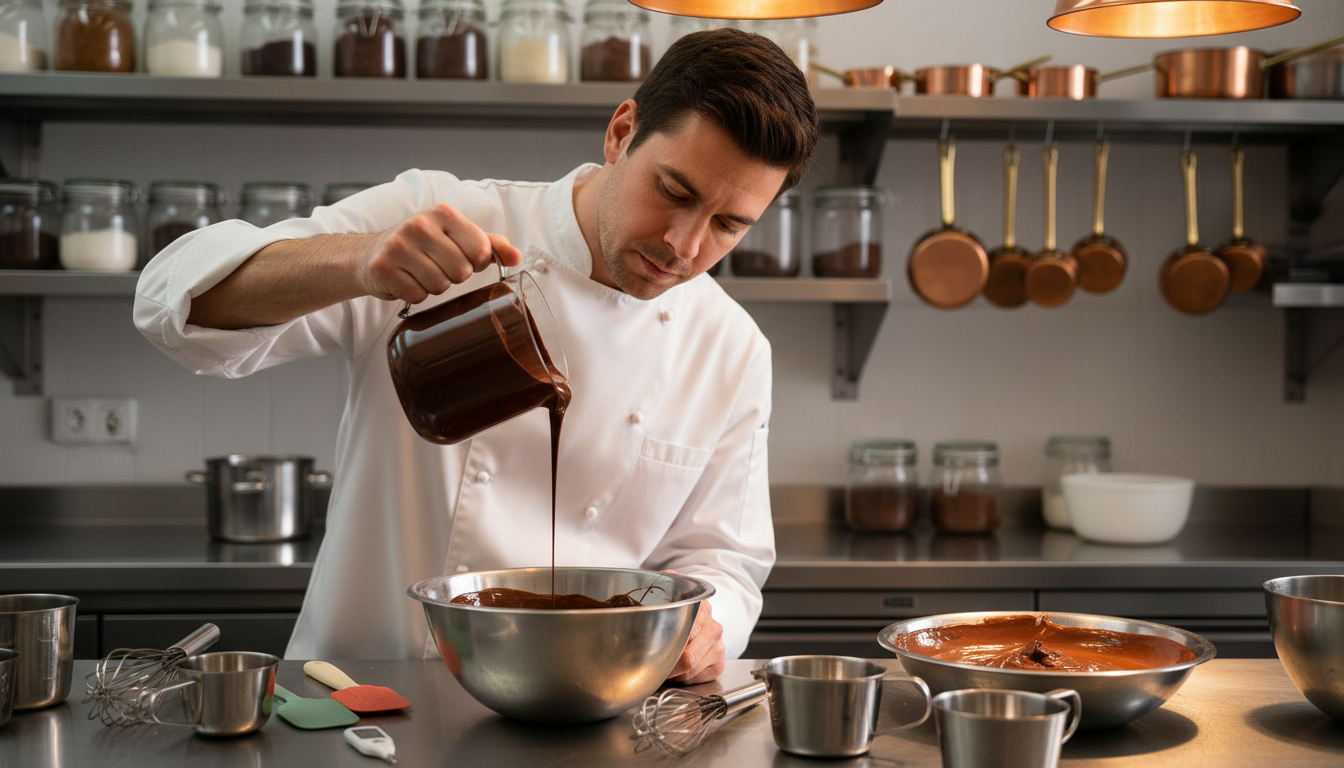
Master the art of professional-quality dark chocolate ganache. Learn the secrets to stability and flavor perfection with this in-depth tutorial.
Creating a high-quality ganache is crucial in the world of confectionery and desserts. You will learn how to master the art of making a stable and flavorful dark chocolate ganache that can be used in various applications.
To start, you’ll need the right ingredients. Here’s a breakdown of what you’ll need, using Baker’s percentage for accuracy:
Now, let’s move on to the process. Follow these clear, numbered steps to achieve stability and flavor mastery in your ganache:
Dark chocolate ganache, a fat-in-water emulsion, is a crucial element in various confections. At its core, ganache is a mixture of chocolate and heavy cream, which provides a rich, velvety texture to desserts.
Ganache is fundamentally a fat-in-water emulsion, where the fat comes from the cocoa butter in the chocolate and the water is primarily from the heavy cream. The stability of this emulsion is crucial for the texture and consistency of the ganache. Invert sugar plays a significant role in this stability by inhibiting the growth of sugar crystals, thus maintaining the smoothness of the ganache.
The ratio of heavy cream to chocolate is another critical factor. A higher proportion of chocolate will result in a thicker, more chocolate-forward ganache, while more heavy cream will produce a lighter, more fluid ganache. Understanding this ratio is essential for achieving the desired consistency for your specific application.
Using high-quality ingredients is paramount when making dark chocolate ganache. Couverture chocolate, with its high cocoa butter content, is ideal because it provides a smoother, more luxurious texture and better flavor. The quality of the heavy cream is also important, as it affects the overall taste and stability of the ganache.
Quality ingredients ensure that your ganache has a rich, deep flavor and a smooth, stable texture. Investing in good-quality chocolate and cream will significantly impact the final product, making it more enjoyable and professional-grade.
Crafting a superior dark chocolate ganache requires a deep understanding of the ingredients and their baker’s percentages. This knowledge allows you to scale the recipe according to your needs while maintaining the integrity of the ganache.
The use of baker’s percentages simplifies the scaling process, as it is based on the weight of the flour (or in this case, chocolate) being 100%. Other ingredients are then calculated as a percentage of this base weight.
The primary ingredients in dark chocolate ganache include dark chocolate, heavy cream, and sometimes invert sugar or other flavor enhancers. Here is a sample ingredients table:
| Ingredient | Baker’s Percentage | Weight (g) |
|---|---|---|
| Dark Chocolate (Couverture) | 100% | 500 |
| Heavy Cream | 50% | 250 |
| Invert Sugar | 5% | 25 |
As shown, the dark chocolate serves as the base at 100%. The heavy cream is added at 50% of the chocolate’s weight, and invert sugar at 5%. Adjusting these percentages allows you to fine-tune the ganache’s texture and flavor.
Selecting the appropriate chocolate is crucial. Couverture chocolate is highly recommended due to its high cocoa butter content, which contributes to a smoother, more luxurious ganache. The cocoa butter content in couverture chocolate typically ranges between 30% to 40%, compared to other chocolates that may have as low as 20%.
“The quality of chocolate is not just about the cocoa content; it’s also about the processing and the addition of other ingredients like vanilla.” – A renowned chocolatier.
When choosing a chocolate, consider the cocoa content and the processing methods. A higher quality chocolate will result in a better-tasting ganache. Additionally, consider the flavor profile you’re aiming for and adjust the recipe accordingly.
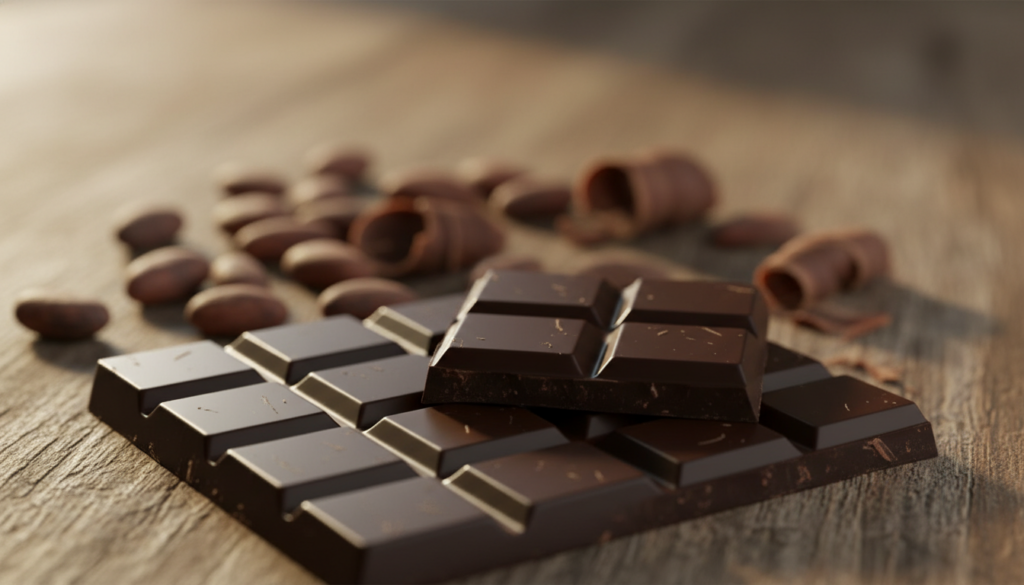
By understanding and adjusting the ingredients and their proportions, you can create a dark chocolate ganache that meets your specific needs, whether it’s for a dessert, a confection, or another culinary application.
Having the proper equipment is crucial for creating stable and flavorful dark chocolate ganache. The right tools not only make the process easier but also ensure that your ganache turns out smooth and consistent.
To start, you’ll need a few essential kitchen tools. These include a double boiler or a heatproof bowl that can be placed over a pot of simmering water, a whisk or spatula for mixing, and a container for storing the ganache. A high-quality chocolate thermometer is also vital for monitoring the temperature of your chocolate and cream mixture.
The ratio of heavy cream to chocolate is critical in making ganache. Using a digital scale can help you measure ingredients accurately, ensuring the perfect balance of flavors. While not mandatory, having a scale can significantly improve your results.
For those looking to achieve precision in their ganache making, there are several optional tools available. A thermometer can help you monitor the temperature of your cream and chocolate, ensuring that it stays within the ideal range. An immersion blender can also be useful for achieving a smooth and consistent texture.
Here’s a summary of the equipment you may need:
| Equipment | Purpose |
|---|---|
| Double Boiler or Heatproof Bowl | Melting Chocolate |
| Whisk or Spatula | Mixing Ganache |
| Digital Scale | Measuring Ingredients |
| Thermometer | Monitoring Temperature |
| Immersion Blender | Achieving Smooth Texture |
By having the right equipment, you can ensure that your dark chocolate ganache turns out perfectly. Whether you’re a professional chocolatier or a home baker, investing in quality tools will make a significant difference in your final product.
Preparing dark chocolate is a crucial step in making a high-quality ganache. The process involves melting the chocolate to a precise temperature to achieve the desired texture and flavor.
There are several methods to melt dark chocolate, each with its advantages. You can use a double boiler, a microwave, or a tempering machine. The double boiler method is highly recommended for its control over temperature.
For the microwave method, place chopped chocolate in a microwave-safe bowl. Heat in 30-second increments, stirring between each interval, until smooth.
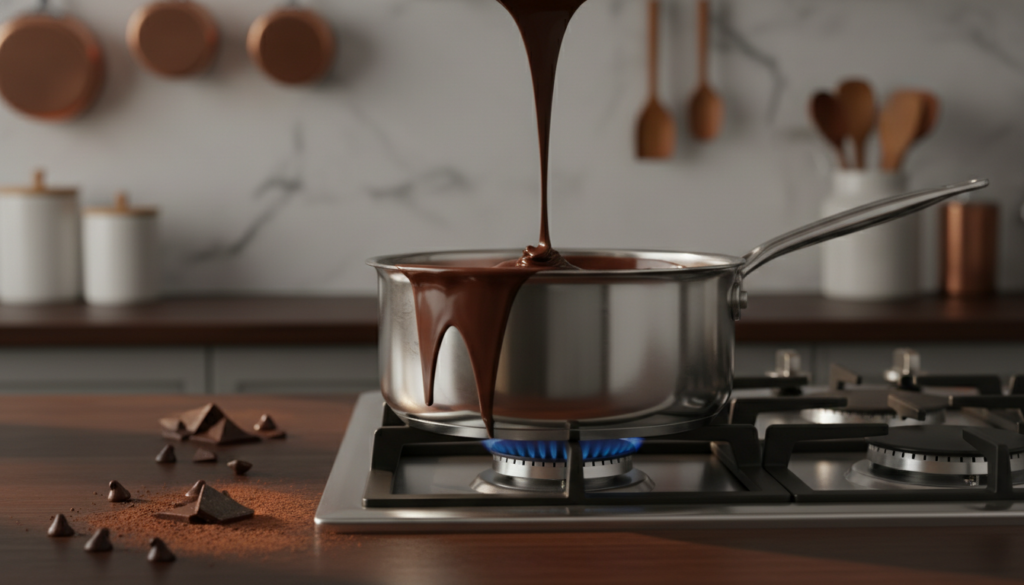
Seizing occurs when chocolate comes into contact with water or is cooled too quickly, causing it to stiffen. To avoid this, ensure your utensils and bowls are dry, and avoid sudden temperature changes.
By following these tips and choosing the right melting method, you can achieve a smooth, melted chocolate that is ideal for making ganache. This careful preparation is key to ganache crystallization, resulting in a stable and flavorful final product.
The art of crafting dark chocolate ganache lies in achieving the perfect balance between chocolate and cream. This balance is crucial for creating a smooth and stable ganache that can be used in various desserts and confections.
To make the ganache, follow these steps:
Achieving the perfect texture is crucial for the ganache to be used effectively in desserts. The emulsification process is key to creating a smooth texture. To ensure this, it’s essential to heat the cream properly and not overheat it, as this can cause the ganache to separate.
When the cream is poured over the chocolate, the mixture should be left to sit for a few minutes. This allows the chocolate to melt evenly, making it easier to achieve a smooth ganache. Gentle stirring is then required to ensure that the chocolate and cream are fully incorporated.
The ganache will thicken as it cools. If you need a thicker ganache, let it cool to room temperature. For a thinner ganache, you can stop the cooling process earlier or gently reheat it.
To ensure your dark chocolate ganache is suitable for its intended use, testing its consistency is essential. The consistency of your ganache can significantly affect its performance in various applications, from coatings to fillings.
There are several methods to test the consistency of your ganache. One common technique is to lift some ganache with a spatula and observe how it drips back into the bowl. If it forms a smooth, even ribbon that doesn’t break easily, it’s ready to use. Another method is to place a small amount on a piece of parchment paper and let it set at room temperature. After about 10-15 minutes, check the texture. It should be firm but still pliable.
Temperature plays a crucial role in the consistency of ganache. It’s essential to test the ganache at room temperature, as its consistency can change significantly with temperature variations.
If your ganache is too thin, you can refrigerate it for a few minutes to firm it up. Conversely, if it’s too thick, gently heating it in short intervals in the microwave or over a double boiler can help achieve the desired consistency. Be cautious not to overheat, as this can cause the ganache to seize.
| Ganache Consistency | Adjustment Method |
|---|---|
| Too Thin | Refrigerate for a few minutes |
| Too Thick | Gently heat in short intervals |
By mastering the techniques for testing and adjusting the consistency of your dark chocolate ganache, you can ensure it performs optimally for your intended application.
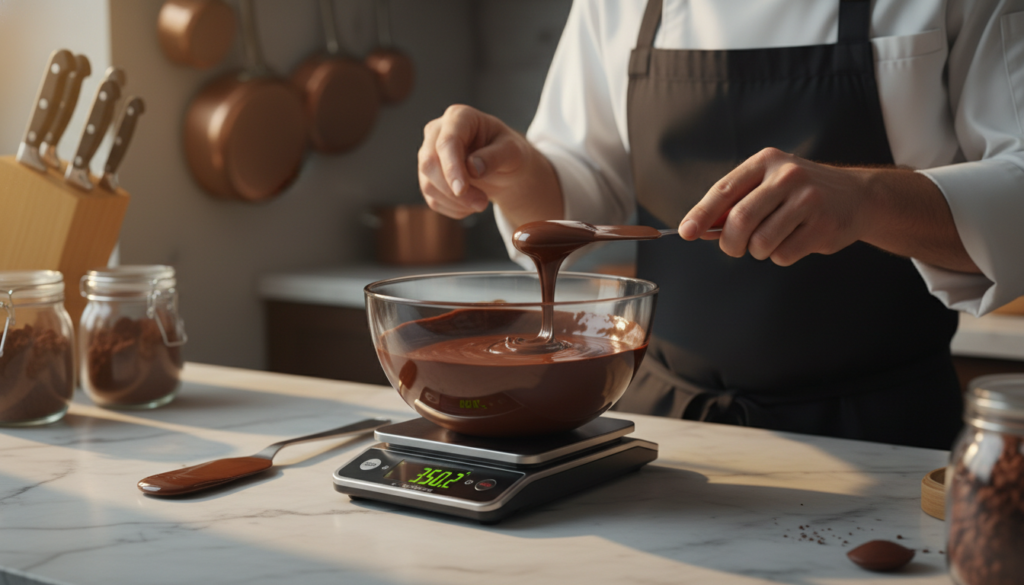
Dark chocolate ganache is a canvas waiting for your creative touch through various flavor enhancements and additions. By incorporating different ingredients, you can tailor the ganache to complement a wide range of desserts and confections.
Infusing your dark chocolate ganache with vanilla or espresso can add depth and complexity. Vanilla brings a creamy sweetness, while espresso intensifies the chocolate flavor. To infuse with vanilla, you can use vanilla extract or scrape the seeds from a vanilla bean. For espresso, simply mix in a small amount of strong espresso into the ganache.
Liquors can add a sophisticated layer to your ganache, making it perfect for adult desserts. Popular choices include Grand Marnier, rum, and Kahlúa. When adding liquors, start with a small amount and taste as you go, since the flavor can quickly become overpowering.
By thoughtfully enhancing your dark chocolate ganache with these flavor additions, you can create a truly unique and memorable dessert experience.
Troubleshooting is an essential skill for achieving high-quality dark chocolate ganache. Even with careful preparation, issues can arise that affect the texture and flavor of your ganache.
A grainy texture in ganache is often due to the chocolate not being properly melted or emulsified. To fix this, you can try re-heating the ganache gently and whisking it thoroughly. If the graininess persists, straining the ganache through a fine-mesh sieve can help remove any remaining particles, resulting in a smoother texture.
Tip: Ensuring that your chocolate is of high quality and that you melt it correctly can prevent graininess. Using a double boiler or a microwave-safe bowl in short intervals, stirring between each heating, can help achieve a smooth melt.
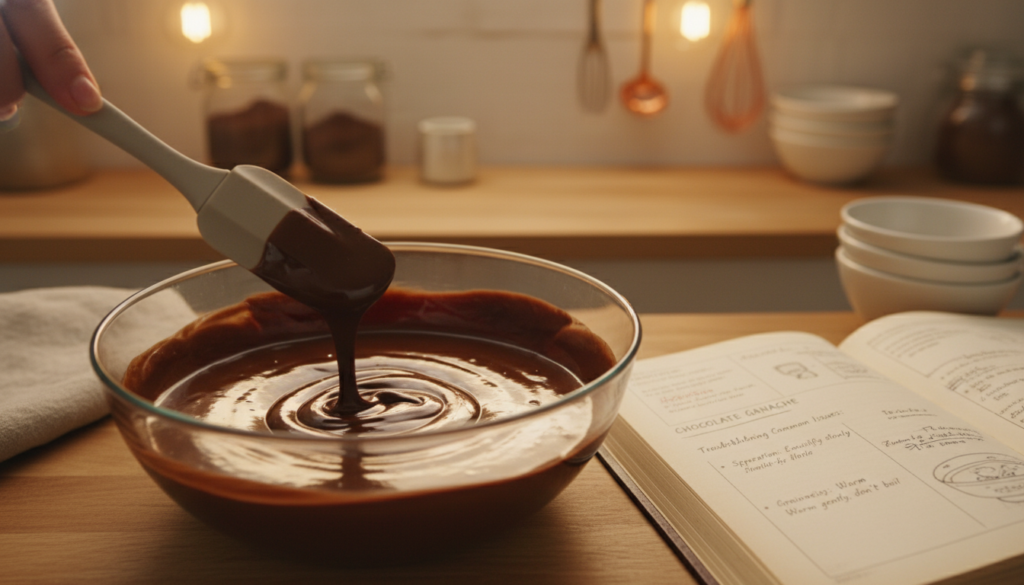
The balance between sweetness and bitterness in dark chocolate ganache is crucial for its overall flavor. If your ganache tastes too sweet or too bitter, adjusting the ratio of chocolate to cream can help. For a sweeter ganache, use a higher proportion of cream, and for a more bitter ganache, increase the proportion of dark chocolate.
Experimentation is key: Taste your ganache as you go and make adjustments accordingly. Remember, the type of chocolate you use significantly impacts the flavor, so choosing a high-quality dark chocolate that suits your taste preferences is essential.
Maintaining shelf-life stability is also crucial. Properly stored ganache can last for several weeks. Keep it in an airtight container in the refrigerator and allow it to come to room temperature before use.
The longevity and flavor of your dark chocolate ganache depend significantly on how it’s stored. Proper storage techniques can extend its shelf life and maintain its quality.
To store dark chocolate ganache effectively, you should keep it in an airtight container. This prevents it from absorbing odors from other foods and protects it from moisture, which can cause it to seize or crystallize. Store the container in a cool, dry place, away from direct sunlight and heat sources.
Refrigeration is recommended if you don’t plan to use the ganache within a week. When refrigerating, ensure the container is tightly sealed to prevent absorption of fridge odors. Allow the ganache to come to room temperature before use to restore its smooth texture.
| Storage Method | Shelf Life | Notes |
|---|---|---|
| Room Temperature | Up to 1 week | Keep away from direct sunlight and heat |
| Refrigerated | Up to 2 weeks | Seal tightly, allow to come to room temperature before use |
| Freezer | Up to 3 months | Thaw in the refrigerator or at room temperature |
Even with proper storage, dark chocolate ganache can deteriorate over time. Signs of deterioration include ganache crystallization, where the ganache becomes grainy or develops a white, sugary coating. Other signs include an off smell or taste, and separation of the chocolate and cream.
If you notice any of these signs, it’s best to discard the ganache and prepare a fresh batch. Regularly checking on your stored ganache can help you catch any issues early.
You can now explore the various creative applications of dark chocolate ganache in your desserts and confections. With its rich, velvety texture and deep flavor, ganache is a versatile ingredient that can elevate a wide range of sweet treats.
Ganache can be used as a filling for cakes, pastries, and chocolates, adding a luxurious touch to your creations. Try pairing it with fresh fruits, nuts, or spices to create unique flavor combinations.
Experiment with pairing dark chocolate ganache with complementary flavors like citrus, coffee, or caramel to create intriguing desserts. The key is to balance the flavors so that the ganache enhances, rather than overpowers, the other ingredients.
By incorporating dark chocolate ganache into your recipes, you can add a new level of sophistication and creativity to your desserts and confections, making them stand out with their rich, velvety texture and deep, chocolatey flavor.