All the world of cacao in one click.

Implement regenerative agroforestry in 2026 with our comprehensive technical roadmap. Achieve sustainability and profitability.
To achieve sustainability and profitability by 2026, you need to adopt a holistic approach to farming. Regenerative practices can help you do so.
The key to successful implementation lies in understanding the essential components and integrating them into a cohesive system. This includes diverse crop species, appropriate shade management techniques, and organic amendments.
By following a step-by-step guide, you can create a thriving agroforestry system that enhances carbon sequestration and promotes ecological balance.
To achieve success in regenerative agroforestry by 2026, it’s essential to define clear standards. Regenerative agroforestry involves integrating trees into agricultural landscapes to enhance biodiversity, improve soil health, and mitigate climate change. As you adopt these practices, establishing a robust framework for regenerative standards becomes crucial.
Regenerative standards serve as a benchmark for farmers, policymakers, and stakeholders to measure the effectiveness of their agroforestry practices. These standards encompass various aspects, including soil conservation, biodiversity enhancement, and efficient water use. By defining these standards for 2026, you can align your practices with the latest research and technological advancements.
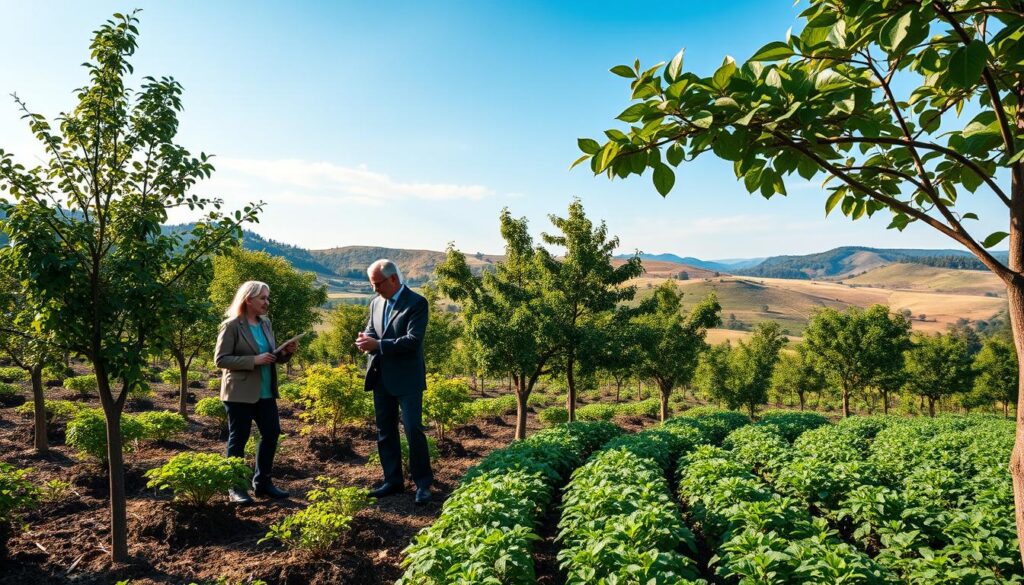
Dynamic shade layering is a critical component of regenerative agroforestry, involving the strategic planting of trees to create a layered canopy that promotes ecological interactions. This technique not only enhances biodiversity but also improves carbon sequestration.
To implement dynamic shade layering effectively, follow these steps:
Effective shade management is crucial for the success of regenerative agroforestry. By adopting dynamic shade layering techniques, you can create a resilient and productive agricultural ecosystem.
According to experts, “Regenerative agroforestry has the potential to transform agricultural landscapes, enhancing both ecological and economic benefits.” This underscores the importance of adopting practices like dynamic shade layering.
“The future of agriculture lies in its ability to regenerate and sustain itself. Regenerative agroforestry is a key strategy in achieving this goal.”
A comparative analysis of different shade layering techniques reveals their varying impacts on biodiversity and carbon sequestration.
| Technique | Biodiversity Impact | Carbon Sequestration |
|---|---|---|
| Single Layer | Low | Moderate |
| Multi-Layer | High | High |
| Dynamic Layering | Very High | Very High |
By understanding the benefits and challenges associated with different techniques, you can make informed decisions about your agroforestry practices.
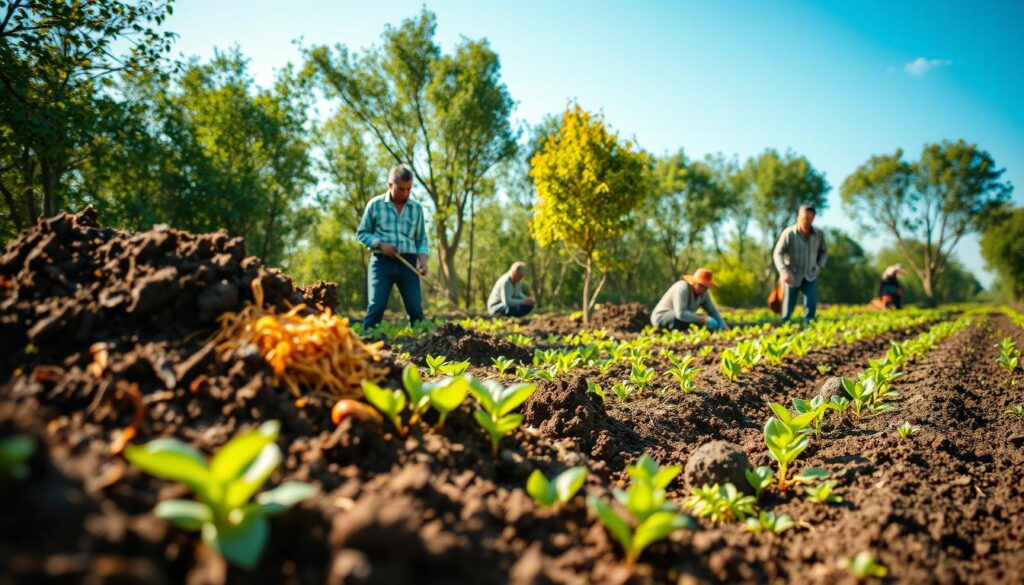
To achieve regenerative agroforestry, you must first focus on restoring your soil’s health through organic amendments. Soil restoration is crucial because it enhances the soil’s structure, increases its water retention capacity, and supports biodiversity. By improving soil health, you create a robust foundation for your agroforestry system, leading to more resilient and productive farming practices.
One effective method for soil restoration involves the application of a balanced mix of organic amendments. This can include compost, manure, and cover crops, each playing a unique role in enhancing soil fertility and overall health. The proportions of these amendments can vary based on the specific needs of your soil, as determined by soil testing and analysis.
A sample recipe for soil restoration might include the following ingredients, listed in a Baker’s percentage format for ease of scaling:
| Ingredient | Percentage (%) |
|---|---|
| Compost | 40 |
| Manure | 30 |
| Cover Crops | 30 |
As noted by soil health experts, “The use of organic amendments is a cornerstone of regenerative agriculture, offering a natural and effective means of enhancing soil fertility and promoting ecosystem services.” Restoring soil health not only benefits your farm but also contributes to broader environmental goals, such as carbon sequestration and biodiversity conservation.
By adopting these soil restoration techniques, you can significantly improve the health and productivity of your agroforestry system. This, in turn, can lead to more sustainable farming practices and a more resilient agricultural enterprise.
To gauge the success of your regenerative agroforestry efforts, it’s essential to measure carbon capture accurately. This process involves assessing the amount of carbon dioxide removed from the atmosphere and stored in various farm components, such as soil, trees, and other organic matter.
Carbon capture measurement is crucial for understanding the environmental impact of your farm and for identifying areas of improvement. By monitoring carbon sequestration, you can make informed decisions about your regenerative agroforestry practices.
Assessing biodiversity is an integral part of regenerative agroforestry. It involves evaluating the variety of plant and animal species on your farm. To do this effectively, follow these steps:
By assessing biodiversity, you can gain insights into the overall health of your ecosystem and make adjustments to enhance its resilience.
To monitor carbon sequestration effectively, you can employ several techniques:
By implementing these monitoring techniques, you can accurately measure carbon capture on your farm and make data-driven decisions to enhance your regenerative agroforestry practices.
Regenerative agroforestry offers a promising approach to mitigating climate change by capturing carbon and promoting biodiversity. By following the steps outlined above, you can effectively measure carbon capture and assess biodiversity on your farm.
To create a thriving regenerative agroforestry system, consider the following recipe for success. The key ingredients are diverse crop species, thorough market analysis, and robust financial planning.
Start by selecting a mix of crops that complement each other, such as cocoa and timber. This cocoa-timber integration approach can enhance biodiversity, improve soil health, and increase profitability.
Next, conduct a thorough market analysis to understand the demand for your crops and identify potential buyers. This will help you make informed decisions about which crops to plant and how to price them.
Finally, develop a comprehensive financial plan that accounts for the initial investment, ongoing expenses, and projected revenue. By following these steps, you can create a regenerative agroforestry system that is both sustainable and profitable.
By adopting regenerative agroforestry practices, such as cocoa-timber integration, you can not only improve the environmental sustainability of your farm but also enhance its economic viability.