All the world of cacao in one click.

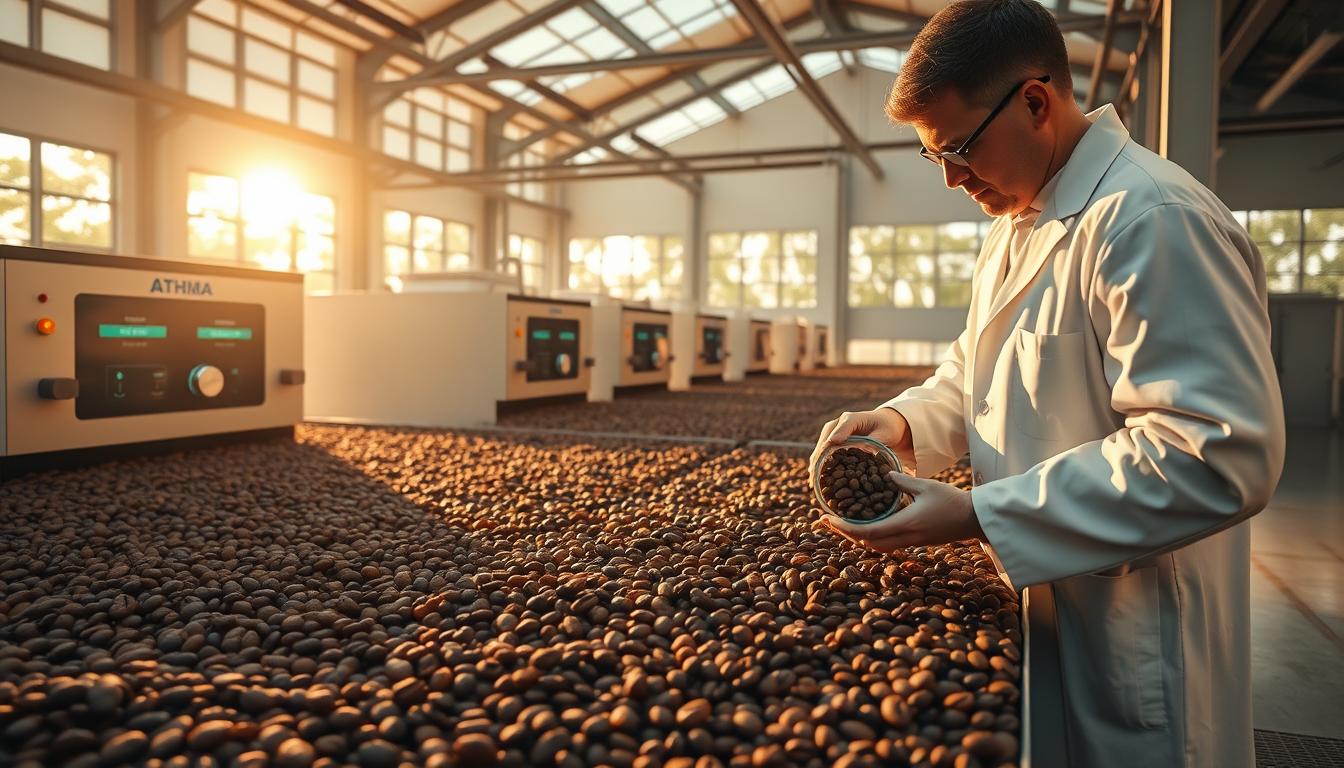
Optimize your solar drying process and protect bean quality from climate volatility in 2026. Learn proven Solar Drying Optimization techniques.
As climate volatility continues to impact agricultural practices, precision drying has become crucial for maintaining bean quality. You need to protect your beans from the adverse effects of changing weather patterns to ensure optimal quality.
To achieve this, you must focus on Solar Drying Optimization techniques that allow for precise control over drying conditions. Maintaining a moisture content of 7% is critical for preserving bean quality.
Here’s a step-by-step guide to preparing for the drying process:
1. Assess your beans’ initial moisture content.
2. Prepare your drying equipment according to the manufacturer’s instructions.
3. Monitor weather conditions to optimize your drying schedule.
You need to adapt your drying methods to the changing climate conditions anticipated in 2026. The increasing climate volatility is expected to impact temperature and humidity levels, directly affecting the drying of beans.
Climate volatility in 2026 will manifest through more extreme weather events, including higher temperatures and unpredictable precipitation patterns. This volatility can lead to challenges in maintaining optimal drying conditions.
To mitigate these challenges, consider the following steps for Solar Drying Optimization:
UV radiation can significantly impact bean quality during the drying process. Increased UV exposure can lead to degradation of nutritional content and flavor. Thus, incorporating UV protection is crucial.
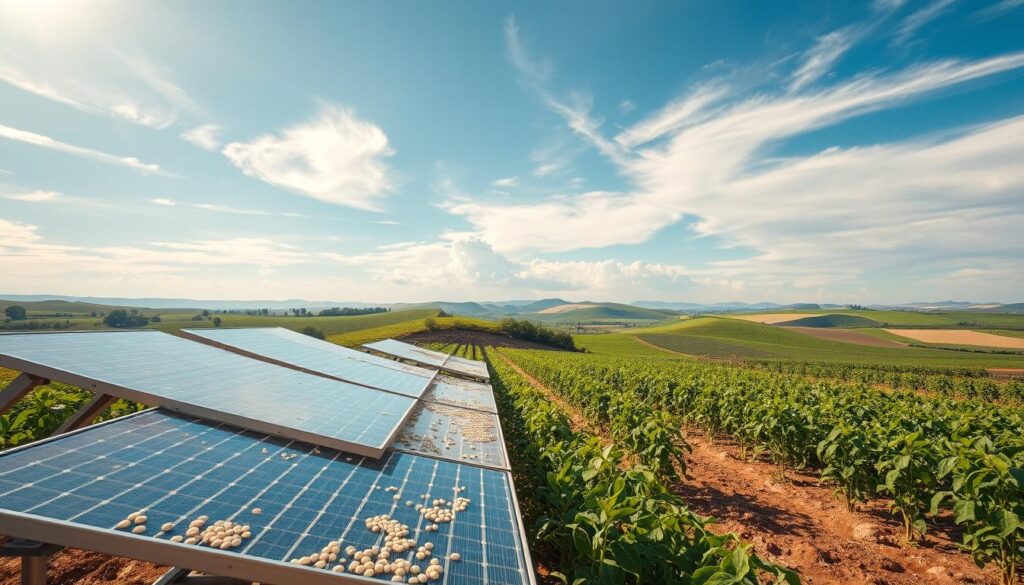
The following table outlines the potential impacts of climate volatility on drying processes and strategies for mitigation:
| Climate Factor | Impact on Drying | Mitigation Strategy |
|---|---|---|
| Increased Temperature | Faster drying but risk of over-drying | Monitor temperature closely, adjust drying time |
| Unpredictable Humidity | Inconsistent drying rates | Use humidity-controlled drying environments |
| Higher UV Radiation | Degradation of bean quality | Implement UV protection measures |
To achieve optimal drying results, it’s essential to engineer solar dryers with careful consideration of several key factors. The efficiency of a solar dryer is not just about harnessing sunlight; it’s also about how effectively it can remove moisture from the beans.
When designing a solar dryer, several factors come into play. Airflow dynamics is one of the critical aspects that can significantly impact the drying efficiency. Ensuring that your solar dryer is designed to maximize airflow can help in achieving uniform drying and preventing the buildup of moisture, which can lead to off-flavors and reduced quality.
The materials used in the construction of the solar dryer also play a crucial role. For instance, using materials that are durable and can withstand various weather conditions is essential. Moreover, the color and texture of the materials can affect how much solar radiation is absorbed. Dark-colored surfaces tend to absorb more heat, which can be beneficial for drying.
Enhancing airflow dynamics in a solar dryer involves a few strategic design elements. Firstly, the dryer should be designed to allow for adequate ventilation. This can be achieved by incorporating vents or chimneys that facilitate the escape of moist air. Secondly, the layout of the drying chamber should ensure that air can circulate freely around the beans.
A well-designed solar dryer can significantly improve the drying process. For example, a dryer with a mixed-mode design, which combines direct and indirect solar drying, can offer more flexibility and efficiency. The table below illustrates a sample composition for drying, highlighting the importance of balancing different ingredients.
| Ingredient | Baker’s Percentage |
|---|---|
| Beans | 100% |
| Moisture Content | 20% |
| Airflow Rate | Optimal: 1.5 m/s |
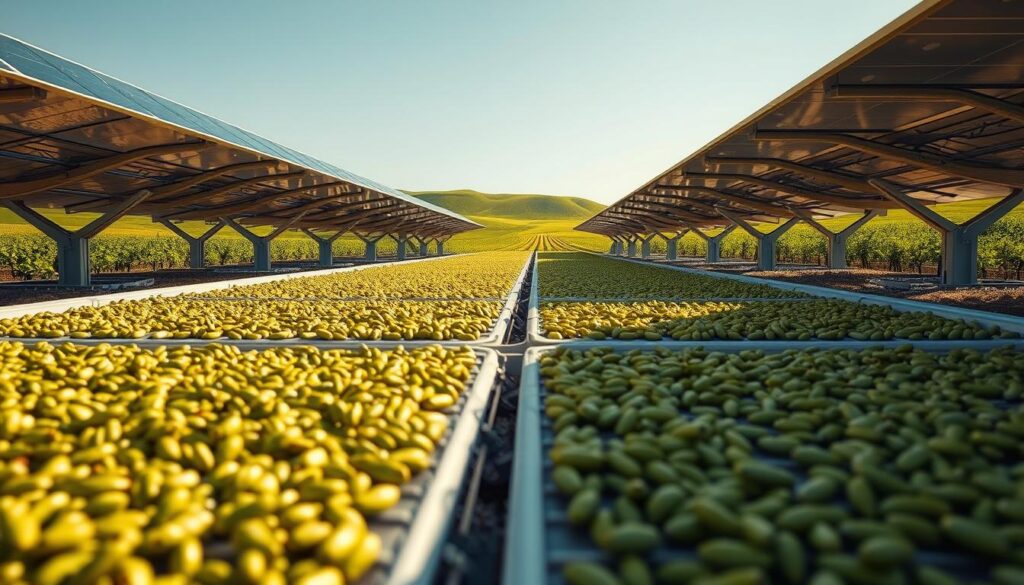
By focusing on these design considerations and enhancing airflow dynamics, you can significantly improve the performance of your solar dryer. This not only helps in achieving better drying results but also contributes to the overall quality of the dried beans.
To maintain the quality of your beans during slow drying, it’s crucial to understand how to prevent off-flavors. Slow drying, while beneficial for preserving bean quality, can sometimes lead to the development of unwanted flavors if not properly managed.
One of the primary concerns during slow drying is the prevention of mold, which can significantly contribute to off-flavors. Here are the steps you can take to minimize this risk:
As noted by agricultural experts, “The key to preventing off-flavors lies in maintaining a controlled environment that inhibits mold growth and ensures even drying.”
This controlled environment is crucial for preserving the natural flavors of the beans.
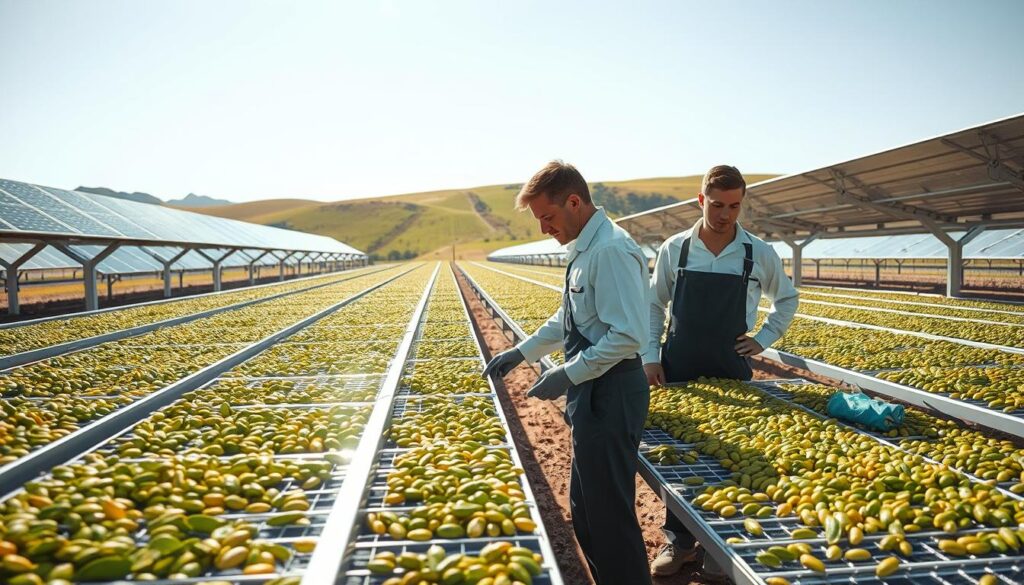
To further illustrate the importance of these strategies, consider the following comparison of drying methods and their impact on off-flavor development:
| Drying Method | Off-Flavor Risk | Mold Prevention |
|---|---|---|
| Slow Drying with Controlled Environment | Low | High |
| Slow Drying without Controlled Environment | High | Low |
| Fast Drying | Moderate | Moderate |
By implementing these strategies and understanding the factors that contribute to off-flavors, you can significantly improve the quality of your dried beans.
After optimizing your solar drying process, it’s crucial to store your dried beans under the right conditions to preserve their quality. Proper storage is the final step in maintaining the integrity of your beans.
To keep your dried beans fresh, you need to store them in a dry, well-ventilated area. One effective method is using raised beds, which allow for good airflow around the beans. When utilizing raised beds for Solar Drying Optimization, ensure they are constructed with durable materials and have adequate drainage.
To get the most out of raised beds, follow these best practices:
– Elevate the beds to at least 6 inches off the ground to improve airflow.
– Use a breathable material, such as wood or plastic mesh, for the bed’s construction.
– Regularly inspect the stored beans for any signs of moisture or pest infestation.
By following these guidelines and incorporating raised beds into your storage strategy, you can effectively maintain the quality of your dried beans.