All the world of cacao in one click.
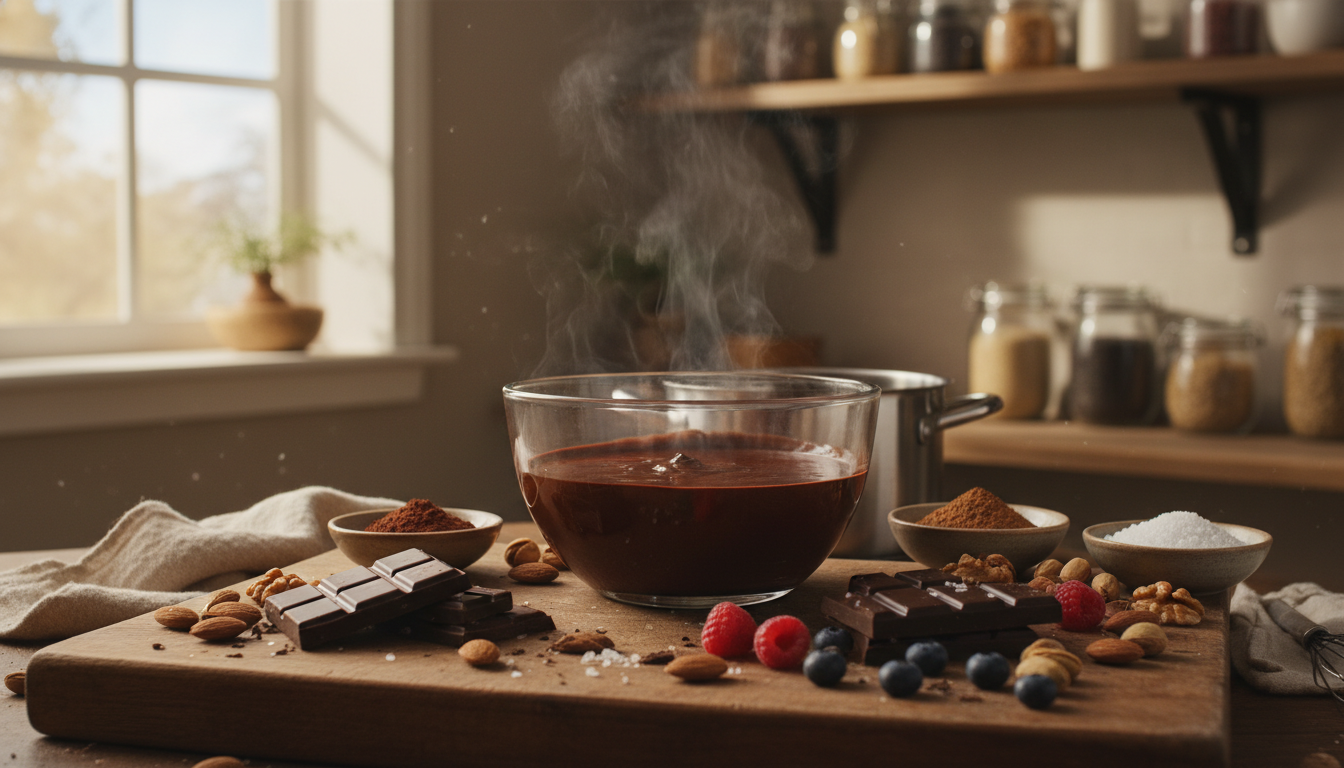
Learn how to make delicious sugar-free dark chocolate bars at home with this step-by-step tutorial.
Creating your own sugar-free dark chocolate bars at home is a straightforward process that requires just a few ingredients and some basic equipment. By using sugar substitutes, you can enjoy delicious and healthy chocolate treats without compromising on taste.
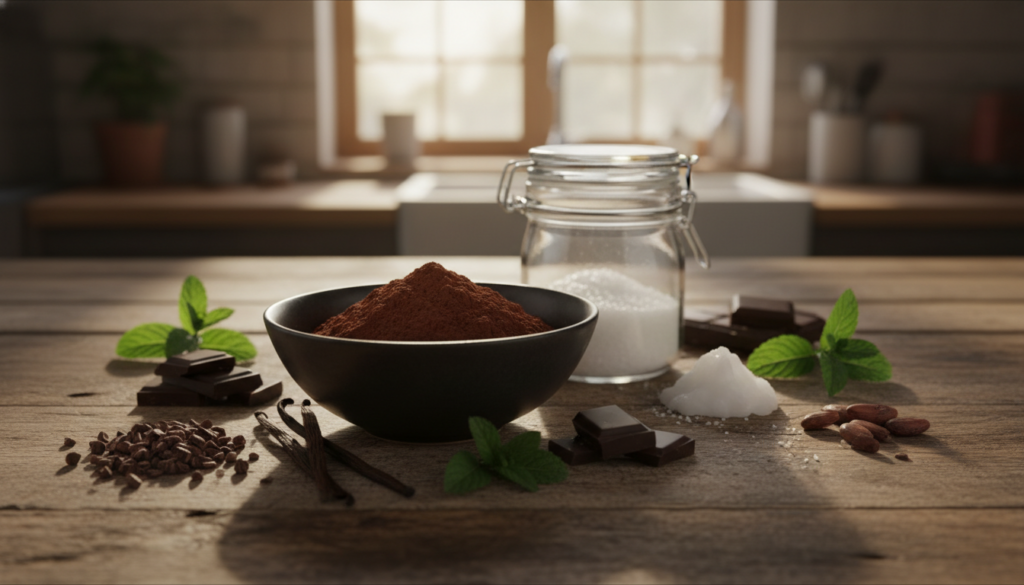
To get started, you’ll need to gather your ingredients, which include high-quality cocoa solids, a sugar substitute of your choice, and cocoa butter. The ingredients are listed in the table below, along with their corresponding Baker’s percentages.
Here’s a sample ingredient list for your sugar-free dark chocolate bars:
The world of sugar-free dark chocolate is expanding, offering a delicious alternative for health-conscious consumers. As more people become aware of the importance of reducing sugar intake, sugar-free dark chocolate has emerged as a popular treat that combines rich flavors with potential health benefits.
Choosing sugar-free dark chocolate can have several advantages. For individuals managing their sugar intake, such as those with diabetes, sugar-free options provide a way to enjoy chocolate without the sugar spike. Additionally, sugar-free dark chocolate often contains fewer calories and less carbohydrate compared to traditional chocolate, making it a preferable choice for those monitoring their diet.
Key Benefits:
Sugar-free dark chocolate relies on alternative sweeteners to provide the sweetness without the sugar. Common natural sweeteners used include Erythritol and Stevia. Understanding the differences between these sweeteners is crucial for choosing the right one for your chocolate-making needs.
| Sweetener | Glycemic Index | Taste Profile |
|---|---|---|
| Erythritol | 0 | Mild, less sweet than sugar |
| Stevia | 0 | Strong, licorice-like aftertaste |
When comparing Erythritol vs Stevia, it’s essential to consider your taste preferences and dietary needs. Erythritol has a sugar-like taste but doesn’t raise blood sugar levels, while Stevia is much sweeter than sugar and can have a distinct aftertaste.
The art of chocolate making is heavily dependent on the equipment used. To create high-quality sugar-free dark chocolate bars, you need to have the right tools and appliances. This not only ensures a smooth process but also affects the final texture and flavor of your chocolate.
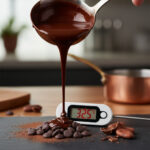
To start making chocolate, you’ll need a few essential pieces of equipment. First, a double boiler or a heat-proof bowl set over a pot of simmering water is necessary for melting your cocoa mass and other chocolate ingredients. A thermometer is also crucial for monitoring the temperature, which is vital for tempering sugar-free chocolate.
Other recommended tools include a spatula for mixing, a mold to shape your chocolate bars, and a cooling rack or refrigerator to set the chocolate. For those looking to refine their tempering process, a tempering machine can be a valuable investment.
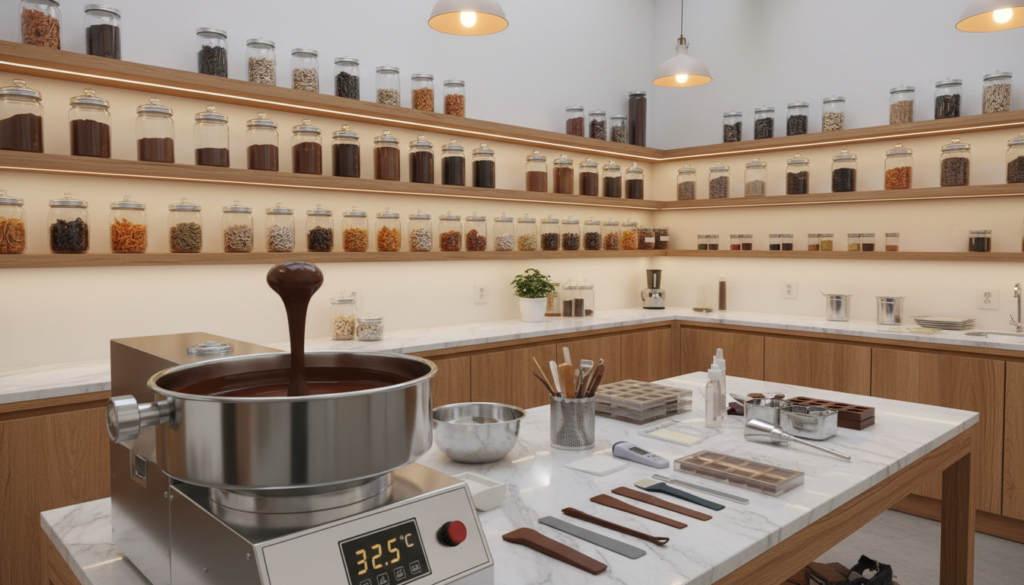
Using the right equipment is not just about making the process easier; it’s about achieving the desired quality in your chocolate. Proper equipment helps in maintaining the correct temperatures, which is crucial for tempering and preventing the chocolate from becoming too grainy or developing an unpleasant texture.
For instance, when working with sugar-free chocolate, it’s essential to avoid overheating, which can cause the chocolate to seize up or develop an unappealing flavor. A thermometer and a controlled heating source can help prevent this.
| Equipment | Purpose | Importance |
|---|---|---|
| Double Boiler | Melting chocolate ingredients | High |
| Thermometer | Monitoring temperature | High |
| Spice Grinder | Grinding nuts or spices | Medium |
| Mold | Shaping chocolate bars | High |
To achieve the perfect balance of flavors in your sugar-free dark chocolate, understanding Baker’s Percentage is key. Baker’s Percentage is a method of expressing the ratio of ingredients in a recipe as a percentage of the total flour weight. Although chocolate making doesn’t always involve flour, the principle can be adapted to ensure consistency and quality in your sugar-free dark chocolate bars.
Using Baker’s Percentage in recipe development allows you to scale your recipes up or down while maintaining the same proportions of ingredients. This is particularly useful when you’re experimenting with different flavors or adjusting batch sizes. For instance, if you’re using a maltitol-free sweetener, understanding how it compares in weight to traditional sweeteners is crucial.
Calculating net carbs becomes straightforward when you understand the percentage of each ingredient. Net carbs are calculated by taking the total carbohydrates and subtracting fiber and sugar alcohols. In sugar-free dark chocolate, this is particularly relevant as it directly impacts the carbohydrate content.
To apply Baker’s Percentage effectively, you’ll need to convert your recipe into the appropriate format. Here’s a step-by-step guide:
| Ingredient | Weight (g) | Baker’s Percentage (%) |
|---|---|---|
| Cocoa | 500 | 100 |
| Sugar-free Sweetener | 200 | 40 |
| Cocoa Butter | 300 | 60 |
| Vanilla Extract | 10 | 2 |
By understanding and applying Baker’s Percentage, you can refine your sugar-free dark chocolate recipe to achieve the desired taste and texture. This method ensures that your chocolate bars are consistently of high quality, whether you’re making a small batch or a large quantity.

As you become more comfortable with Baker’s Percentage, you’ll find it easier to experiment with new ingredients and flavor combinations, confident in your ability to scale your recipes accurately.
With high-fiber cocoa as the star ingredient, let’s dive into the process of crafting your sugar-free dark chocolate bars. This guide will walk you through preparing your workspace, melting the chocolate, and pouring it into bars.
Before you start, ensure your workspace is clean and organized. You’ll need a double boiler or a microwave-safe bowl, a spatula, and a chocolate mold.
Melting the chocolate is a crucial step in making your diabetic-friendly chocolate bars. You can use either a double boiler or a microwave-safe bowl.
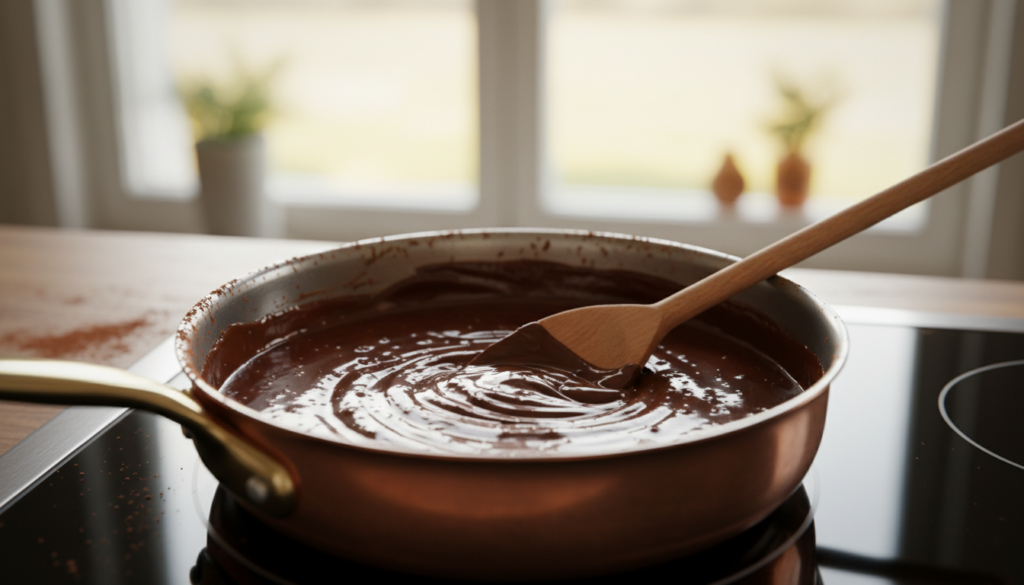
Once your chocolate is melted, it’s time to pour it into your mold and let it set.
By following these steps, you’ll have delicious sugar-free dark chocolate bars made with high-fiber cocoa, perfect for a diabetic-friendly treat.
Explore the world of flavor enhancements for your sugar-free dark chocolate bars. By incorporating various ingredients, you can create unique and delicious variations that cater to different tastes and preferences.
One of the simplest ways to enhance the flavor of your sugar-free dark chocolate is by adding nuts and fruits. Nuts like almonds, hazelnuts, and pecans provide a satisfying crunch, while fruits such as cranberries, raspberries, and cherries add a burst of flavor. When using fruits, especially those with high water content, it’s essential to pat them dry before adding to prevent blooming or texture issues in your chocolate.
Tips for Adding Nuts and Fruits:
Spices can dramatically change the flavor profile of your sugar-free dark chocolate. Common spices used include cinnamon, cayenne pepper, and vanilla. When infusing with spices, start with a small amount and taste as you go, adjusting the spice level to your liking.
Tempering Sugar-Free Chocolate: Regardless of the additions, tempering your sugar-free chocolate is crucial for achieving a smooth, glossy finish. Use sugar substitutes that are suitable for tempering, as some may not provide the desired texture.
| Addition | Flavor Profile | Texture |
|---|---|---|
| Nuts (Almonds, Hazelnuts) | Rich, Nutty | Crunchy |
| Fruits (Cranberries, Raspberries) | Fruity, Tart | Chewy |
| Spices (Cinnamon, Cayenne) | Warm, Spicy | Smooth |
By experimenting with different combinations of nuts, fruits, and spices, you can create a wide range of flavor enhancements for your sugar-free dark chocolate bars. Remember, the key to successful flavor variations lies in balancing the ingredients and properly tempering the chocolate.
You can significantly extend the shelf life of your sugar-free dark chocolate by storing it under the right conditions. Proper storage is essential to maintaining the quality and flavor of your chocolate bars.
To preserve your sugar-free dark chocolate, store it in a cool, dry place away from direct sunlight. The ideal storage temperature is between 60°F to 70°F (15°C to 21°C). Using airtight containers can help prevent moisture from affecting the chocolate. Additionally, keeping the chocolate away from strong-smelling foods is crucial, as chocolate can absorb odors easily.
When storing chocolate, it’s also important to consider the type of natural sweeteners used. Some natural sweeteners, like stevia or erythritol, can be more sensitive to temperature and humidity than others. Ensuring that the chocolate is wrapped properly or stored in an airtight container can mitigate potential issues.
The shelf life of your sugar-free dark chocolate can vary depending on the cocoa mass content and the storage conditions. Generally, dark chocolate with a high cocoa content (70% or higher) tends to have a longer shelf life due to its lower sugar content and higher antioxidant levels.
When stored correctly, sugar-free dark chocolate can last for several months to a year. Regularly checking the chocolate for any signs of spoilage, such as an off smell or visible mold, is essential. If you notice any of these signs, it’s best to discard the chocolate to ensure safety and quality.
Even with careful planning, issues like improper tempering or grainy texture can arise during chocolate making. Understanding the causes and solutions to these problems is crucial for producing high-quality sugar-free dark chocolate bars.
One of the most frustrating issues is when your chocolate doesn’t set properly. This can be due to several factors, including incorrect tempering, inadequate cooling, or contamination. Tempering sugar-free chocolate requires precision to achieve the right crystal structure.
To troubleshoot, check your tempering process. Ensure that you’ve heated and cooled the chocolate to the correct temperatures. If using a thermometer, verify its accuracy. Another factor could be the cocoa butter content in your cocoa mass; too little can prevent the chocolate from setting properly.
A grainy texture can be unpleasant and is often caused by the chocolate seizing or the sugar not dissolving properly. This issue can be addressed by ensuring that your ingredients are well mixed and that the chocolate is melted gradually.
To achieve a smooth texture, consider the following table of melting points for different types of chocolate:
| Chocolate Type | Melting Point (°F) | Melting Point (°C) |
|---|---|---|
| Dark Chocolate | 105-115 | 40-46 |
| Milk Chocolate | 95-105 | 35-40 |
| White Chocolate | 100-110 | 38-43 |
By understanding and adjusting these factors, you can improve the texture of your sugar-free dark chocolate. Remember, practice makes perfect, and tempering sugar-free chocolate is an art that requires patience.
As you complete your sugar-free dark chocolate bars, you can take pride in creating a treat that is not only delicious but also diabetic-friendly. With high-fiber cocoa and maltitol-free sweeteners, your chocolate bars offer a guilt-free indulgence.
Your sugar-free dark chocolate bars are characterized by low net carbs, making them an excellent choice for those monitoring their carb intake. The use of erythritol or stevia as sweeteners provides a sugar-free alternative without compromising on taste.
Now that you’ve mastered the basics, feel free to experiment with different ingredients and flavor variations. Try infusing your chocolate with various spices or nuts to create unique taste experiences. The versatility of sugar-free dark chocolate making allows you to continually innovate and tailor your creations to your preferences.
By choosing high-quality ingredients and being mindful of the sweeteners used, such as opting for erythritol over stevia or ensuring your chocolate is maltitol-free, you can enjoy a rich, satisfying chocolate experience.