All the world of cacao in one click.

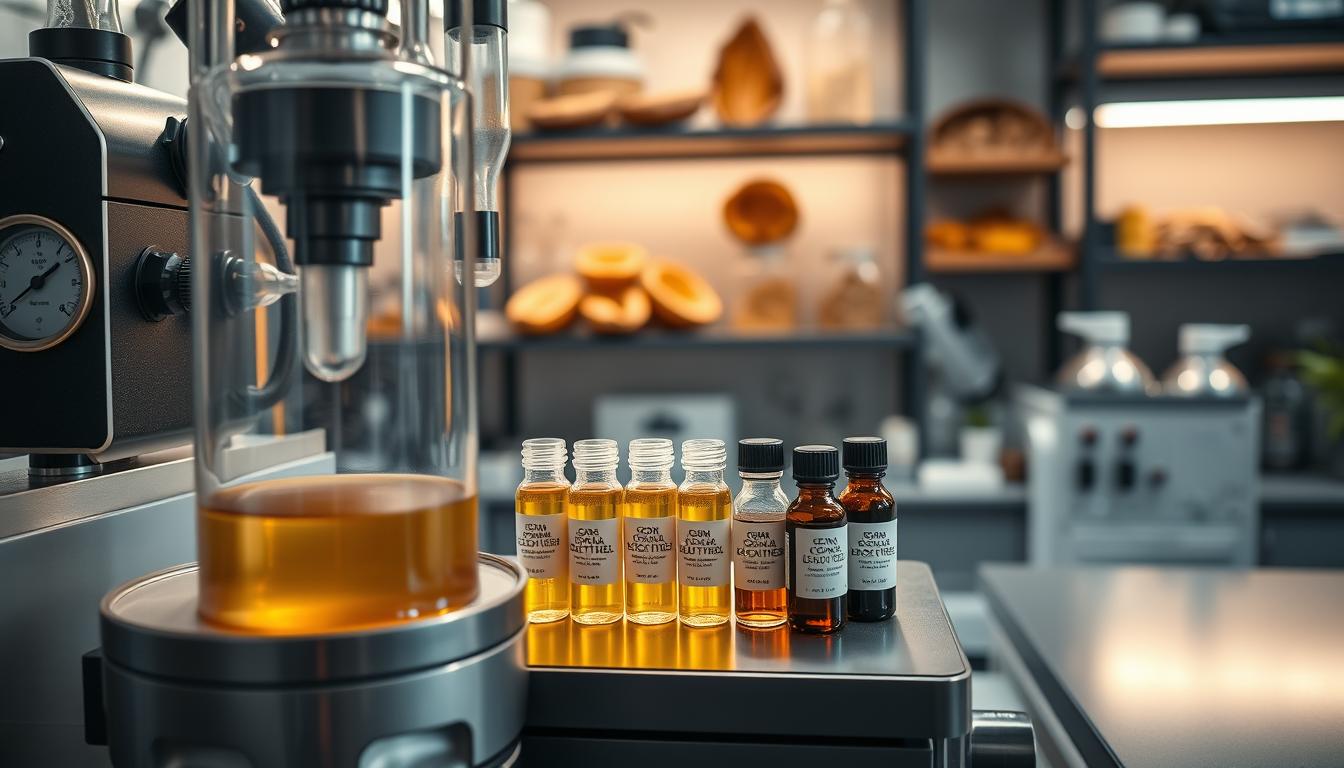
Unlock the sustainable extraction of pure cocoa butter and essential oils using CO2 supercritical technology.
You are about to unlock the green chemistry approach to extracting pure cocoa butter and essential oils using CO2 supercritical technology. This process is a game-changer in the industry, offering a sustainable extraction method that is both solvent-free and efficient.
The CO2 supercritical extraction process involves using carbon dioxide at high pressures and temperatures to extract the desired compounds from various materials. This method allows for the production of high-purity extracts without the use of harsh chemicals.
By understanding the principles behind this technology, you can achieve the desired outcomes in extracting pure cocoa butter and essential oils.
You can achieve high-quality extracts using supercritical fluid extraction, a method that harnesses the power of CO2. This technique is particularly valued for its ability to produce solvent-free and high-purity fat extracts, making it ideal for applications in food, cosmetics, and pharmaceuticals.
Supercritical fluid extraction operates on the principle that certain fluids, when subjected to high pressures and temperatures, exhibit properties that are intermediate between those of liquids and gases. CO2 is the most commonly used fluid due to its non-toxicity, inertness, and ease of handling.
The extraction process involves several key steps:
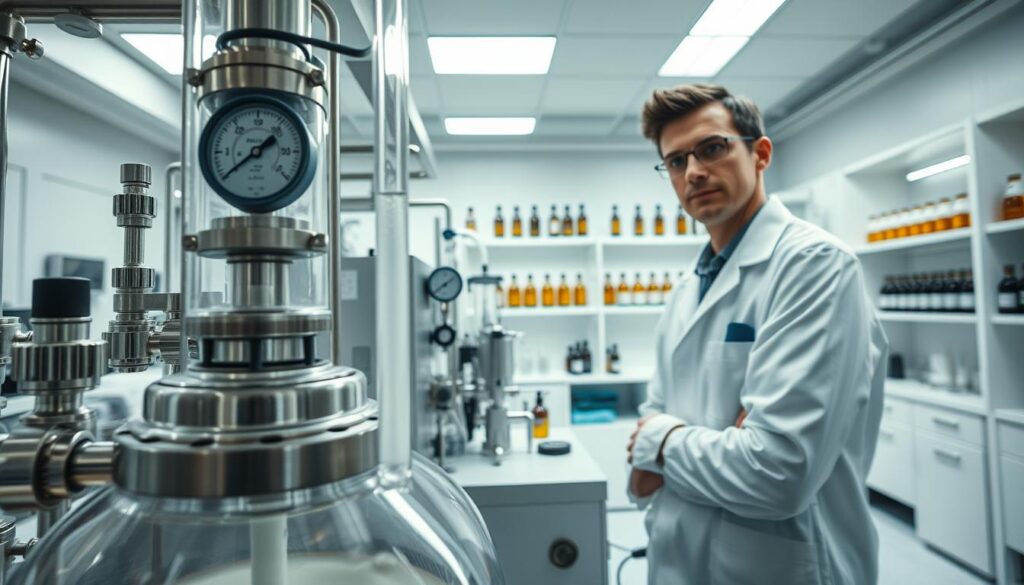
The effectiveness of supercritical CO2 extraction lies in its ability to selectively extract compounds based on the conditions of temperature and pressure. By adjusting these parameters, you can optimize the extraction for specific compounds, ensuring high-purity products.
The science behind this process is rooted in the physical chemistry of supercritical fluids. At temperatures and pressures above its critical point, CO2 exhibits a density similar to that of liquids, allowing it to dissolve a wide range of compounds, while its viscosity is closer to that of gases, facilitating the diffusion of solutes.
Cocoa butter extraction methods vary, but one stands out for its purity and quality. The extraction process is critical in determining the final product’s characteristics, including its aroma, flavor, and texture.
Several methods are used to extract cocoa butter from cacao beans, including mechanical pressing, solvent extraction, and supercritical CO2 extraction. Each method has its advantages and disadvantages, affecting the quality and purity of the extracted cocoa butter.
Mechanical Pressing involves physically pressing the cocoa butter from the cacao beans. While this method is chemical-free, it may not extract all the available cocoa butter.
Solvent Extraction uses a solvent to extract the cocoa butter. Although this method can be more efficient, there’s a risk of solvent residue in the final product, affecting its quality and safety.
Supercritical CO2 Extraction uses carbon dioxide at high pressures and temperatures to extract the cocoa butter. This method is noted for its ability to preserve the natural aroma and flavor of the cacao beans without leaving chemical residues.
Supercritical CO2 extraction offers several advantages, including the preservation of the natural aroma extraction and flavor profile of the cacao beans. This method is also environmentally friendly, as CO2 is non-toxic and can be recycled.
“Supercritical fluid extraction has emerged as a promising technology for the extraction of valuable compounds from natural sources.”
A comparison of the different extraction methods can be seen in the characteristics of the final product. The following table illustrates the differences in cocoa butter extracted using different methods, presented in Baker’s percentage for clarity.
| Extraction Method | Cocoa Butter Yield (%) | Aroma Intensity | Flavor Profile |
|---|---|---|---|
| Mechanical Pressing | 70-80 | Moderate | Rich, Chocolatey |
| Solvent Extraction | 90-95 | Low | Muted, Chemical notes |
| Supercritical CO2 Extraction | 85-90 | High | Complex, Fruity notes |
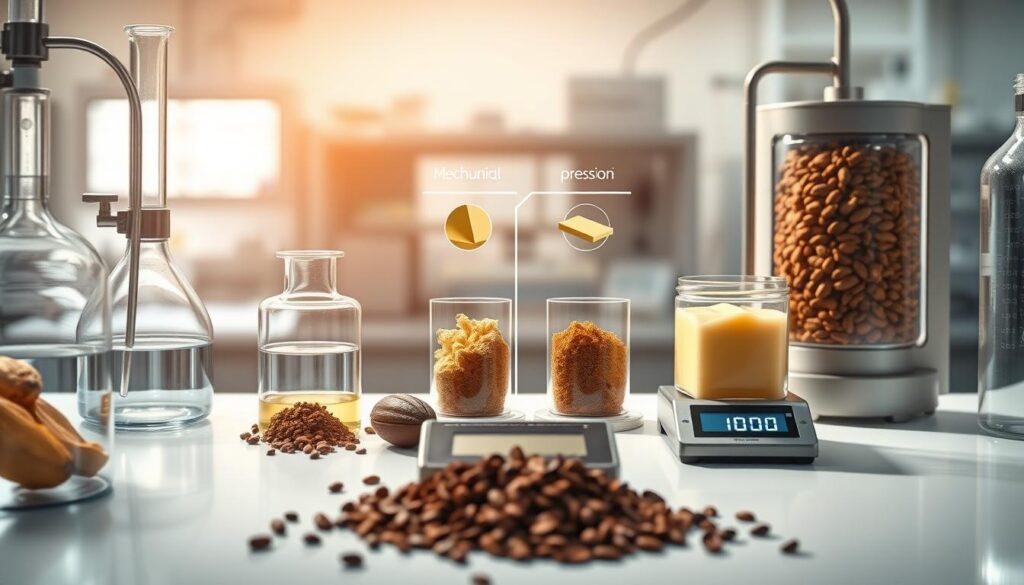
As shown, supercritical CO2 extraction offers a high yield while preserving the natural aroma and flavor profile, making it a superior method for producing high-quality cocoa butter.
The art of perfumery has long relied on the delicate extraction of essences from botanicals, a process where supercritical CO2 extraction shines. This method allows perfumers to capture the true essence of plants, preserving their unique aromatic profiles.
Supercritical CO2 extraction is particularly valuable in perfumery due to its ability to extract delicate essences without damaging the botanicals. This results in a more authentic and nuanced fragrance.
CO2 extraction plays a crucial role in perfumery by providing a clean and efficient way to extract essences. The process involves using supercritical CO2 to selectively extract the desired compounds from botanicals.
Benefits of CO2 Extraction in Perfumery:
To capture the essence of botanicals using CO2 extraction, follow these steps:

The use of CO2 extraction in perfumery not only results in high-quality fragrances but also contributes to a more sustainable production process. By reducing the reliance on solvent-based extraction methods, perfumers can lower their carbon footprint and appeal to environmentally conscious consumers.
| Extraction Method | Carbon Footprint | Essence Quality |
|---|---|---|
| Supercritical CO2 Extraction | Low | High |
| Solvent-Based Extraction | High | Variable |
| Steam Distillation | Medium | High |
As the perfumery industry continues to evolve, the adoption of supercritical CO2 extraction is expected to grow. This technology offers a compelling combination of quality, efficiency, and sustainability.
You can now explore the versatility of CO2 supercritical extraction on a smaller scale with lab-sized extraction units. These systems are designed to provide the same benefits as their larger counterparts, but with the added convenience of a compact footprint.
To scale down the CO2 extraction process, follow these steps:
1. Select a suitable raw material for extraction, such as cocoa beans or botanicals.
2. Configure the lab-sized extraction unit according to the manufacturer’s guidelines.
3. Optimize extraction parameters, including pressure, temperature, and CO2 flow rate, to achieve the desired yield and quality.
Lab-sized extraction units are ideal for research and development, allowing you to test new extraction parameters and raw materials without requiring large quantities. This approach supports green chemistry principles and maintains a solvent-free process, even at a small scale. By utilizing these units, you can efficiently develop new products and ensure quality control in a laboratory setting.