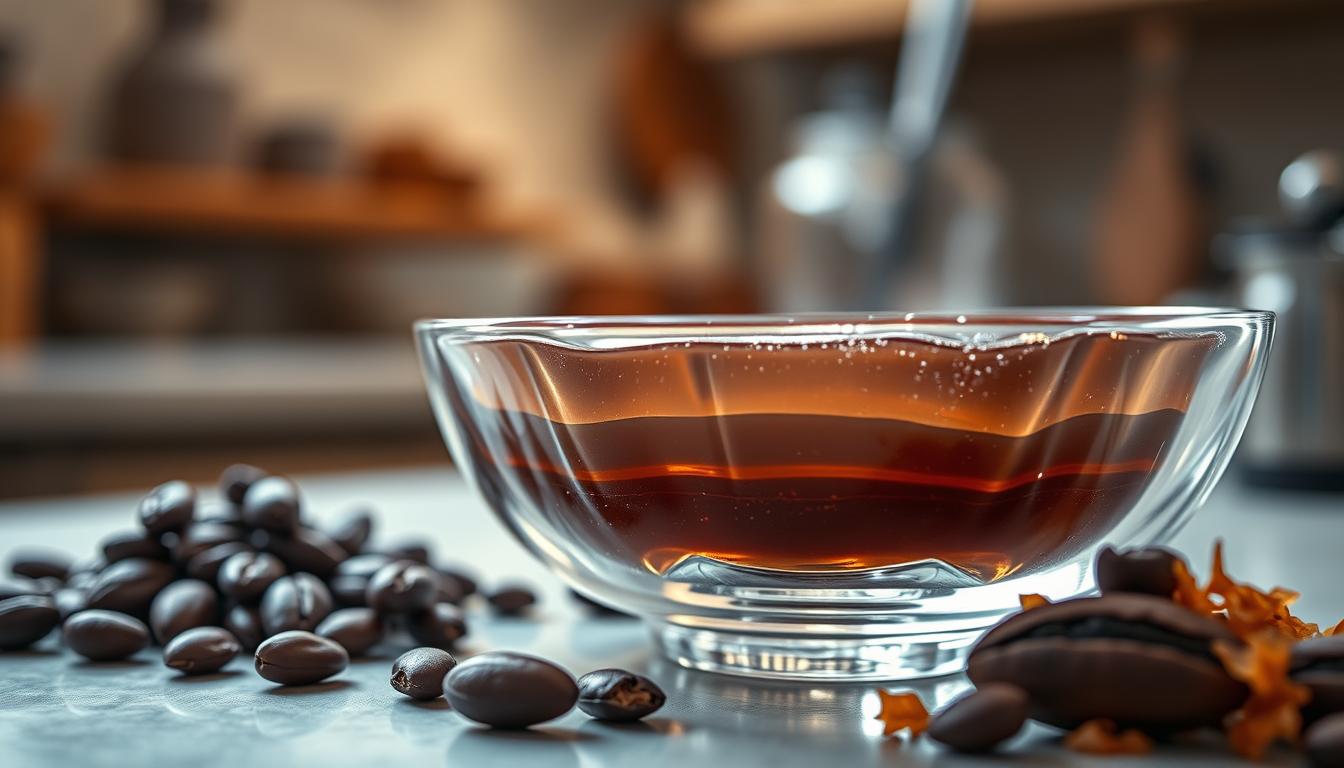
Welcome to the world of modern pastry where clarity meets deep flavor. You will master the art of creating stunning tiers using infused cacao water. This unique technique highlights Transparency in every single bite.
Achieving a glass-like finish requires precision and the right gelling agent. We utilize advanced Agar Tech to ensure each portion sets with perfect stability. This method results in a visually striking treat that impresses any guest.
This professional approach ensures your dessert maintains a firm yet delicate texture. By following these ratios, you can produce consistent results every time you work. Let us look at the specific proportions needed for your success.
| Ingredient |
Amount (g) |
Baker’s Percentage |
| Filtered Water |
500g |
100% |
| Cacao Nibs |
50g |
10% |
| Fine Sugar |
75g |
15% |
| Agar-Agar Powder |
6g |
1.2% |
Follow these numbered steps to build your culinary masterpiece:
- Steep the cacao nibs in hot filtered water for ten minutes.
- Strain the liquid and combine it with the sugar and agar.
- Simmer the mixture for two minutes to activate the gelling properties.
- Pour a thin base layer into your mold and let it firm.
- Continue adding layers carefully to create a beautiful stacked effect.
Key Takeaways
- Agar-agar provides superior clarity compared to gelatin.
- Cacao water offers a refined and sophisticated flavor profile.
- Precise temperature control is vital for successful layering.
- Using Baker’s percentages ensures consistency in every batch.
- This technique creates a 100% vegan-friendly gourmet dessert.
- A simmer stage is required to fully hydrate the agar.
Mastering Transparency in Cocoa Extraction
Transparency is key to visual innovation in desserts, and mastering cocoa extraction is the first step towards achieving it. To create a clear and visually appealing cacao water jelly, you must understand the techniques behind cocoa extraction and the importance of using high-quality cocoa.
One of the challenges in preparing desserts like cacao water jelly is substituting gelatin with agar-agar. Agar-agar is a popular vegan alternative to gelatin, derived from red algae. It provides a similar gelling effect without the use of animal products. However, achieving the right consistency and transparency requires careful consideration of the ratio of agar-agar to liquid.
To achieve transparency in your cacao water jelly, you will need to focus on the quality of your cocoa extract. Using high-quality cocoa is essential for both flavor and clarity. The extraction method also plays a critical role in determining the final transparency of your jelly.
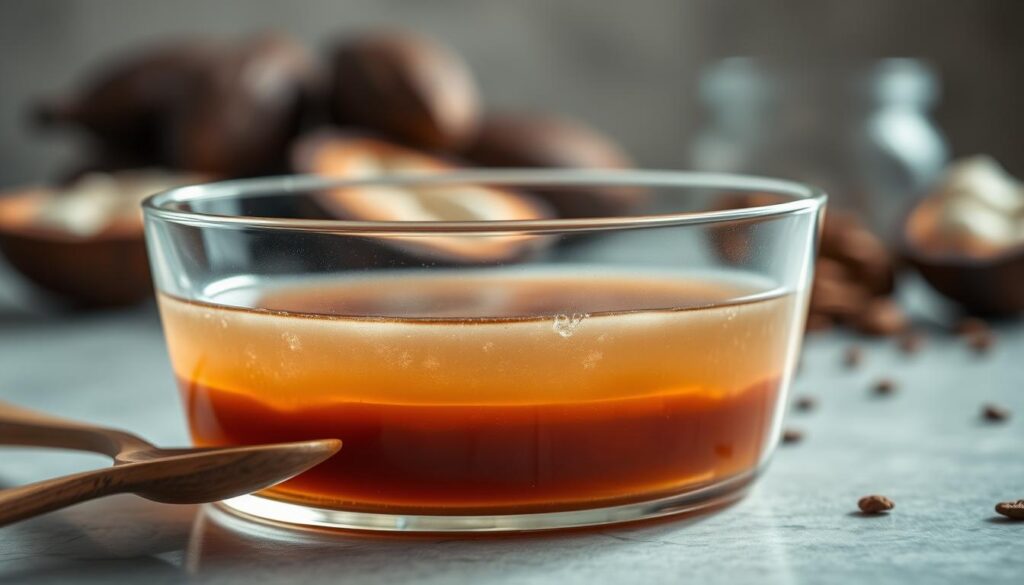
Here’s a basic recipe to get you started, including the ingredients and their percentages based on Baker’s percentage:
| Ingredient |
Baker’s Percentage (%) |
| Cocoa Extract |
20 |
| Agar-Agar |
1.5 |
| Sugar |
30 |
| Water |
100 |
To enhance the transparency of your cacao water jelly, consider the following tips:
- Use a high-quality cocoa extract that is rich in flavor and has minimal impurities.
- Adjust the ratio of agar-agar to liquid to achieve the desired consistency without compromising clarity.
- Experiment with different extraction methods to find the one that yields the clearest extract.
By mastering the techniques of cocoa extraction and gelatin substitution with agar-agar, you can create a visually stunning and delicious cacao water jelly that showcases your visual innovation skills.
Layering Techniques for Plated Desserts
Achieving transparency and visual innovation in plated desserts begins with effective layering. You need to understand how to create layers that not only look appealing but also remain stable over time.
To layer your cacao water jelly effectively, follow these steps:
- Prepare your agar-agar mixture according to your recipe, ensuring it is clear and free of bubbles.
- Pour a thin layer of the mixture into your mold or serving dish.
- Allow this layer to set before adding the next, ensuring each layer is distinct and transparent.
- Repeat the process until you achieve the desired number of layers.
Stability Test: 48h Visual Clarity
After layering your dessert, it’s crucial to test its stability and visual clarity over a 48-hour period. This involves observing the dessert for any changes in layer clarity, texture, or overall appearance.
To conduct the stability test:
- Place the layered dessert in a controlled environment, away from direct sunlight and extreme temperatures.
- Observe and record the dessert’s appearance at regular intervals (e.g., 24 hours and 48 hours).
- Check for any signs of degradation, such as layer mixing or loss of transparency.
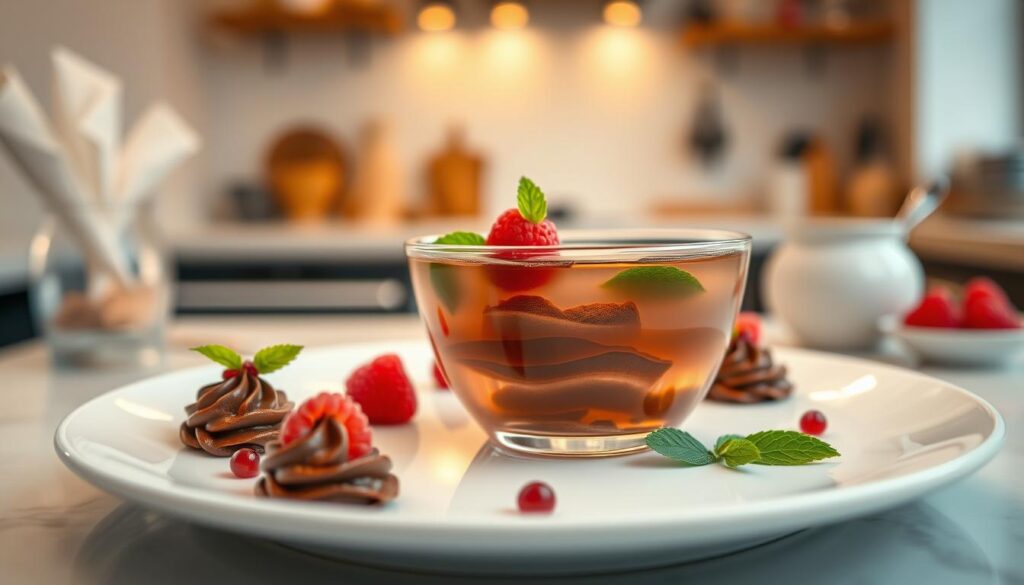
By following these steps and conducting a thorough stability test, you can ensure your plated desserts maintain their visual appeal and transparency over time, enhancing the overall dining experience.
Stability Test: 48h Visual Clarity
You have mastered the art of creating transparent layers with Agar-Agar, a product of Agar Tech, and now it’s time to test its stability. The 48-hour visual clarity test is a simple yet effective method to determine the dessert’s longevity.
By using Agar Tech, you are opting for a gelatin substitution that enhances the stability of your dessert. This substitution is key to maintaining the clarity and structure of your Cacao Water Jelly.
To conduct the test, prepare your dessert as described, then store it in a controlled environment. Observe the dessert at regular intervals over 48 hours, noting any changes in clarity or layer stability.
The results will help you refine your recipe, ensuring that your dessert remains appealing to the consumer over time.
FAQ
Why is agar-agar preferred over gelatin for achieving high-clarity cacao water jelly?
When you are aiming for maximum Transparency, agar-agar is the superior choice because it provides a firmer set and a higher melting point. Utilizing Agar Tech allows your dessert to remain stable at room temperature, whereas gelatin often requires constant refrigeration. Furthermore, as a plant-based Gelatin Substitution, agar-agar produces a cleaner break and a more neutral flavor profile, ensuring the delicate notes of your cacao extraction are not masked.
How does the extraction method impact the visual quality of the final dessert?
The clarity of your jelly depends entirely on the precision of your cocoa extraction. To drive Visual Innovation in your plating, you must use a cold-infusion or a light simmering technique followed by rigorous filtration. By removing all fine particulates, you ensure the Transparency of the liquid remains uncompromised, allowing your guests to see through the intricate layers you have created.
What are the primary benefits of using Agar Tech for layered plated desserts?
Agar Tech offers a significant advantage in the kitchen because it sets at a higher temperature (approximately 32-45°C). This allows you to pour multiple layers in a shorter timeframe compared to traditional methods. For your professional workflow, this means you can achieve sharp, distinct lines between your cacao water jelly and other components, which is a hallmark of modern Visual Innovation.
Why is a 48-hour stability test necessary for this recipe?
Conducting a stability test ensures that your Gelatin Substitution maintains its structural integrity over time. Over 48 hours, you are monitoring the jelly for syneresis—the release of water—which can ruin the Transparency and mouthfeel of a plated dessert. By verifying the 48-hour visual clarity, you guarantee that your Agar Tech application will hold up in a high-end service environment without losing its aesthetic appeal.
Can I achieve the same level of transparency with traditional cocoa powders?
Achieving true Transparency with standard cocoa powder is difficult because the solids remain suspended in the liquid. For the best results, you should use cacao husks or nibs to create a “cacao water.” This method ensures that you capture the aromatic essence of the chocolate while maintaining the clear, glass-like finish required for sophisticated Visual Innovation in your pastry work.