All the world of cacao in one click.


Master the art of water-based cacao sorbet with our tutorial. Achieve the perfect balance of total solids for heat resistance.
You want a frozen treat that stands up to heat without losing its shape. Learning the Brix Level is the best way to get a smooth texture.
By balancing total solids, you create a treat that is easy to scoop. This Water Sorbet method ensures high quality and consistency in every batch.
| Ingredient | Baker’s Percentage (%) |
|---|---|
| Cacao Powder (22% Fat) | 12.00% |
| Sucrose | 18.00% |
| Dextrose | 4.50% |
| Neutral Stabilizer | 0.50% |
| Liquid Base | 65.00% |
Effective management of water activity is crucial for producing high-quality water-based cacao sorbet. Water activity (Aw) is a critical factor that influences the texture, stability, and overall acceptability of the sorbet.
Water activity is defined as the ratio of the vapor pressure of water in a substance to the vapor pressure of pure water at the same temperature. It is a measure of the energy status of water in a system, which in turn affects the growth of microorganisms and the texture of the sorbet.
Understanding water activity is essential for controlling the quality of your sorbet. Hydrocolloids play a significant role in managing Aw by modifying the texture and preventing the growth of ice crystals, which can lead to an unpleasant texture.
Hydrocolloids such as guar gum, xanthan gum, and carrageenan are commonly used in sorbet production to control water activity and improve texture. These ingredients help to create a smooth and even texture, while also enhancing the overall stability of the sorbet.
“The use of hydrocolloids in sorbet production not only improves texture but also contributes to a clean label, as they are derived from natural sources.”
The impact of water activity on sorbet texture cannot be overstated. High water activity can lead to the growth of ice crystals, resulting in a coarse or icy texture. Conversely, optimal water activity ensures a smooth and refreshing texture.
| Water Activity Level | Effect on Sorbet Texture |
|---|---|
| High Aw (>0.8) | Coarse or icy texture due to ice crystal growth |
| Optimal Aw (0.5-0.7) | Smooth and refreshing texture |
| Low Aw ( | Texture becomes too hard or brittle |
By managing water activity effectively, you can achieve a clean label and maintain the desired texture in your water-based cacao sorbet. The use of hydrocolloids is a key strategy in this regard, as they help to control Aw and improve the overall quality of the sorbet.
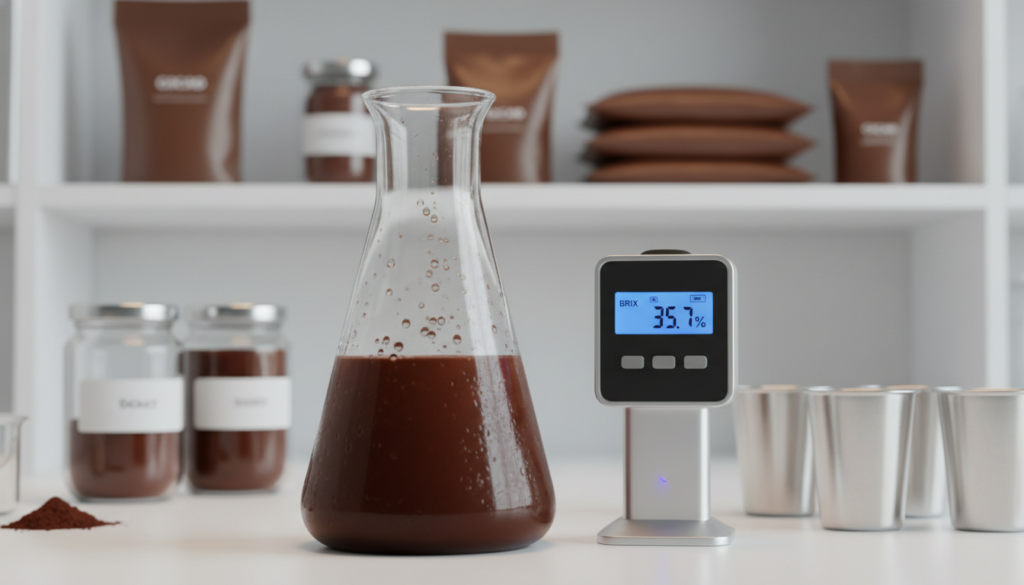
The Brix scale is fundamental in the formulation of water-based cacao sorbet, as it directly influences the sorbet’s mouthfeel and ice crystal size. By accurately measuring the sugar content, you can tailor your sorbet’s texture to your liking.
Understanding the Brix scale is crucial because it measures the sugar content in your sorbet mixture, which in turn affects its freezing properties and overall palatability. A higher Brix level typically results in a smoother sorbet due to the reduction in ice crystal size. This is because sugars inhibit the growth of ice crystals, leading to a more even, creamy texture.
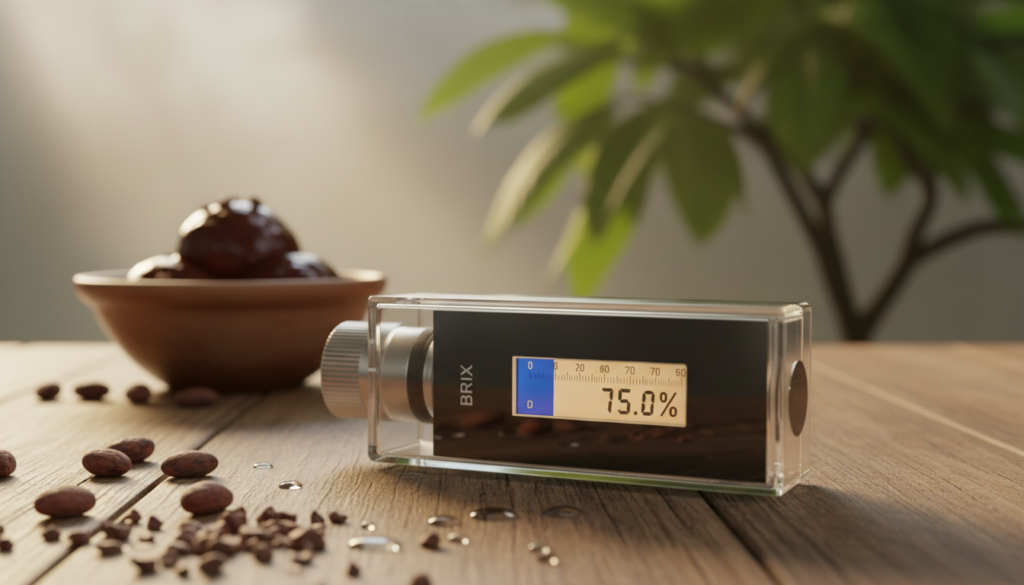
To measure Brix levels, you can use a refractometer, a tool that measures the refractive index of a solution to determine its sugar content. This is a straightforward process that provides immediate feedback on your sorbet mixture’s sugar content.
Here are key points to consider when measuring and adjusting Brix levels:
By carefully controlling the Brix level, you can significantly enhance the quality of your water-based cacao sorbet, making it more enjoyable for consumers. The right balance of sugar not only improves texture but also brings out the flavors, creating a more satisfying dessert experience.
Creating a water-based cacao sorbet that resists heat stress requires balancing total solids. You can achieve this by carefully managing the ingredients and their proportions.
To make a high-quality water sorbet, you will need the following ingredients:
Here’s a simple recipe to get you started:
Follow these steps to create your intense cacao sorbet:
By following this recipe and process, you can create a water sorbet with enhanced heat stress resistance, ensuring it remains stable and enjoyable under various conditions.